

What can a crack in your wall tell you about your foundation? Seeing foundation settling cracks can be unsettling, and it’s reasonable to wonder whether your home has a serious structural problem. The crack’s pattern and whether it changes over time often matter more than its mere presence.
Not every crack signals damage that needs repair. But dismissing a widening crack or other changes could mean missing a reason to take a closer look. In South Texas, expansive clay soil can swell when wet and shrink when dry, which is one factor to consider.
This guide explains what foundation settling cracks can and can’t tell you, clears up common myths, and shows you what to document as you monitor changes. You’ll also learn which warning signs deserve attention and when to seek a professional assessment. The goal is to help you make a measured decision without jumping to conclusions or ignoring a developing concern.
Key Takeaways
- Foundation settling cracks are clues to observe, not a diagnosis. Their pattern and changes over time need context.
- Photograph each crack, note its location and date, and record changes or related signs without attempting invasive tests or repairs.
- South Texas soil and moisture shifts are factors to consider, but they can’t confirm what caused a specific crack.
- When cracks change or appear alongside other concerns, a foundation professional can assess the structure and determine whether further action is warranted.
Foundation Settling Cracks: What They Mean, and What They Do Not
A crack in a wall or floor can make you wonder whether the house is safe. That concern is understandable, but a crack by itself can’t confirm structural failure or show that a repair is needed. Its location, direction, width, and changes over time are useful clues, not a diagnosis.
Some cracks are limited to finishes such as drywall, plaster, or paint. Others may be associated with movement in the structure or foundation. A line that follows a drywall joint, for example, may have a different explanation from a crack that crosses several materials. Still, appearance alone can’t establish the cause. A qualified assessment considers the building as a whole, its foundation type, related signs, and the home’s history.
Myth: Every foundation crack means the house is failing
Not every crack points to a serious problem, but it’s unwise to dismiss one without context. A crack’s shape or width alone can’t tell you whether it’s harmless, active, or structural. Note where it is and whether it changes, and pay attention to any other changes in the home. An experienced professional can evaluate those observations alongside the structure rather than drawing conclusions from one mark.
What does foundation settling actually mean?
Settling is the movement or adjustment of a foundation as the ground beneath it responds to the structure and surrounding conditions. Settling alone doesn’t establish that repair is needed. Movement may happen gradually, while a sudden change or uneven movement calls for closer attention. Differential settlement means one part of a structure moves differently from another, which can put stress on connected building elements. The distinction between uniform and differential structural settlement helps explain why movement patterns matter, though it can’t identify the cause of a particular crack.
For a slab foundation, the crack’s relationship to the slab and the rest of the home matters. A crack in a finish isn’t the same as evidence that the concrete foundation itself has moved. Learn more about how slab foundations are assessed in this slab foundation repair guide.
In short, foundation settling cracks are a reason to observe, not an at-home verdict. Keep track of what you see and how it changes. A professional assessment is the appropriate next step when a crack progresses or appears alongside other concerns.
Why Foundation Settling Cracks Develop in South Texas
A crack can have more than one possible explanation. Soil conditions, shifts in moisture, drainage around the home, construction details, and the building’s loads are all factors a professional may investigate. No single factor, including local soil type, proves what caused a particular crack.
Local soil and moisture conditions can influence how a foundation moves, but they don’t determine the cause or severity of a crack on their own. In parts of South Texas, expansive clay can change volume as moisture levels rise and fall. The effect varies by property. San Antonio, Austin, Houston, and Victoria are all within Hercules Foundation Repair’s service area, but their soil and site conditions shouldn’t be treated as identical.
Drainage is another part of the picture. Water that collects near a home may affect the soil supporting it. Construction details and how a building’s weight is distributed can also matter. The International Code Council’s International Building Code standards include a chapter on soils and foundations, reflecting the role of site conditions in foundation design. That reference doesn’t diagnose an individual home or mean the same requirements apply everywhere.
How soil and moisture changes may affect foundations
Some soils become softer or change volume as their moisture content changes. If support beneath different parts of a foundation shifts unevenly, the structure may respond with movement. Soil varies from site to site, and moisture can vary around a single property, too. A crack alone can’t show whether soil movement is involved. Assessing that possibility requires looking at the specific home and its surroundings.
Why foundation type matters when interpreting a crack
A slab-on-grade foundation is a concrete slab that supports the home, while a pier-and-beam foundation is elevated on piers with beams supporting the floor. Because the structures differ, a crack’s location and significance depend partly on the foundation type and which building element is cracked. A mark in a finish may not indicate a foundation crack. Observations need to be interpreted in context.
If foundation settling cracks are changing or appear with other signs of movement, a foundation professional can consider the home’s foundation type alongside its site conditions. To learn about foundation repair, visit Hercules Foundation Repair.
Settling Cracks vs. More Concerning Cracks: How to Read the Clues
A crack’s appearance can help you decide what to monitor, but it can’t tell you exactly what caused it. A hairline line in paint is different from a crack visible in concrete, yet even that distinction doesn’t confirm whether the foundation needs attention. Look for change and context, not a single clue that promises a diagnosis.
| Observation | How to interpret it |
|---|---|
| A fine crack limited to paint, plaster, or drywall that looks unchanged in dated photos | May be less concerning, but its appearance alone can’t establish the cause. |
| A crack that gets longer or wider, changes direction, or repeatedly reappears after cosmetic patching | Document the change and consider seeking professional guidance, especially if other concerns appear. |
| Crack edges that appear offset, or a crack visible in structural material such as concrete or masonry | Worth assessing in context. The pattern alone can’t confirm severity or a repair need. |
| Cracks alongside doors that have begun sticking or floors that seem uneven | Several observations changing together deserve more attention than one isolated mark. |
Use this comparison as a guide for observation, not as a way to label a crack harmless or structural. Width and direction are useful details to record, but neither can independently confirm cause, severity, or whether repair is warranted.
Which crack patterns are worth documenting?
Track whether a crack changes in length, width, or direction, and note if one edge appears higher or farther out than the other. Record whether it’s in a surface finish or visible in a structural material, if you can tell without removing or damaging anything. Take clear photos from a consistent angle, include the date, and keep them together. A record is more dependable than memory.
When cracks appear alongside other changes
A sticking door or a floor that seems uneven doesn’t prove foundation movement. Everyday factors can affect how doors operate or how floors feel. But if you notice these changes alongside a crack that’s also progressing, record and share the observations as a group. The pattern over time can help a professional decide what needs closer assessment, without assuming a cause from symptoms alone.
For foundation settling cracks, the useful question isn’t simply “How wide is it?” It’s “What has changed, where, and what else changed at the same time?” If your record shows ongoing change or multiple concerns, seek an on-site professional assessment rather than relying on a visual rule of thumb.
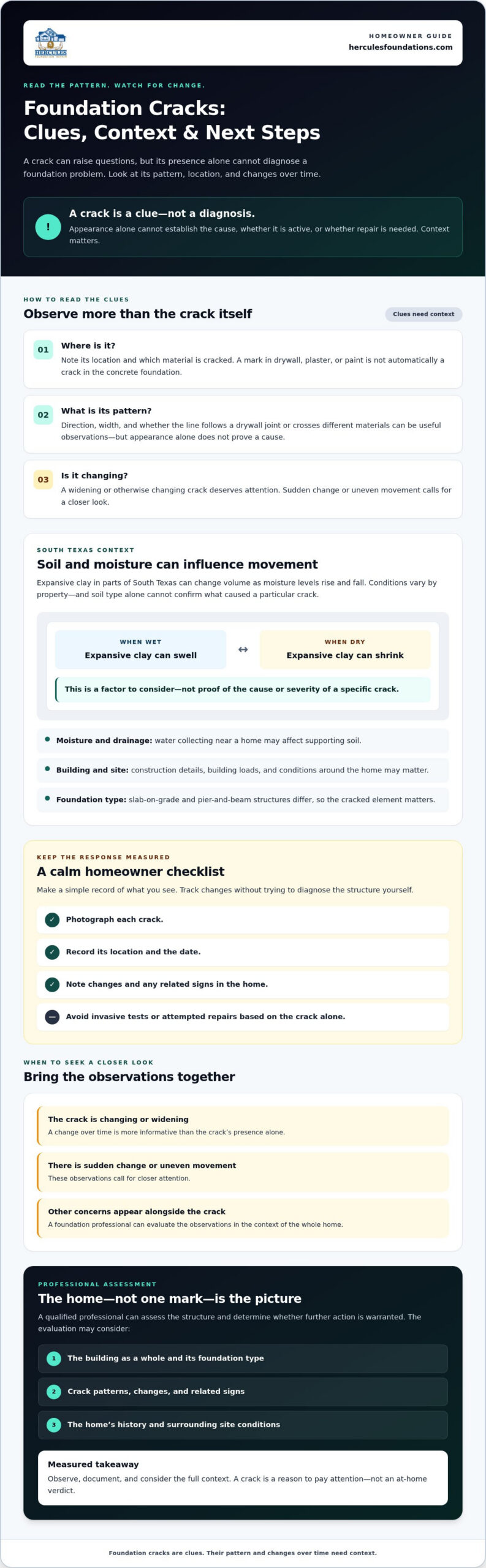
Foundation Settling Cracks: A Calm Homeowner Checklist
You don’t need to identify the cause of a crack on your own. A simple, consistent record can help you notice changes and share useful details if you decide to seek professional guidance. Avoid drilling, removing finishes, or attempting structural repairs to investigate it.
How to monitor a crack without guessing
Use the same viewpoint and method each time you document it. A single measurement or online checklist can’t diagnose a foundation, but dated observations make changes easier to compare.
- 1. Photograph it. Take a clear picture from a consistent distance. Include a ruler or another familiar scale beside the crack for comparison, without pressing it into or altering the surface.
- 2. Add the date. Save the date with each photo so you can put your observations in order.
- 3. Record the location. Note the room or exterior area, and whether the crack appears in a finish, masonry, concrete, or another visible material.
- 4. Note changes and related observations. Record if the crack seems longer, wider, or differently shaped, or if you notice changes such as a sticking door or an uneven-feeling floor. Describe what you observe rather than guessing at the cause.
- 5. Decide whether to seek guidance. If the crack visibly changes, other concerns appear, or the damage develops suddenly or rapidly, contact a foundation professional promptly. Don’t wait for a long photo history when a change is happening quickly.
When should you contact a foundation professional?
Consider an assessment if a crack is progressing or appears alongside other changes in the home. Share your dated photos, location notes, and a straightforward timeline. These details can help a professional understand what you’ve noticed, but they aren’t a substitute for an on-site assessment.
A foundation contractor can assess foundation-related concerns. That’s different from plumbing services or a general home inspection, and a crack alone shouldn’t lead you to assume a plumbing issue or confirm structural damage. If you suspect a problem outside a contractor’s scope, contact the appropriate qualified professional.
For concerns about foundation movement, you can discuss your observations with Hercules Foundation Repair. A calm record gives you a practical starting point for the conversation.
How a Foundation Professional Assesses Settling Cracks
A foundation professional doesn’t judge a home by one crack alone. An assessment considers the structure as a whole, including the foundation type, the crack’s location and pattern, and other changes you’ve observed. This broader view helps distinguish a visible symptom from a confirmed cause and informs whether any next step is appropriate.
The findings guide what happens next. A professional may determine that continued observation is reasonable, or that further evaluation or foundation repair should be considered. If stabilization or repair is recommended, the approach depends on the home and assessment findings. A crack’s appearance by itself can’t establish which work, if any, is needed. No outcome should be assumed before the situation is evaluated.
What information helps an assessment?
Bring dated photographs and notes showing where the crack is and what has changed. Include whether it’s inside or outside, what material it appears in, and whether you’ve noticed related changes elsewhere. If known, share whether the home has a slab or pier-and-beam foundation and any relevant history, such as previous work or when you first noticed the crack.
These details help frame the conversation, but a remote description or photo can’t replace an in-person assessment. A professional needs to consider the home itself and how its features relate to the observations you’ve recorded.
Choosing a next step in Hercules Foundation Repair’s service area
For homeowners and property owners in San Antonio, Austin, Houston, and Victoria, Hercules Foundation Repair provides residential and commercial foundation repair, including slab and pier-and-beam foundation repair, as well as concrete leveling. The appropriate service depends on the property and what an assessment finds. The company’s offerings shouldn’t be taken as a diagnosis or a promise of a particular repair.
If foundation settling cracks are changing or you’ve noticed other concerns, it’s reasonable to ask a foundation contractor about an assessment. Share what you’ve documented and discuss whether the concern fits the company’s foundation repair or concrete leveling services. For a straightforward next step, contact Hercules Foundation Repair.
Use What You’ve Noticed to Choose Your Next Step
A crack alone can’t confirm foundation damage. Its pattern and changes over time, especially alongside other observations, offer more useful context. Photographing and dating what you see can help you explain the concern clearly without trying to diagnose it yourself.
South Texas soil and moisture conditions may influence foundation movement, but each property is different. If foundation settling cracks are changing or you’ve noticed other changes in the home, a professional assessment can help determine whether further action is appropriate. Any repair recommendation should depend on the findings, not assumptions based on one crack.
Hercules Foundation Repair is a family-owned South Texas contractor offering residential and commercial foundation repair, including slab and pier-and-beam foundations. If you’re ready to discuss your observations, talk with Hercules Foundation Repair about your foundation concerns.
You don’t have to interpret every clue alone. A clear record and a measured next step can help you move forward with greater confidence.
Frequently Asked Questions
Do foundation settling cracks always mean structural damage?
No. A crack can appear in a finish or result from movement without proving that the foundation has structural damage. Its location, material, pattern, and changes over time all matter, as do other observations in the home. A photograph or visual rule of thumb can’t confirm the cause. If a crack is changing or appears alongside other concerns, a qualified foundation professional can assess the broader structure.
How can I tell whether a foundation crack is getting worse?
Compare dated photographs taken from the same distance and angle. Record the crack’s location and whether it seems to grow longer, widen, change direction, or develop an offset between its edges. Include a ruler or another scale in photos for comparison, but don’t rely on one measurement to diagnose the foundation. Note related changes, such as doors sticking, and share the timeline with a professional if concerns persist.
Are horizontal foundation cracks more serious than vertical cracks?
Not automatically. Direction is one observation, not a diagnosis. The meaning of a horizontal or vertical crack depends on where it appears, what material is cracked, whether it’s changing, and what else is happening in the building. A horizontal crack in a foundation wall deserves attention if it’s growing or accompanied by other changes, but direction alone can’t establish severity or repair need. Seek an assessment if you’re concerned.
Can Texas clay soil cause foundation settling cracks?
Expansive clay can swell as it absorbs moisture and shrink as it dries, so changing soil moisture may contribute to foundation movement in some locations. That doesn’t prove clay caused a particular crack, and soil conditions vary from property to property. Homes in San Antonio, Austin, Houston, and Victoria shouldn’t be assumed to share identical ground conditions. A professional assessment considers the specific site, foundation, and observed changes together.
Should I seal a foundation crack before having it assessed?
If a crack is changing or you’re arranging an assessment, photograph and document it before covering it. A sealant may make later observation more difficult, and sealing a crack doesn’t establish or resolve its underlying cause. Avoid attempting structural repairs yourself. For a stable, surface-level crack, the right next step depends on what material is affected and what’s causing the crack, so ask a qualified professional before deciding whether to seal it.
When should I call a foundation repair professional about cracks?
Contact a foundation professional if a crack visibly changes, develops an offset, or appears with other concerns such as sticking doors or floors that seem uneven. Seek guidance promptly if damage is developing suddenly or rapidly. Share dated photographs and notes about the crack’s location and history. Hercules Foundation Repair serves San Antonio, Austin, Houston, and Victoria, offering residential and commercial foundation repair, including slab and pier-and-beam foundations.
Can one foundation crack be harmless while another needs attention?
Yes. Two cracks that look similar may have different explanations, while a small crack can warrant attention if it’s changing or appears alongside other signs. A crack limited to paint or drywall isn’t the same observation as one visible in concrete or masonry, but appearance alone still can’t confirm cause or severity. Record what you see and how it changes, then seek a professional assessment when the pattern raises concern.