
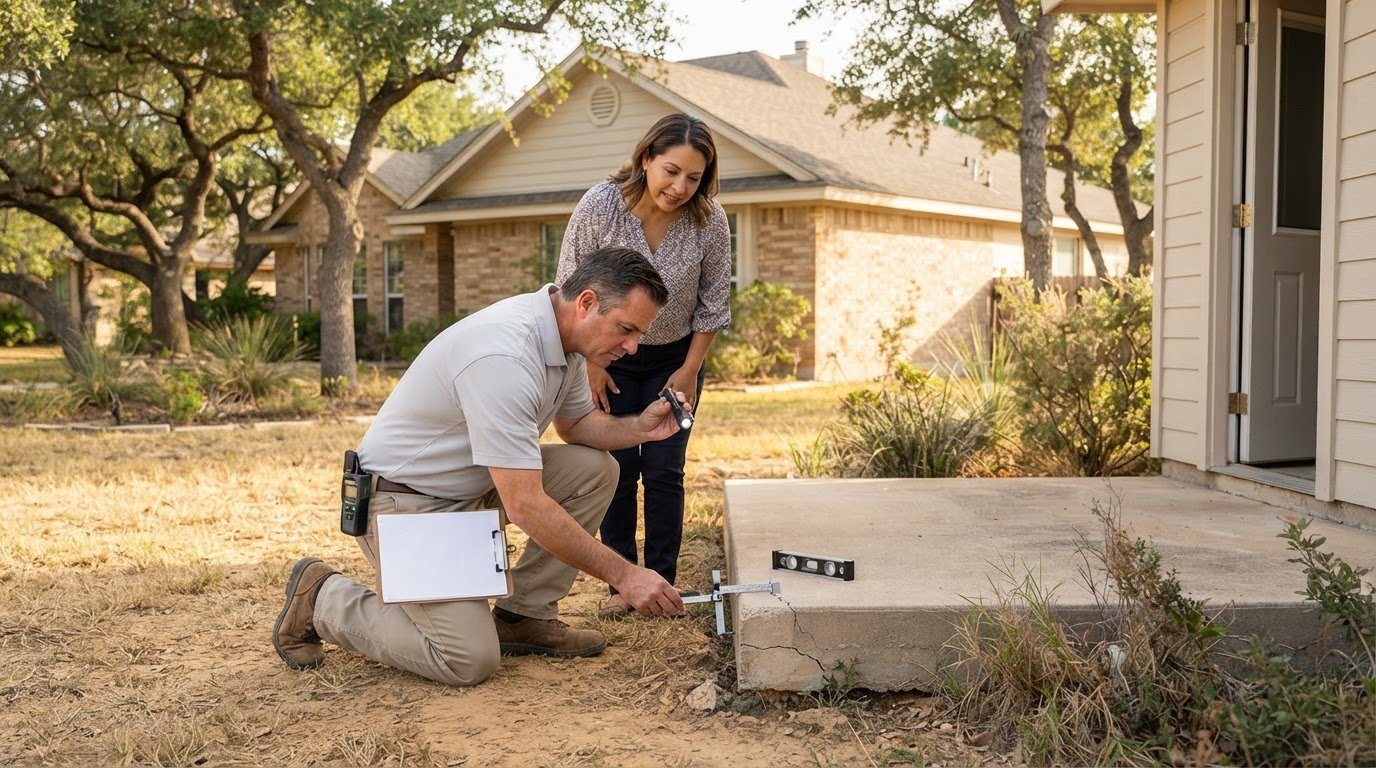
What if the crack you noticed is only one clue, not the whole story? A foundation inspection Victoria TX homeowners seek should connect visible signs, possible soil movement, and the home’s overall structure. A hairline crack, sticking door, or uneven floor can be concerning, but none alone confirms a foundation problem.
It’s reasonable to want clear answers before agreeing to repairs. Soil conditions and changes in moisture can affect a foundation, so an assessment should consider more than a single symptom. It can help put your observations in context and clarify whether they point to movement that needs further attention.
This guide explains which changes around your home deserve a closer look, what a structural assessment can help establish, and what details to gather before discussing repair needs. You’ll also learn how to take a practical next step without rushing into a decision. Hercules Foundation Repair provides residential and commercial foundation repair in Victoria, San Antonio, Austin, and Houston. If the evidence points to a structural concern, its repair expertise can help you understand the options for your property.
Key Takeaways
- A foundation assessment considers visible foundation and building conditions. A concerning sign alone doesn’t mean repairs are needed.
- A foundation inspection Victoria TX homeowners pursue can put symptoms in context, including how the home’s foundation type affects what matters.
- Record where cracks, sticking doors or windows, uneven floors, and visible separations appear, and note whether they change over time.
- Prepare for a productive discussion by gathering photos, relevant property history, and when you first noticed each concern.
- If structural repair is the next step, Hercules Foundation Repair serves Victoria, San Antonio, Austin, and Houston with residential and commercial foundation repair.
Foundation Inspection in Victoria, TX: What Questions Can It Answer?
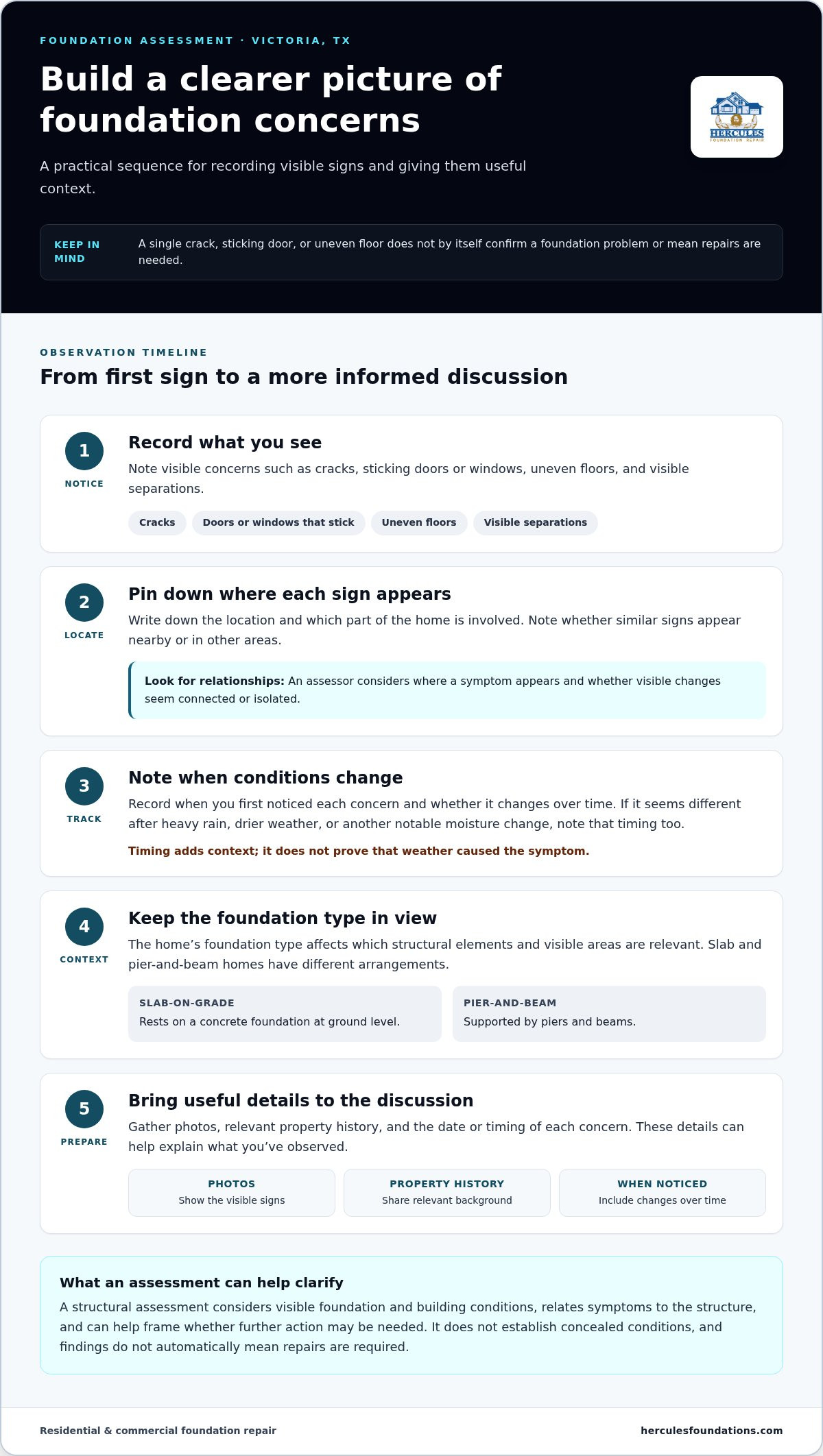
A structural foundation assessment considers visible foundation and building conditions to help explain concerns you’ve noticed. It can put cracks, sticking doors, or uneven areas into context, but findings don’t automatically mean repairs are needed. Useful questions include whether signs appear related, which parts of the structure they involve, and whether the observed condition suggests a need for further action.
A foundation-focused assessment differs from a general home or real-estate inspection. While general property inspectors such as lininspects.com survey overall visible conditions across a building, a structural assessment centers on the foundation and related signs. Its purpose is to understand the concern in relation to the structure and potential foundation repair, not to provide a broad review of every home system or a real-estate transaction report.
The right questions depend on the home. A slab foundation and a pier-and-beam foundation have different structural elements, so the relevant visible areas differ too. For background on types of foundations and engineering principles, it helps to understand how a foundation supports a structure. The home’s symptoms and accessible conditions also shape what can reasonably be observed.
What does a foundation inspection look for?
The focus is on visible conditions at the foundation and accessible structural areas, along with related signs elsewhere in the building. The assessor considers where a symptom appears, whether similar signs occur in other areas, and whether they seem connected or isolated. This context helps frame the concern, but it cannot establish concealed conditions or follow one fixed checklist for every property.
For example, a crack near a doorway can be considered alongside other visible changes in that area, rather than treated as a diagnosis on its own. The aim is to understand the pattern and discuss what it may indicate, not to assume every sign has the same cause.
When should a Victoria homeowner seek a structural assessment?
Consider seeking professional guidance when a concern persists, changes, or appears alongside other structural symptoms. In Victoria, a foundation inspection Victoria TX homeowners consider can help organize those observations into a clearer discussion of the home’s condition and potential repair needs.
A single cosmetic crack doesn’t establish its cause or severity. Note its location and whether it changes, and watch for other signs nearby. That record gives a foundation repair professional more useful context than viewing a crack in isolation. The goal is a measured next step, not a rushed repair decision.
How a Victoria Foundation Assessment Connects Symptoms to the Structure
A useful assessment looks for relationships, not just isolated signs. The location, direction, and pattern of visible changes can help frame questions about the structure. For example, a door that sticks near an area with other visible changes may provide different context than a door that sticks by itself. Neither observation proves a cause, but together, signs can guide a more informed discussion.
Structural movement is a change in a foundation’s position or shape relative to the structure it supports; the observation alone doesn’t determine whether repair is needed. That distinction matters. A foundation inspection Victoria TX homeowners consider should connect what they’ve noticed to the home’s support system and conditions, without treating every change as a repair diagnosis.
How slab and pier-and-beam foundations differ during an assessment
A slab-on-grade home rests on a concrete foundation at ground level. A pier-and-beam home is supported by piers and beams, creating a different arrangement of structural elements. As a result, visible observations relevant to one foundation type may not apply in the same way to the other. The slab foundation repair guide explains more about slab systems and their role in supporting a home.
For either type, the focus is on how visible symptoms relate to the structure, rather than on a one-size-fits-all checklist. A general overview of what to expect during a foundation inspection can also help homeowners understand common areas of attention.
Why soil moisture and timing matter in Victoria
Soil can change in volume as its moisture content changes. Depending on the ground and site conditions, wetting or drying may affect how soil supports a structure. Those general principles don’t establish what’s happening under a particular Victoria home, and local conditions can vary. An assessment should consider the property’s visible evidence rather than assume a specific soil cause from its location alone.
Timing adds useful context. Note if a crack, door, or floor condition seems different after heavy rain, drier weather, or another notable moisture change. Record what changed and when, but avoid assuming that weather explains the symptom. Patterns over time can make the conversation more precise.
Bring those observations into a discussion focused on the home’s condition and structural needs. If the findings point toward foundation repair, Hercules Foundation Repair’s foundation repair services can help you consider a practical next step for your property.
Which Foundation Symptoms Should Victoria Homeowners Document?
A clear record makes it easier to describe what you’re seeing and when it started. Focus on observable details, not conclusions about the cause. Cracks, sticking doors or windows, uneven floors, and visible separation may be useful to document, but each can have more than one explanation. A foundation repair professional can interpret the signs in the context of the home and its foundation.
| Observation | Location | When noticed | Whether it changes |
|---|---|---|---|
| Crack in a wall or floor | Room and specific wall or area | Date first seen, if known | Appears stable, intermittent, or changing |
| Sticking door or window | Room and which door or window | When it first became noticeable | Happens consistently or comes and goes |
| Uneven floor | Room and approximate area | When you first noticed it | Seems unchanged or more noticeable |
| Visible separation | Where two surfaces or materials meet | Date first observed | Stable or changing over time |
Photos can supplement your notes. Take a dated picture from a consistent viewpoint, with enough surrounding detail to show where the symptom is. If you photograph the same area again later, use a similar angle and distance. This helps document visible changes over time, though a photo by itself can’t establish what caused them.
What details should you record before the assessment?
For each concern, note the room or area, when you first noticed it, and whether it seems stable, intermittent, or changing. Mention if more than one room is affected. Gather relevant property history, such as earlier repairs or maintenance, and keep the details factual. Past work may provide useful context, but it doesn’t prove the cause of a current symptom.
Keep the language plain. “Crack above the living room doorway, first noticed in May” is more useful than a guess about settling. For a foundation inspection Victoria TX homeowners can prepare by bringing these observations together in one note or photo folder. You don’t need technical measurements; clear locations and dates are a practical start.
How to separate a visible symptom from a confirmed foundation problem
Describe what you see rather than assigning a diagnosis or repair method. A sticking door is an observation; it doesn’t establish why the door sticks. Several signs may help a professional interpret the overall pattern, but they still don’t determine which repair, if any, is appropriate.
Visible symptoms alone cannot determine the cause of foundation movement. A professional assessment considers the signs alongside the home’s structure and condition. Your record helps explain what has changed and where, leaving the cause and next steps to be evaluated in context.
How to Prepare for a Foundation Inspection in Victoria, TX
A little preparation can make a foundation inspection Victoria TX homeowners arrange more useful. You don’t need to diagnose the problem or measure the structure yourself. Your role is to make it easy to understand what you’ve observed, where it appears, and how it may have changed. Clear notes and access to relevant areas help keep the discussion focused on your home’s condition.
A simple checklist before the appointment
Set aside a few minutes to organize the details. Gather what you know, and don’t worry if some dates or history are uncertain. Labeling information as approximate is better than guessing.
- List visible concerns by location. Note the room, wall, doorway, floor area, or exterior spot so each observation is easy to find.
- Make access practical. Clear a path to the areas you want to discuss, including visible foundation areas that are easy to reach. Don’t move heavy items or attempt to uncover concealed spaces.
- Bring dated photos. Photograph each concern from a consistent angle, and keep the images together in a folder or album. Add a short caption with the location and date.
- Gather relevant property history. Note repairs or maintenance that may help explain the timeline, along with when you first noticed the current concerns.
Photos work best as a record, not as proof of a diagnosis. Dated photos paired with precise locations make it easier to discuss what changed, and where. If a symptom comes and goes, write that down too. The goal is clear communication, not a homeowner-led conclusion about the cause.
What to discuss after the structural findings
Once the visible conditions have been discussed, ask for a plain-language explanation of what was observed and what it may mean for the structure. You can also clarify what the findings suggest as a practical next step. A useful conversation connects any recommendation to the property’s observed condition and structural needs.
- Ask which observations appear related and which may be separate.
- Discuss whether the findings suggest monitoring, further evaluation, or a repair conversation.
- Ask what information supports a proposed repair, and how it relates to the affected area.
If uneven concrete surfaces are part of your concern, the concrete leveling options guide can help you understand that topic separately from structural foundation concerns. The right approach depends on what needs attention.
Bring your notes to a conversation about repair needs with a local foundation contractor. Hercules Foundation Repair serves Victoria with residential and commercial foundation repair, including slab and pier-and-beam foundations.
Foundation Inspection Next Steps with Hercules Foundation Repair in Victoria
Once you’ve gathered your observations, the next step is to discuss what they may mean for your home and whether foundation repair should be considered. A foundation inspection Victoria TX homeowners arrange can help clarify visible concerns, but repair recommendations should relate to the property’s observed condition and structural needs. Your notes and dated photos give the conversation a useful starting point without requiring you to diagnose the issue yourself.
How Hercules supports Victoria foundation repair needs
Hercules Foundation Repair is a family-owned South Texas contractor serving Victoria, San Antonio, Austin, and Houston. The company provides residential and commercial foundation repair, including work for slab and pier-and-beam foundations. Since these systems support a structure differently, the relevant repair discussion depends on the home’s foundation type and the conditions observed.
Not every uneven surface indicates a foundation concern. If the issue involves an uneven or sinking concrete surface, concrete leveling may be relevant; if signs point to structural foundation concerns, the conversation may center on foundation repair. Keeping those needs distinct helps focus attention on the right part of the property instead of assuming one solution fits every symptom.
Choose a clear next step for your foundation concern
When you discuss your concern, share where each sign appears, when you first noticed it, and whether it seems stable or changing. Bring photos taken from consistent viewpoints, along with any relevant repair or maintenance history. These details help explain the timeline and give a foundation repair professional context for discussing the property’s condition and possible repair needs.
You can ask for a straightforward explanation of which observations matter, how they relate to the structure, and what next steps may be appropriate. A measured discussion should connect any repair recommendation to the findings, rather than treating a single symptom as a reason to rush into work. If the concern involves a slab or pier-and-beam foundation, identifying the system can also help keep the conversation specific to your home.
There’s no need to arrive with a technical diagnosis. Start with what you’ve noticed and let the discussion focus on the condition of the property. That’s a practical way to move from uncertainty toward an informed decision.
If you have structural foundation concerns in Victoria, Hercules Foundation Repair provides foundation repair for local homes and businesses.
Take the Next Step with a Clear Plan
Uncertainty can make every new crack or stiff door feel like a warning. Instead of trying to predict what might happen, focus on getting a clear explanation of the conditions you’ve observed and what they mean for your home. A foundation inspection Victoria TX homeowners pursue can be the start of a more informed conversation, not a commitment to repair.
Use that conversation to understand the options in front of you and decide what makes sense for your property. If you’re advised to monitor an area, clarify what changes would be worth noting. If foundation repair is recommended, make sure the discussion connects the proposed work to the observed structural concern. A sound decision starts with understanding, not pressure.
When you’re ready to discuss your home’s foundation concerns, contact Hercules Foundation Repair about foundation repair in Victoria.
Frequently Asked Questions
What does a foundation inspection in Victoria, TX include?
A foundation assessment generally considers visible foundation conditions and related signs in the building, with areas of focus shaped by the home and the concern. For example, the relevant observations for a slab home differ from those for a pier-and-beam home. A foundation inspection Victoria TX homeowners seek can help put reported symptoms in context, but it can’t guarantee a hidden condition will be found or establish a repair plan from one visible sign alone.
When should I get a foundation inspection for my Victoria home?
Consider seeking professional guidance if a concern persists, changes, or appears with other noticeable changes in the home. A new crack, a floor that feels different underfoot, or a door that recently began sticking may be worth documenting. These signs don’t prove the foundation is failing. If a change happens suddenly or affects safe access, prioritize safety and arrange appropriate help rather than entering or using an area that seems unsafe.
Can a foundation inspection tell me exactly what caused a crack?
Not necessarily. The crack’s location and appearance can be considered alongside other visible conditions, but a single observation may not reveal a definitive cause. Building materials, moisture conditions, movement, and prior repairs can all provide relevant context. Share what you know about the crack’s history, including any earlier repairs, and ask for an explanation of what the available observations support and what remains uncertain.
How much does a foundation inspection in Victoria, TX cost?
There isn’t one price that applies to every property and assessment. The work involved depends on the property’s circumstances and the scope of the assessment. Hercules Foundation Repair specializes in residential and commercial foundation repair, including slab and pier-and-beam foundations. If your concern may involve structural foundation repair, describe the property and the issue so the discussion can focus on your repair needs.
Is a foundation inspection the same as a home inspection?
No, the focus differs. A general home inspection considers a range of visible systems and components, while a structural assessment focuses on the foundation and related structural concerns. A foundation contractor’s repair-focused discussion also isn’t automatically a substitute for an inspection required as part of a real-estate transaction. Be clear about the question you need answered so you can seek the appropriate kind of assessment for your situation.
What should I do before a foundation inspection?
Make your notes easy to use: identify each concern by room or exterior area, include when you first noticed it, and bring any photos or relevant repair records. You can also note whether a symptom happens continuously or only sometimes. If you don’t know when it began, say so rather than guessing. Clear, accurate observations help keep the discussion grounded in what you’ve actually seen.
What happens if an inspection finds foundation movement?
Movement should be discussed in relation to the observed conditions and the structure, not treated as an automatic repair order. Ask what was seen, why it matters, and whether monitoring, further evaluation, or a repair discussion is appropriate. Keep the explanation and any next-step recommendations with your property records. If repair is indicated, Hercules Foundation Repair serves homeowners and businesses in Victoria, San Antonio, Austin, and Houston.