
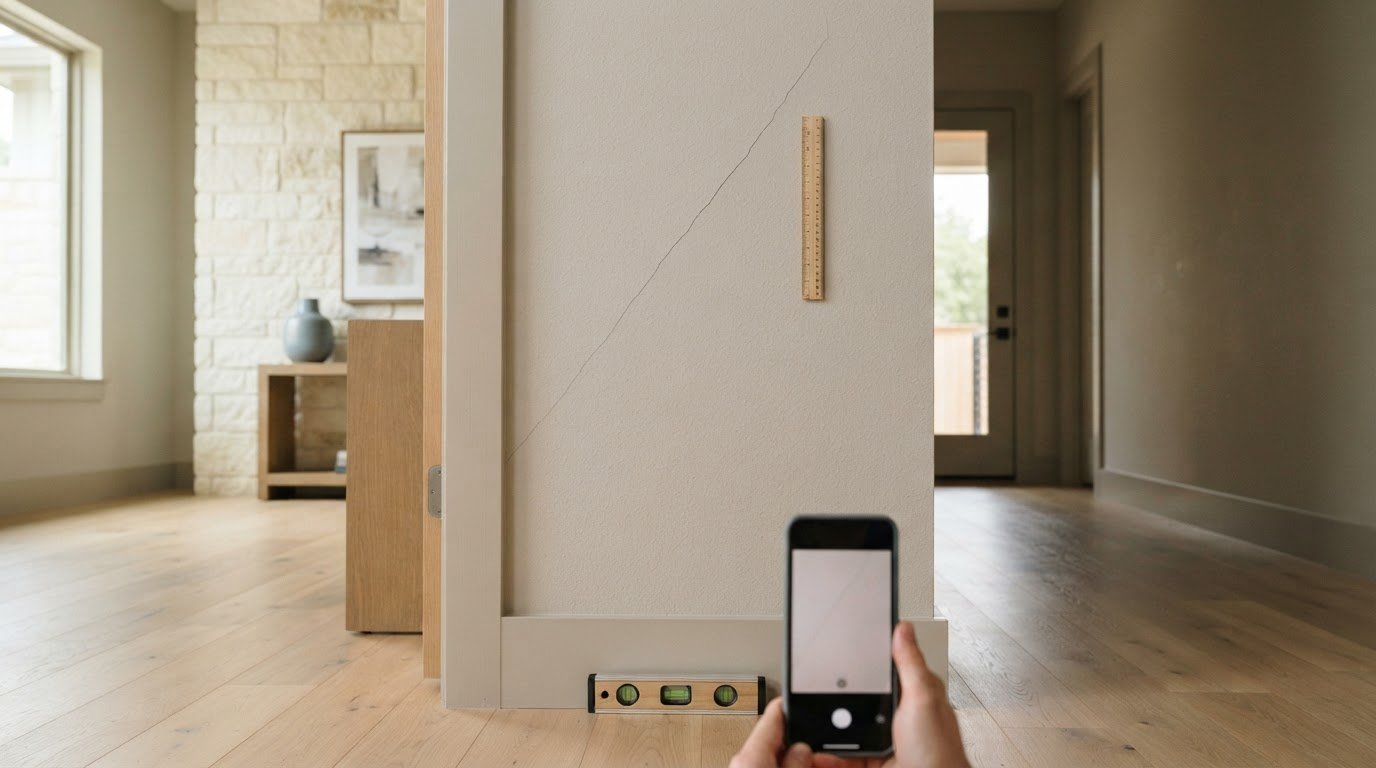
Does a diagonal crack above your door mean the foundation is moving? A search for “diagonal cracks above doors foundation” can quickly lead to alarming conclusions, but a crack alone isn’t a diagnosis. Its direction and location offer clues to investigate, while changes in drywall, framing, or other conditions may also explain it.
It’s understandable to worry that a small crack could grow or affect how a door or window works. The next step is to look at the full pattern, not just one line in the wall. This article explains what diagonal cracks above doors may suggest, which nearby changes to note, and how to document what you see. You’ll also learn when monitoring may be reasonable and when a professional opinion can help clarify the cause. The right response depends on the evidence and your home’s foundation type, so don’t assume every crack needs repair.
Key Takeaways
- Diagonal cracks near a doorway can form when drywall splits at an angle; the pattern helps guide what to check next.
- Expansive clay is one factor to consider in Texas, but it doesn’t establish the cause of a crack above a door.
- Compare the crack with other changes, such as sticking doors or additional wall cracks, rather than relying on one clue.
- Photograph the crack from consistent angles, date each image, and note its location and any changes.
- The appropriate next step may be continued observation, further evaluation, or foundation repair, depending on the evidence and foundation type.
What Can a Diagonal Crack Above a Door Mean for Your Foundation?
A diagonal crack above a door may reflect movement in the home, including possible foundation movement, but its appearance alone can’t confirm a foundation problem. It’s a slanted split in the drywall near the top corner of a doorway. The crack is a visible symptom, not a diagnosis. It may point to stress in the wall, but it doesn’t identify the cause, severity, or repair needed.
People searching “diagonal cracks above doors foundation” are often trying to determine whether that pattern proves the foundation is shifting. It doesn’t. Consider where the crack is, whether it changes over time, and whether other parts of the home show signs of movement.
Why Do Cracks Appear Above Door Openings?
A doorway interrupts an otherwise continuous wall. The wall must transfer loads around the opening, so stress may become visible near the corners, where drywall can crack. Depending on the home’s construction, framing around the opening, drywall seams, or a lintel, which supports an opening in masonry, can affect where a crack appears and how it runs.
If one part of a home moves differently from another, that movement can put stress on walls and openings. This is called differential movement. Structural settlement is one possible source, but construction details and the crack’s direction matter too. A slanted line above one doorway doesn’t point to one cause on its own. Similar-looking cracks can develop under different conditions.
Does a Diagonal Crack Always Mean Foundation Damage?
No. A single crack can’t establish whether the foundation is damaged, how serious a problem may be, or whether repair is needed. It may be a sign of differential movement, but it can also relate to drywall, joints, or framing. The pattern deserves attention, not an automatic conclusion.
Look at what changes over time and across the home. Is the crack becoming longer or more noticeable? Are nearby doors or windows harder to open or close? Are there other cracks near openings or elsewhere on the walls? These observations provide context, but none confirms a diagnosis by itself.
If you notice a new crack, record its location and take a dated photo so you can compare it later. A stable, isolated mark and a changing crack accompanied by other symptoms may call for different next steps. If the pattern progresses or concerns you, a professional assessment can help determine whether foundation movement is involved.
How Foundation Movement Can Create Diagonal Cracks Above Doors
Foundation movement can create stress that travels through a home’s framing and appears as a crack in the drywall above a doorway. If one part of the foundation moves differently from another, the wall may be pulled or compressed unevenly. This differential settlement can affect openings because the wall and framing have to accommodate movement. The crack’s direction alone doesn’t reveal what moved or why.
A crack pattern is a clue, not a diagnosis. Its meaning depends on the foundation type, the home’s construction, and what other changes appear over time. The same visible line may have different explanations in two homes, so consider the broader setting rather than assuming every diagonal crack has the same cause.
How Soil and Seasonal Moisture May Affect Texas Foundations
In parts of Texas, expansive clay can change volume as its moisture content changes. That movement may affect the soil supporting a home, but properties don’t all sit on the same soil or respond in the same way. Local drainage, site conditions, and foundation design all influence how moisture changes affect a structure.
A crack above a door can’t confirm that soil movement is involved. Look at the wider picture, including visible drainage conditions and whether changes are occurring elsewhere in the home. NC State Extension’s guide to thoroughly inspect the structure offers homeowners a broader framework for considering features such as the foundation, drainage, and windows.
Why Doorways Can Make Wall Movement Easier to Notice
A doorway is an opening in the wall, and relative movement may become visible around its corners. The drywall crack is a surface symptom; the framing behind the drywall and the foundation below it are separate parts of the structure. A door may become harder to operate at the same time, but neither symptom alone identifies the cause.
Foundation type matters, too. In a slab home, movement in different areas of the slab may transfer stress into the walls above. In a pier-and-beam home, floor framing is supported by piers and beams, so movement in those supports can affect the structure differently. These systems aren’t interchangeable, and an assessment should account for how the home is built.
If a crack keeps changing or appears alongside door changes and other wall symptoms, consider having the pattern assessed rather than relying on the drywall alone. Homeowners in Hercules Foundation Repair’s stated South Texas service area can learn more about foundation repair options. The appropriate next step depends on the evidence and foundation type, not the crack pattern by itself.
Foundation Crack or Another Cause? Compare the Clues Before You Conclude
A crack above a doorway is one clue, not a verdict. To understand whether a concern about diagonal cracks above doors foundation may involve movement, consider whether other changes are present, where they occur, and whether the crack is changing. The examples below can help organize your observations, but none can confirm a cause on its own.
| What you notice | What it may suggest |
|---|---|
| A crack above one doorway, with no other noticeable changes | An isolated finish or framing change is one possibility; this alone can’t confirm or rule out foundation movement. |
| Cracks in multiple areas, or a crack that appears to be changing | A broader pattern of movement may be worth assessing, though the pattern doesn’t identify its cause. |
| A crack along with a sticking door or a sloping floor | Several symptoms together provide more context for a professional than a crack by itself. |
| A crack near a recent alteration or visible moisture | The change may be relevant to finish materials or framing; its connection, if any, needs site-specific evaluation. |
What Other Signs May Strengthen a Foundation Concern?
Note changes beyond the doorway, such as other wall cracks, doors that have become harder to open or close, or floors that seem sloped. A professional can consider where these symptoms occur and whether they form a related pattern. Their presence may make further evaluation more appropriate, but no single sign or combination of signs proves foundation failure.
Photos can help track what you’ve observed, but they can’t show the full structure or establish whether it’s safe. Don’t rely on crack direction, appearance, or a picture alone to decide what’s happening. Record the location of each symptom and whether it seems to be changing. Those details can help guide an in-person assessment.
Could Drywall, Framing, or a Recent Change Explain the Crack?
Possibly. Drywall finishes and joints can move or crack, and changes to framing may affect nearby surfaces. Visible moisture or a recent alteration may also be relevant context. These are possibilities, not conclusions. Without examining the home, it isn’t possible to assign a specific cause to a particular crack.
Before seeking an assessment, note when you first saw the crack, any changes made nearby, and whether you’ve noticed moisture or other symptoms. Sharing those details helps a professional consider foundation-related and non-foundation explanations instead of judging the situation by one mark on the wall.
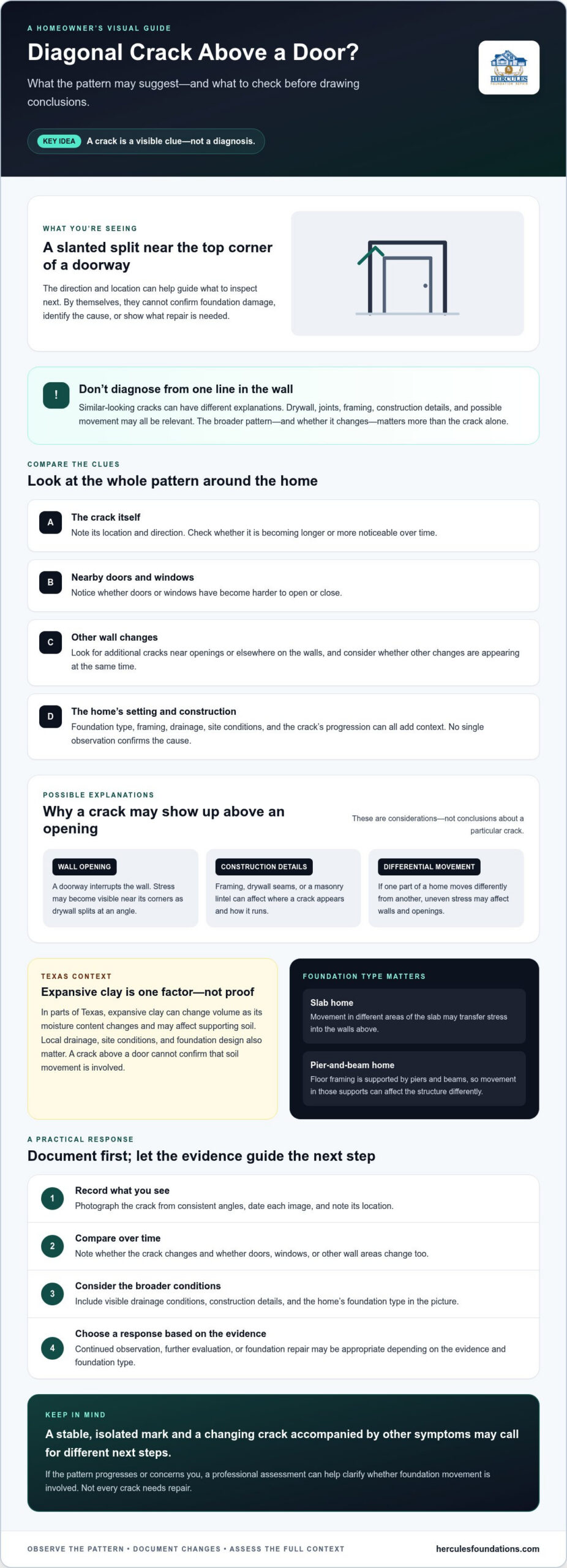
What to Do If You Find a Diagonal Crack Above a Door
A crack is easier to assess when you can show where it is and how it changes. Start with a simple record, then consider whether the pattern and any related symptoms warrant a professional opinion. Home observations help explain what you’ve noticed, but they can’t confirm the cause or replace an assessment.
How to Document a Crack Without Making a Diagnosis
Before filling, painting over, or otherwise concealing the crack, record its visible condition. Take a clear, dated close-up, then another photo from farther back so its position above the doorway is easy to identify. Use similar angles and lighting for later photos to make comparisons more useful.
Keep a short note with the location and any changes you observe. For example, record whether the crack seems longer, whether another crack has appeared nearby, or whether the door’s operation has changed. You can also note a floor-level observation, visible moisture, or a recent alteration in the area. Describe what you see rather than labeling it as foundation damage.
- Photograph the crack and the full doorway, and add the date.
- Write down the room and the crack’s position, such as above the upper left corner.
- Record related changes without assuming they share one cause.
If you know the home has a slab foundation, that detail can help frame the next conversation. Hercules Foundation Repair’s slab foundation repair guide provides more information for homeowners considering slab-related concerns. Foundation type is useful context, not proof that the crack comes from the foundation.
When Should You Ask for a Professional Assessment?
Consider asking a qualified foundation professional for an assessment if the crack appears to be progressing or occurs alongside other changes, such as additional wall cracks or doors that have become difficult to operate. A professional can evaluate the broader pattern and consider the foundation type, rather than drawing conclusions from a photograph or search results for diagonal cracks above doors foundation.
When you make contact, share the crack’s location, dated photos, observations over time, and the foundation type if you know it. Ask whether the company serves your area. Homeowners in San Antonio, Austin, Houston, or Victoria should verify current availability. An assessment can help clarify whether further evaluation, monitoring, or foundation repair is appropriate. To discuss foundation concerns with Hercules Foundation Repair, contact the team about an assessment.
How a Foundation Contractor Can Assess and Address the Cause
A sound recommendation starts with understanding what is happening, not assuming that a crack calls for foundation repair. During an assessment, a qualified professional can consider the crack’s location and progression alongside other symptoms, foundation type, and relevant site conditions. Measurements may be part of the professional evaluation, but a homeowner can’t diagnose movement from a photo or one observation.
Ask what evidence supports the findings and how it relates to the recommended next step. Depending on the assessment, that step might be monitoring a condition, gathering further professional information, or considering foundation repair. A clear explanation should connect the observed conditions to the proposed approach rather than treating every crack as proof that work is needed.
What May Happen During a Foundation Assessment?
The professional may review where cracks appear, whether doors or floors have changed, and whether symptoms occur in more than one area. They’ll also need to know whether the home has a slab or pier-and-beam foundation, if that information is available. Site observations and appropriate measurements can help evaluate the broader pattern. Bring dated photos and notes, and ask which findings indicate movement and which remain uncertain.
Useful questions include: What did you observe beyond the crack? What supports the conclusion about its cause? Are there reasonable options besides immediate repair? These questions can help you understand the assessment before deciding how to proceed.
Which Foundation Repair Approach Might Be Considered?
There isn’t one repair approach that fits every home. Slab and pier-and-beam foundations are built differently, and site conditions and professional findings affect which response may be appropriate. A recommendation should follow an assessment of the cause and extent of movement, not the direction of a crack alone. For some conditions, continued monitoring or further evaluation may make more sense than repair. In other cases, the evidence may support discussing foundation repair.
Hercules Foundation Repair is a family-owned South Texas foundation contractor with over 45 years of experience. Its work includes slab and pier-and-beam foundation repair. Homeowners who have documented changes and want to discuss their observations can contact Hercules Foundation Repair. The goal is to understand the evidence and foundation type before settling on a next step, not to assume every crack needs repair.
Take the Next Step With Confidence
A diagonal crack above a doorway is a clue to investigate, but it doesn’t confirm foundation movement by itself. Consider the full pattern: whether the crack changes, whether other cracks appear, and whether doors or floors show related changes. Clear, dated photos and notes can help you explain what you’ve observed.
The right response depends on the evidence and your home’s foundation type. A professional assessment can help clarify whether monitoring, further evaluation, or foundation repair is appropriate. If you’re weighing what diagonal cracks above doors foundation concerns may involve, Hercules Foundation Repair is a family-owned business serving South Texas for over 45 years, with residential and commercial slab and pier-and-beam foundation repair services.
Talk with Hercules Foundation Repair about your foundation concerns. A careful next step can replace uncertainty with a clearer understanding of your home.
Frequently Asked Questions
Do diagonal cracks above doors always mean foundation problems?
No. A diagonal crack above a doorway can result from foundation movement, but drywall joints, framing changes, or other conditions may also contribute. The phrase “diagonal cracks above doors foundation” describes a concern to investigate, not a diagnosis. Consider whether the crack is changing and whether other symptoms, such as sticking doors or cracks elsewhere, are present. A professional assessment can help determine the cause.
Are diagonal cracks above doors serious?
They can be, but the crack’s direction or appearance alone can’t establish severity. A stable, isolated drywall crack may have a different explanation from a changing crack accompanied by sticking doors, sloping floors, or additional wall cracks. Photograph and date the crack, then compare it over time. If you notice progression or several changes together, ask a qualified foundation professional to assess the broader pattern.
Can foundation settling cause cracks above doorways?
Yes. If one part of a foundation settles or moves differently from another, stress can transfer through the structure and appear as a crack near a doorway. This is one possible explanation, not proof of the cause. Homes with slab and pier-and-beam foundations can respond differently, and construction details also matter. A professional can consider the foundation type and surrounding symptoms when assessing whether movement is involved.
How can I tell if a crack above a door is getting worse?
Take dated photos from consistent angles, including one that shows the crack’s position above the full doorway. Record its location and note visible changes, such as the crack extending or other symptoms appearing. Also track whether a nearby door becomes harder to open or close. These records can make changes easier to describe, but photos and home monitoring can’t confirm the cause or replace a professional assessment.
Should I repair a diagonal crack above a door myself?
Contact a qualified foundation contractor if the crack appears to be progressing or occurs alongside other concerning changes, such as sticking doors, sloping floors, or cracks in separate areas. Share dated photos, the crack’s location, and any changes you’ve noticed. Mention the foundation type if known. Hercules Foundation Repair serves San Antonio, Austin, Houston, and Victoria, so homeowners in those cities can ask about current service availability.