
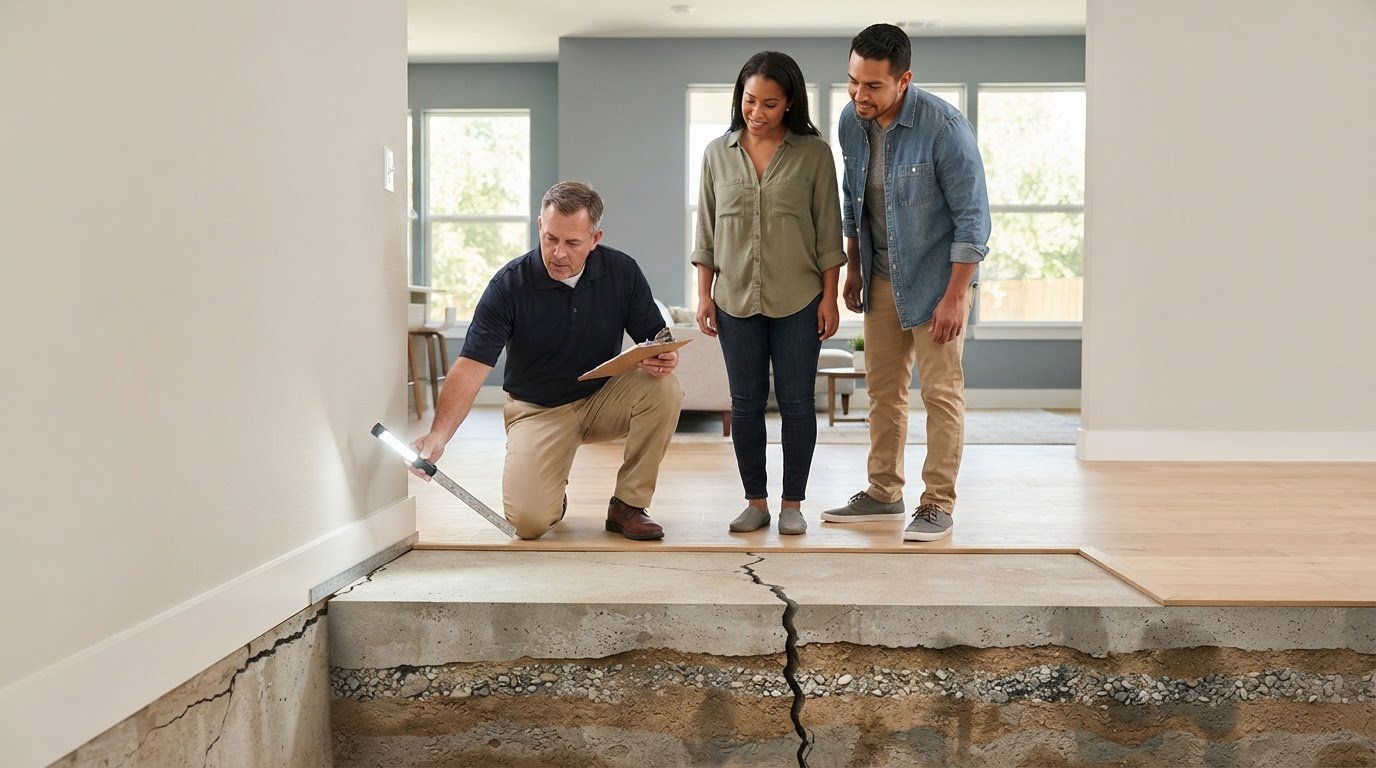
Could a thin crack need only surface sealing, while a less obvious one points to a deeper foundation problem? The cost to fix cracked foundation damage depends on what’s causing it and how much work the structure needs, not just how the crack looks. That can make estimates difficult to compare, especially when you want to understand what work your Texas home actually needs.
Crack direction, signs of movement or water intrusion, foundation type, and access to the affected area can all shape the repair scope. A vertical crack may have a different cause and solution than a horizontal crack, so appearance alone isn’t enough to choose a fix.
This guide explains the conditions that affect an estimate, compares common repair approaches, and suggests what to document before discussing your property. Hercules Foundation Repair provides residential and commercial slab and pier-and-beam foundation repair in San Antonio, Austin, Houston, and Victoria. Understanding the symptoms is a practical place to start.
Key Takeaways
- The cost to fix cracked foundation damage depends on the cause, access, foundation type, and repair scope, not just the crack’s appearance.
- Crack location and related signs of movement or water intrusion can help put the issue in context, but they don’t diagnose it on their own.
- Compare repair options by purpose and scope, from sealing an opening to addressing structural movement.
- A clear estimate should identify the affected area, explain the repair’s purpose, and describe the proposed work.
- Document changes and related symptoms to help clarify the repair needs for a slab or pier-and-beam foundation.
Cost to Fix a Cracked Foundation: Why the Visible Crack Is Only One Factor
A new crack, or one that seems to be widening, can leave you unsure how much repair your home needs. The cost to fix cracked foundation damage depends on more than the line you can see. The cause, foundation type, access to the affected area, and structural scope all influence the work. A narrow crack may need attention if it’s changing, while a wider crack doesn’t reveal its cause by itself.
The cause and any ongoing movement matter more than appearance alone. Sealing treats the opening at the surface. Stabilizing a moving foundation addresses the underlying structural concern and can involve a different, broader scope. The right plan starts with understanding the crack’s context, not simply measuring its width.
Which foundation cracks may need closer attention?
Cracks may run vertically, horizontally, or in a stair-step pattern through masonry. Their direction can offer useful clues, but none proves on its own that a foundation needs structural repair. Soil behavior is also part of the broader picture: Soil mechanics examines how soil behaves, a factor considered when assessing foundation stability.
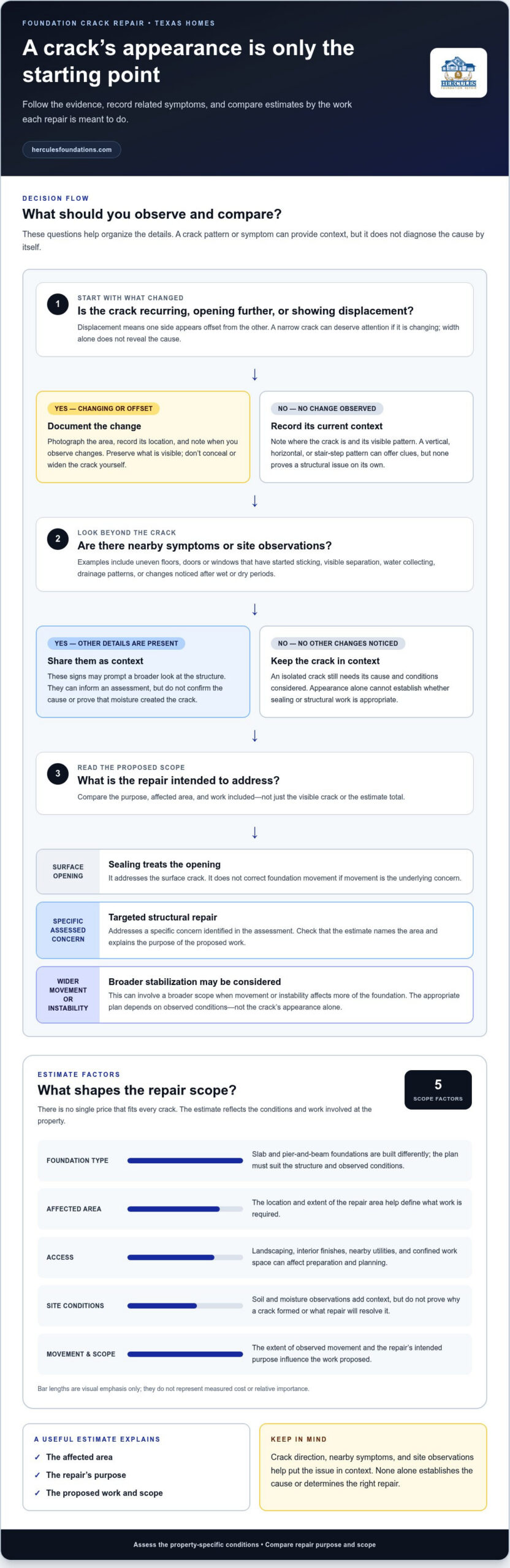
Pay attention to changes over time. Note whether a crack is recurring, opening further, or showing displacement, where one side appears offset from the other. Nearby signs, such as doors or windows that have started sticking, can also help put it in context. Photograph the area, record its location, and note when you observe changes. Don’t conceal or widen the crack yourself. Preserving what’s visible can help clarify what needs attention.
Why a crack does not have one standard repair price
Two cracks that look alike may have different causes. One may be limited to the surface and need sealing; another may be connected to foundation movement and call for stabilization. The repair method and scope depend on the foundation type, the affected area, access for the work, and the conditions observed.
That distinction matters in both slab and pier-and-beam homes. Surface treatment can close an opening, but it won’t correct movement if the foundation needs support. On the other hand, broader structural work may not be appropriate for a crack that doesn’t indicate foundation movement. There’s no single price that fits every crack. A property-specific assessment helps identify the repair’s purpose and the work involved, giving you a clearer basis for reviewing an estimate.
What Drives the Cost to Repair Foundation Cracks in Texas?
An estimate reflects the work needed for the property’s specific conditions, not just the crack itself. Foundation type, the affected area, access to the work zone, and the extent of any movement all shape the scope. In practical terms, the estimate should account for the foundation, repair area, access, site conditions, and the issue the work is intended to address.
Crack location and nearby symptoms add context. A crack accompanied by uneven floors, sticking doors, or visible separation may prompt a broader look at the structure than an isolated crack with no other changes. These signs don’t confirm a cause, but they’re useful details to share during an assessment.
How foundation type and access affect the repair scope
Slab and pier-and-beam foundations are built differently, so the repair plan must suit the structure and observed conditions. For slab-specific context, see this slab foundation repair guide. The foundation requirements chapter from the International Code Council is a reference for residential foundation construction, but it doesn’t determine the right repair for a particular home.
Access matters, too. Landscaping, interior finishes, nearby utilities, and available work space can affect how a project is planned. A crack behind finished surfaces or in a confined area may require different preparation from one that’s easy to reach. These factors influence the practical scope, not just the visible length of the crack.
How soil, moisture, and movement can influence an estimate
Changes in soil moisture may contribute to ground movement, but that possibility alone doesn’t establish why a crack formed at a Texas property. Conditions vary from site to site—much like how property owners evaluating foundation repair Tallahassee must factor in distinct local soil and moisture conditions—so an assessment should consider the property, foundation type, crack pattern, and evidence of movement together rather than assume one regional cause.
Note what you’ve observed around the home, including drainage patterns, areas where water collects, or changes after wet or dry periods. These observations can inform an assessment, but they don’t prove that moisture caused the crack or that changing drainage will resolve it. A specialist considers them alongside the structure and symptoms when defining the repair scope. For more information about foundation repair, visit Hercules Foundation Repair.
Foundation Crack Repair Options: Compare the Scope Before Comparing Estimates
Estimates are easier to understand when you compare what each proposed approach is meant to do. Sealing treats the opening. Targeted structural repair addresses a specific assessed concern, while broader stabilization may be considered when movement or instability affects a wider part of the foundation. The appropriate approach depends on the foundation type, observed movement, and site conditions, not simply the crack’s appearance.
These categories describe different purposes, not a diagnosis. A crack description or photo alone can’t establish which repair your property needs. Compare the issue each scope is intended to address, along with the area and work included.
| Repair purpose | Situations considered | What the work is intended to address |
|---|---|---|
| Cosmetic or surface sealing | An opening assessed as not requiring structural stabilization | Seals the visible crack; doesn’t, by itself, correct foundation movement |
| Targeted structural repair | A specific area with an assessed structural concern | Addresses the identified concern in that portion of the foundation |
| Broader stabilization | Movement or instability assessed across a wider area | Supports or stabilizes the foundation according to the project scope |
When crack sealing may differ from structural foundation repair
Sealing focuses on closing the opening, which may help limit water entry where appropriate. Structural repair has a different purpose: addressing assessed movement or instability in the foundation. If a crack reflects an underlying structural issue, surface treatment alone may leave that cause untouched. The cost to fix cracked foundation damage therefore depends on whether the work is limited to the opening or must address a broader structural concern.
A photo or short description can’t settle that distinction. The crack’s location, changes over time, nearby symptoms, and foundation type all help inform an assessment. A repair plan should make clear what the proposed work is intended to address.
When foundation repair and concrete leveling serve different needs
Foundation repair addresses the foundation’s structural condition. Concrete leveling focuses on correcting uneven concrete surfaces. For example, movement affecting a home’s foundation is a different concern from a sunken walkway or uneven exterior slab. A surface-level fix doesn’t automatically stabilize a foundation, and foundation repair isn’t automatically the right approach for every uneven concrete area.
Hercules Foundation Repair provides slab and pier-and-beam foundation repair, as well as concrete leveling for uneven concrete. Read this concrete leveling comparison guide for more context on that separate repair need. Compare estimates by purpose, affected area, and proposed work rather than assuming methods with different scopes are interchangeable.
How to Understand a Foundation Crack Repair Estimate
An estimate is most useful when it explains the work behind the total. Read it as a description of the assessed issue and proposed solution, not just a figure to accept or compare. The cost to fix cracked foundation damage can reflect different repair areas and purposes, so estimates may describe different projects.
Check whether the proposed work connects the observed condition to a specific repair purpose. Then review what’s included, what the plan assumes about site access, and whether site conditions could change the scope. This helps you understand what the estimate covers and what may need clarification.
What a clear repair scope should explain
A useful scope should identify the affected foundation area, describe the observed issue, and state what the proposed repair is intended to address. It should explain the repair approach in language you can follow, including how that approach relates to the assessed condition. For example, a plan to seal a crack has a different purpose from work intended to address structural movement.
Look for practical details as well. The estimate should make clear what preparation and access are assumed, which work is included, and what site conditions could affect the project scope. If it uses an unfamiliar structural term, the term’s meaning and relevance to the proposed work should be clear. These details help you understand the reasoning behind the plan.
How to compare estimates without focusing only on the total
Review estimates side by side, but compare the described work rather than treating the totals as a direct measure of value. Use this checklist:
- Diagnosis: What condition is the repair intended to address?
- Repair area: Which parts of the foundation are included?
- Method and purpose: Is the work sealing a crack, addressing a targeted structural concern, or stabilizing a wider area?
- Preparation and access: What work-area conditions does the plan assume?
- Inclusions and exclusions: What is part of the stated scope, and what could require a change?
- Follow-up: Does the estimate explain any planned follow-up or what happens if site conditions differ from the assumptions?
Different estimates may cover different areas, conditions, or repair goals. Clarify structural terms you don’t recognize, and make sure you understand what the proposed work is intended to accomplish. Comparing those details gives you a sounder basis for reviewing the plan than focusing on the headline total alone.
For more information about foundation repair, visit Hercules Foundation Repair.
Get a Foundation Crack Repair Assessment from Hercules
You don’t need to diagnose the crack yourself to take a useful next step. Record what you’ve noticed, share relevant details about the property, and get a professional assessment to understand whether the concern calls for surface work, structural repair, or another scope. A clear record of changes and related symptoms can help put the proposed repair in context.
What to note before discussing a foundation crack
Make a simple record while the crack is easy to track. Note its location, when you first noticed it, and whether it appears to have widened, returned, or shifted. Dated photos can help show visible changes over time.
- Describe nearby symptoms, such as doors that stick, uneven floors, or additional wall cracks.
- Share what you know about the foundation type, such as slab or pier-and-beam.
- Note relevant observations around the property, including areas where water collects or changes in the crack after wet or dry periods.
These observations provide useful context, but they don’t establish the cause or replace a professional assessment. Avoid filling, widening, or otherwise altering the crack before recording its condition. A straightforward history of what you’ve seen can help focus the discussion.
Discuss a property-specific repair plan with Hercules
Understanding the cost to fix cracked foundation damage starts with identifying the condition and the work needed to address it. Hercules Foundation Repair provides residential and commercial repair for slab and pier-and-beam foundations.
Hercules serves San Antonio, Austin, Houston, and Victoria. Share the crack’s location, any changes you’ve observed, and related symptoms when discussing your foundation repair needs. Understanding the assessed condition and proposed scope can help you make a considered decision instead of guessing from appearance alone.
Take the Next Step Toward a Clear Repair Plan
The cost to fix cracked foundation damage depends on what’s causing the crack and the work needed to address it. Appearance alone can’t tell you whether sealing, targeted structural repair, or broader stabilization is appropriate. A property-specific assessment connects observed symptoms to a repair scope, helping you understand what an estimate proposes before making a decision.
Start by documenting the crack’s location, any changes, and related symptoms. Then review whether the proposed work identifies the affected area, explains its purpose, and fits the assessed condition. Those details make the next step more manageable, even if you’re still unsure what the crack means.
Hercules Foundation Repair provides residential and commercial slab and pier-and-beam foundation repair in San Antonio, Austin, Houston, and Victoria. If you have concerns about a crack or an estimate, contact Hercules Foundation Repair to discuss your foundation repair needs.
Frequently Asked Questions
How much does it cost to fix a cracked foundation?
The cost to fix cracked foundation damage depends on the cause and repair scope, so there’s no single price that applies to every property. A crack needing surface sealing is different from one connected to foundation movement that calls for structural work. Foundation type, affected area, site access, and preparation also matter. A property-specific assessment helps clarify the work needed and what an estimate covers.
What factors affect the cost of foundation crack repair?
Key factors include foundation type, the location and extent of the affected area, access for the work, and whether the foundation shows movement. The repair method depends on what the work needs to address, such as sealing an opening or stabilizing a structural concern. Related symptoms, preparation needs, and site conditions can also shape the scope. Review the proposed work, not just the crack, to understand an estimate.
Can a foundation crack be repaired without fixing the whole foundation?
Yes. A repair may be limited to a particular crack or affected area if the assessment shows that broader stabilization isn’t needed. But if the crack relates to movement or instability beyond that spot, sealing or patching it alone may not address the underlying concern. The appropriate scope depends on the foundation and observed conditions. A repair plan should state which area it covers and what the work is intended to correct.
Are foundation cracks always a sign of structural damage?
No. A foundation crack doesn’t automatically mean there’s structural damage. Some cracks may be limited to the surface, while others can be associated with movement or pressure affecting the structure. Direction and width can offer clues, but they don’t establish the cause by themselves. Watch for changes over time, displacement, recurring openings, or nearby symptoms such as sticking doors or uneven floors, and share those observations during an assessment.
Is it cheaper to seal a foundation crack or repair the foundation?
Sealing a crack may involve a narrower scope than structural foundation repair, but the approaches address different problems. Sealing treats the opening; structural work is intended to address an assessed concern such as movement or instability. If the foundation is moving, sealing alone may leave the underlying issue unresolved. The suitable approach depends on the condition, so compare the purpose and included work rather than assuming the smallest scope is the right fix.
How do I know whether a foundation crack is getting worse?
Document the crack over time with dated photos and notes about its location and visible changes. Look for widening, a recurring opening, or displacement where one side appears offset from the other. Also note related changes, such as new wall cracks, sticking doors, or uneven floors. These signs don’t diagnose the cause, but they provide useful context. Avoid hiding or widening the crack, and share your records when discussing the concern.
Does foundation repair cost more for a slab or pier-and-beam foundation?
Neither foundation type is automatically more expensive to repair. The cost depends on the assessed condition, affected area, access, and work required. Slab and pier-and-beam foundations may need different repair approaches. Hercules Foundation Repair works on both types for residential and commercial properties in San Antonio, Austin, Houston, and Victoria. A property-specific scope helps explain which work applies to your foundation and why.