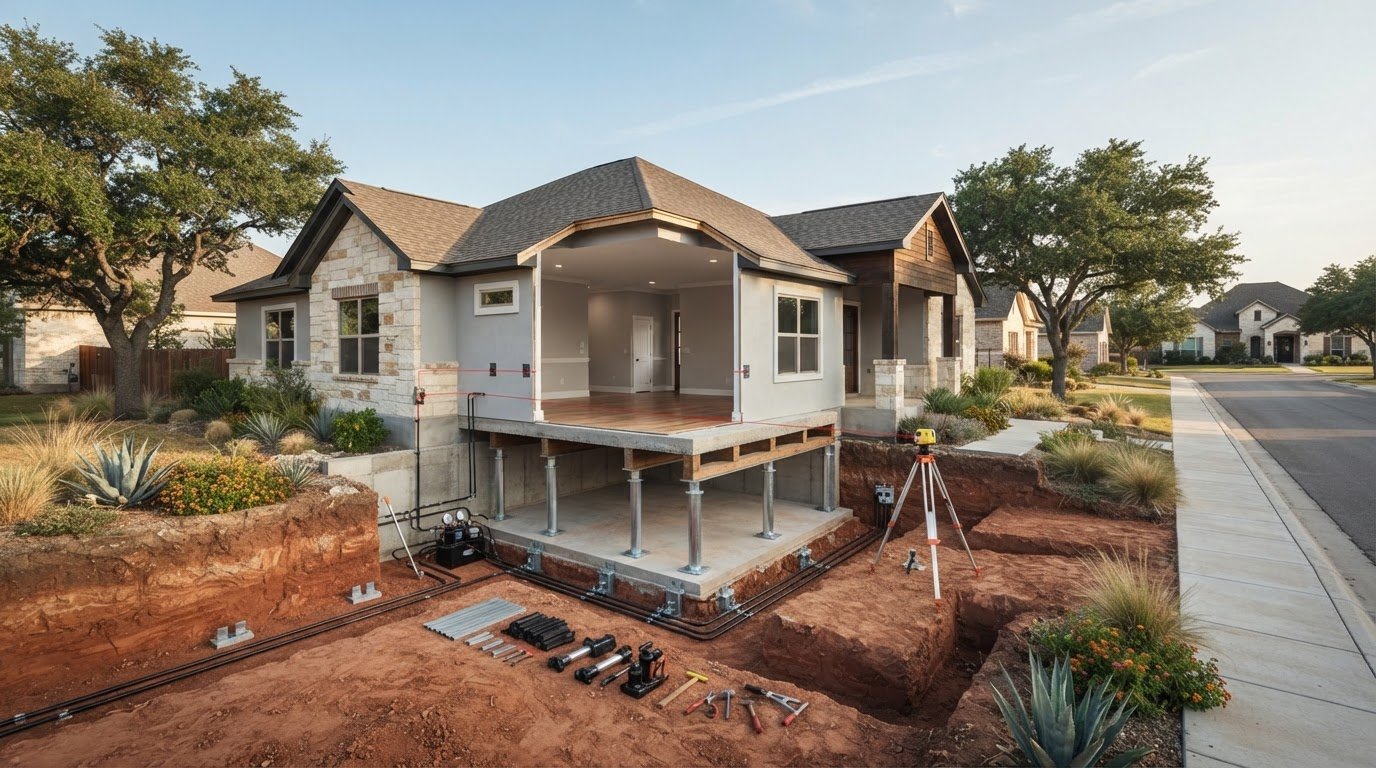
What if the right house leveling solution isn’t to raise every part of your home, but to address where and why it has moved? Cracks, sticking doors, or uneven floors can be unsettling, but a visible change alone doesn’t reveal the cause. For homeowners considering house leveling Victoria TX, the key is matching the repair to the foundation and the movement, not choosing a fix based on one symptom.
Victoria’s expansive clay soil can swell when wet and shrink during dry spells, putting stress on foundations as moisture conditions change. That local pattern matters, but so do your home’s foundation type and the location of the signs you’ve noticed. House leveling can address certain foundation-related unevenness, but it won’t resolve every crack or other issue that may look similar.
This guide explains what leveling can and can’t address, which local conditions and home details shape an evaluation, and what to expect when Hercules Foundation Repair assesses your home. Hercules provides structural foundation repair and concrete leveling for homes and businesses in Victoria and across South Texas.
Key Takeaways
- House leveling addresses certain types of foundation movement, but it won’t explain or resolve every crack, sticking door, or uneven floor.
- In Victoria, changing soil moisture can contribute to foundation movement; drought alone doesn’t prove a home needs leveling.
- For house leveling Victoria TX, the right approach depends on whether the home has a slab or pier-and-beam foundation, or whether the concern involves a separate concrete surface.
- Make an evaluation more informative by noting when symptoms appeared, where you’ve observed them, and whether they have changed.
- Hercules serves South Texas with slab and pier-and-beam foundation repair, commercial foundation repair, and concrete leveling.
House Leveling in Victoria, TX: What It Can Address
House leveling is structural work intended to address movement in a home’s foundation. Depending on the foundation type and what has shifted, repairs may support or adjust affected areas. The goal is to address the underlying structural concern, not to promise perfectly level floors. Older homes, additions, and differences in construction can affect how a floor feels, so the home needs to be considered as a whole.
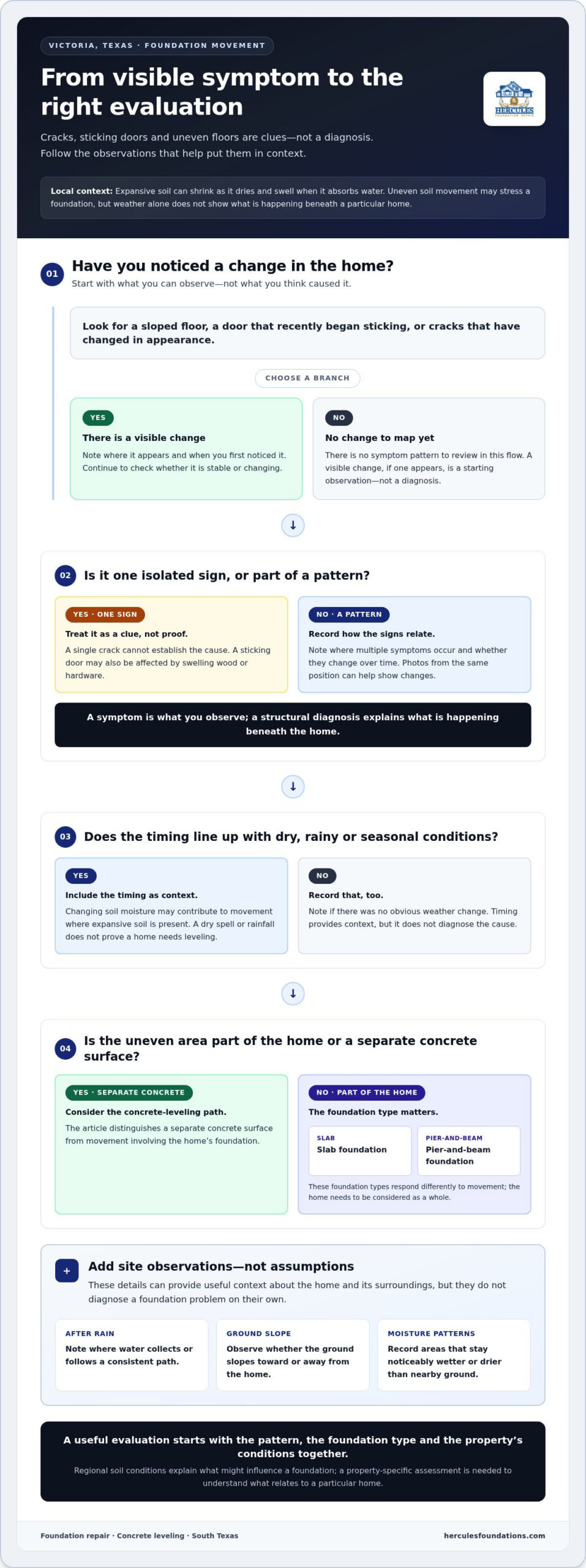
Uneven floors, sticking doors, and cracks are clues, not conclusions. A door may bind because its frame has shifted, but swelling wood or hardware issues can also affect how it closes. A crack may relate to foundation movement, but one visible mark alone can’t establish the cause. Look at the pattern: where changes appear, whether multiple symptoms occur together, and whether they are changing over time.
A symptom is what you observe; a structural diagnosis explains what is happening beneath the home.
What homeowners may notice before seeking house leveling
Look for changes across the home rather than treating one detail as proof. You might notice a floor that feels sloped in one area, a door that recently began sticking, or cracks that have changed in appearance. Write down each location and when you first noticed it. Photos taken from the same position over time can help you describe whether a change seems stable or is progressing.
For homeowners researching house leveling Victoria TX, this record is a practical starting point. Include seasonal patterns if you’ve noticed them, but don’t assume they identify the cause. A single crack or difficult-to-close door can have explanations unrelated to foundation movement. The relationship among your observations gives a clearer picture to review.
Why Victoria conditions matter to foundations
Some areas in and around Victoria have expansive soils that can change volume as moisture levels shift. During dry periods, soil may shrink; after rain, it may absorb water and swell. If the soil beneath a foundation moves unevenly, it can contribute to stress or movement in the structure. The amount and pattern of movement depend on local ground conditions and the specific home.
Drought can contribute to changing soil moisture, but it isn’t proof that a particular house needs leveling. Conditions aren’t identical across Victoria, and homes can respond differently based on foundation type, construction, and surrounding conditions. Note whether a symptom appeared during a dry stretch, after rain, or without an obvious weather change. Timing provides context, but it doesn’t diagnose the problem.
Keep your notes factual: what changed, where it happened, and when you noticed it. That gives an evaluation a better starting point than a guess based on one symptom or the weather alone.
How Victoria’s Soil and Weather Can Affect House Leveling Needs
Soil and weather provide useful context for understanding foundation movement, but they don’t tell the whole story. In Victoria, periods of dry weather and rain can change moisture levels in the ground. Where expansive soil is present, it may shrink as it dries and swell as it takes in water. If these changes occur unevenly beneath a home, they can contribute to shifting support and structural stress.
Regional soil conditions help explain what might influence a foundation, but a property-specific assessment is needed to understand how those conditions relate to a particular home. Drought can be one factor in soil moisture change, not proof that a house needs leveling.
How expansive soil and moisture changes affect a home
Think of moisture-sensitive soil like a sponge: it can contract as it dries and expand as it becomes wetter. That change may affect the ground supporting a foundation, especially if moisture varies from one part of the site to another. The comparison is general, though. Soil and foundation conditions differ from property to property, so regional risk doesn’t establish what’s happening beneath an individual home.
What local conditions can an evaluation consider?
Alongside the foundation, an evaluation can consider visible site conditions that may help explain movement. Notice whether the ground appears to slope toward or away from the home, where rainwater collects, and whether water seems to follow a consistent path near the foundation. These observations don’t diagnose a problem on their own, but they add useful context about the home’s foundation and surroundings.
After rainfall, look for persistent puddles near the home, areas where water runs toward the structure, or spots where the ground stays noticeably wetter or drier than its surroundings. You can also note whether symptoms seem to change with the seasons. Share what you observe rather than interpreting it as proof of a specific cause.
Conditions can vary within Victoria, and homes in the same area may have different site layouts, foundation types, and drainage patterns. An evaluation should consider the structure and its surroundings together. A slab foundation and a pier-and-beam foundation respond differently to movement, and the relevant site observations may also differ.
- Note where water collects or flows after rain.
- Observe whether the ground slopes toward or away from the home.
- Record seasonal changes you’ve noticed in the property or its symptoms.
Changes in soil moisture can be part of the picture, but homeowner watering practices aren’t a substitute for understanding the cause of foundation movement. Don’t assume that adding water or changing a routine will correct a structural issue. For homeowners considering house leveling Victoria TX, the next step is to connect local conditions with the home’s foundation and observed movement. Hercules Foundation Repair serves Victoria with structural foundation repair based on the needs of the specific home.
House Leveling vs. Other Foundation Repairs: What Fits Your Victoria Home?
“Leveling” can describe different kinds of work, so start by identifying what has moved: the home’s structural foundation or a separate concrete surface. Slab and pier-and-beam homes are built differently, and concrete leveling addresses a different kind of concern. The right scope depends on the structure and observed conditions, not on a one-size-fits-all ranking of repair methods.
| Structure or concern | What the repair discussion focuses on | Key distinction |
|---|---|---|
| Slab foundation | The home’s concrete foundation and signs of structural movement. | Structural foundation repair considers the slab and the movement affecting the home. |
| Pier-and-beam foundation | The foundation’s supports and the way they hold the structure. | Its construction differs from a slab, so the evaluation and repair scope must fit that system. |
| Eligible concrete surface | A separate concrete area, such as a walkway or patio, that has become uneven. | Concrete leveling addresses the surface, not necessarily movement in the home’s foundation. |
How foundation type changes the repair discussion
A slab foundation is a broad concrete base beneath the home. A pier-and-beam foundation holds the structure above the ground on supports, with a space below the floor. Because these systems transfer weight differently, an evaluation must focus on the relevant structural components and observed movement. A crack or sloping floor alone doesn’t identify a repair method. For more detail about slab-specific concerns, see this slab foundation repair guide.
When concrete leveling is a different kind of solution
A settled patio or walkway may need attention to that concrete surface rather than to the home’s structural foundation. Concrete leveling and foundation repair aren’t interchangeable: one addresses eligible concrete surfaces, while the other addresses structural concerns. If your concern is an exterior slab or similar surface, consider how concrete leveling differs from foundation repair.
Use the comparison as a starting point, not a diagnosis. An uneven walkway beside the home doesn’t by itself show that the foundation has moved. Likewise, indoor symptoms need to be considered alongside the home’s foundation type and the pattern of movement. A careful evaluation connects those details before setting the repair scope.
That’s the practical approach to house leveling Victoria TX: identify the structure involved, understand what has shifted, and match the repair discussion to the findings. Hercules Foundation Repair serves Victoria with structural foundation repair services and concrete leveling, with the scope shaped around the home and observed conditions.
What to Expect During a Victoria House Leveling Evaluation
A useful evaluation starts with your concerns, then connects what you’ve noticed to the home’s foundation and visible conditions. An uneven floor or sticking door shouldn’t automatically lead to a preset repair. The goal is to understand the structure, explain the findings in plain language, and outline a scope that reflects the home’s needs.
- Describe what you’ve noticed. Share the symptoms, where they occur, and when you first became aware of them. Mention whether they seem stable or have changed. These details help focus the discussion without treating an observation as a diagnosis.
- Review the foundation and visible conditions. The evaluation considers whether the home has a slab or pier-and-beam foundation, along with the structural areas and visible signs related to your concerns. Foundation type matters because each system supports the home differently.
- Discuss the findings. The findings should connect your observations with the conditions identified at the home. If a symptom doesn’t point to a clear structural cause by itself, a clear explanation can distinguish what the sign shows from what it cannot establish alone.
- Outline a tailored scope. If structural repair is recommended, the proposed work should reflect the foundation type and observed movement. You should understand what the scope addresses and why it fits the findings, rather than receive a generic recommendation.
What information helps make the evaluation useful?
A short timeline can bring the details together. Note when you first noticed each change, whether it has progressed, and which rooms or exterior areas are involved. A simple list is enough; photos may also help you describe what you’ve seen. These notes support the conversation, but they don’t replace a review of the foundation and property conditions.
- List affected rooms and the locations of visible signs.
- Record when each concern began and any changes you’ve noticed since.
- Include relevant exterior observations, such as areas where water collects.
How findings guide a tailored repair plan
The foundation type and observed structural conditions help shape the scope. A slab home and a pier-and-beam home call for attention to different parts of the structure, so the recommendation should explain how the proposed work relates to the specific findings. No preset approach can substitute for that connection. A clear explanation of what the work is intended to address helps show how it follows from the evaluation.
If you’re considering house leveling Victoria TX, organized observations can make the first conversation more focused. Hercules Foundation Repair serves Victoria with structural foundation repair for residential and commercial properties, including slab and pier-and-beam foundations.
Choose Hercules for House Leveling in Victoria, TX
Foundation concerns can make it hard to know what to do next. A useful repair conversation starts with the home itself: its foundation type, the changes you’ve observed, and the structural conditions behind them. Hercules Foundation Repair serves Victoria with foundation repair and concrete leveling, helping homeowners distinguish structural concerns from issues involving a separate concrete surface.
Why local structural experience matters
Hercules is a family-owned and operated South Texas business that has served the region for over 45 years. That regional experience brings context to the foundation concerns homeowners raise, including questions about changing soil moisture and how different home foundations are built. The process focuses on understanding the concern, explaining the structural findings, and relating the proposed work to the home.
The repair scope should fit the structure, not a generic promise to make every floor perfectly level. A slab foundation and a pier-and-beam foundation have different components and support systems, so their structural repair discussions differ. Concrete leveling serves another purpose: addressing eligible concrete surfaces rather than automatically correcting movement in a home’s foundation.
Hercules provides slab foundation repair, pier-and-beam foundation repair, commercial foundation repair, and concrete leveling. This range helps distinguish an uneven surface from a structural foundation concern, since they aren’t necessarily the same problem. An evaluation can clarify which part of the property is affected and why the recommended work fits the observed conditions.
Take the next step with Hercules Foundation Repair
Before deciding on a repair, make sure the discussion connects the home’s foundation type and visible conditions to the proposed scope. A clear explanation helps you understand what the work is intended to address and how it relates to the findings. The aim is a suitable structural approach, not an unsupported guarantee or a method chosen before the home is assessed.
If you’re considering house leveling Victoria TX, bring your questions and notes about what you’ve noticed. Hercules can discuss your foundation concerns and the repair approach that fits the home’s observed conditions.
Take the Next Step Toward a Clear Foundation Plan
Uncertainty can make every new crack or change in your home feel worrying. You don’t have to choose a repair based on appearances alone. Use what you’ve observed as a starting point for a conversation about what the structure needs and why. That’s a grounded way to approach house leveling Victoria TX and move from concern toward an informed decision.
Before reaching out, gather notes or photos that help explain what has changed and where. Then discuss your concerns with a team that can relate the home’s foundation type and visible conditions to a suitable structural scope. Hercules Foundation Repair works with homeowners on foundation repair and concrete leveling, tailoring the approach to the property rather than relying on a one-size-fits-all promise.
Frequently Asked Questions
Can I stay in my home during house leveling?
Whether you can remain at home depends on the repair scope and which areas of the property are affected. Some work may be concentrated outside or beneath a particular part of the structure, while other work could affect access to rooms or create noise and disruption. Before work begins, get a clear explanation of which areas may be affected and whether you’ll need to make temporary arrangements.
How long does house leveling take?
The duration varies with the home, foundation type, and scope of structural work. A limited repair and a project involving broader foundation concerns aren’t necessarily comparable, so a general time estimate may not fit your situation. Once the work has been scoped, discuss the stages involved and factors that could affect the schedule. That gives you a project-specific expectation rather than a guess.
Will house leveling fix every crack in my home?
No. House leveling may address structural movement related to certain cracks, but it can’t be assumed to resolve every crack or prevent unrelated ones from appearing. For example, a crack in a wall’s finish may have a different cause from a crack connected to foundation movement. Keep a record of where cracks occur and how they change, and consider the pattern alongside the structure rather than judging by one mark alone.
Does homeowners insurance cover house leveling?
Coverage depends on your specific policy, the cause of the damage, and the terms your insurer applies. Don’t assume foundation movement or leveling is automatically covered. Review your policy and contact your insurance company to ask how it treats your circumstances, what documentation it needs, and whether any exclusions apply. Keep relevant records, such as dated photos and repair documents, to support a discussion with your insurer.
Can house leveling increase a home’s resale value?
It may help address a structural concern that could matter to a prospective buyer, but no repair can guarantee a higher sale price or faster sale. The effect depends on the home, the market, and a buyer’s assessment. Keep records of completed work and related documentation so you can describe the repair history accurately. For homeowners in Victoria, as well as San Antonio, Austin, and Houston, clear information can support a more informed conversation during a sale.
Is house leveling the same as replacing a foundation?
No. House leveling generally refers to structural work intended to address foundation movement, while foundation replacement means removing and rebuilding some or all of the foundation. The terms aren’t interchangeable, and replacement isn’t automatically required when movement is present. The appropriate scope depends on the specific structure and its condition. Make sure the reasoning behind the proposed work is clear so you understand whether it involves adjustment, repair, or replacement.