
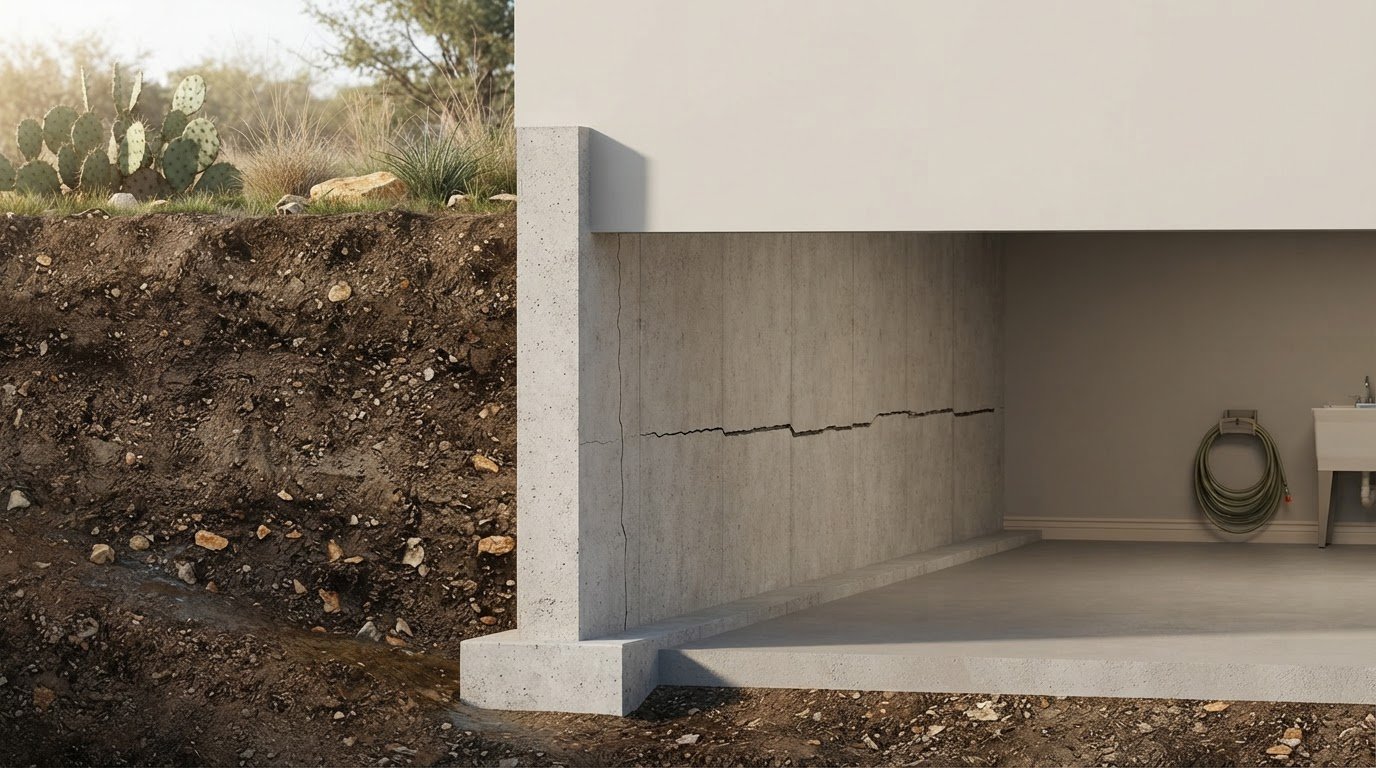
Horizontal foundation cracks are generally more concerning than vertical cracks because they can signal pressure against a wall or structural stress. Vertical cracks are often linked to concrete shrinkage or natural settling, though either direction deserves attention if a crack grows, lets in water, or appears alongside other changes in the home. The difference between vertical foundation cracks and horizontal ones is an important clue, not a complete diagnosis.
It’s understandable to worry when a crack appears in a foundation wall. Its direction and width, whether it changes over time, and any nearby signs in the home can help indicate whether it may be a surface issue or a more serious concern.
This guide explains what vertical and horizontal cracks can indicate, which warning signs to watch for, and how water and soil pressure affect foundation walls. You’ll learn what to observe and when a professional assessment can help determine the next step.
Key Takeaways
- Use a crack’s direction as one clue, then consider whether it’s growing and what other changes appear nearby.
- Learn which signs of water intrusion deserve attention and how exterior drainage can affect moisture around a foundation.
- Understand why sideways cracks may point to pressure against a wall, and which accompanying signs raise concern.
- See how the likely cause and foundation type help determine whether foundation repair is the appropriate next step.
What Is Worse, Vertical or Horizontal Foundation Cracks?
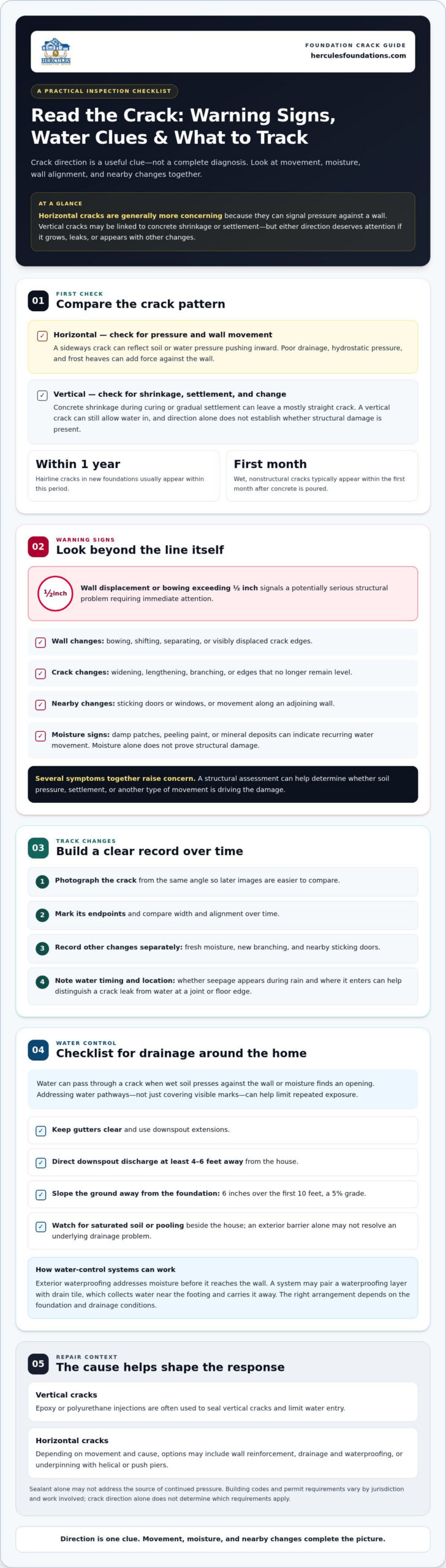
Horizontal cracks are generally more concerning because they can signal pressure against a foundation wall. Vertical cracks often reflect concrete shrinkage or settlement, but direction alone cannot establish whether structural damage is present.
Shrinkage and Settlement Cracks
Vertical cracks can form as concrete shrinks during curing or as a foundation settles under the structure. Shrinkage occurs as concrete loses moisture and volume; settlement is downward movement as supporting soil adjusts. Both can leave a mostly straight crack, but its location and movement matter. Hairline cracks in new foundations usually appear within one year. Wet, nonstructural cracks typically appear within the first month after concrete is poured.
Normal Cracks and Structural Damage
Narrow, stable cracks may reflect curing or gradual settlement, while widening, offset edges, or related wall movement raise structural concerns. Check whether the sides remain level and whether nearby doors or windows begin sticking. Moisture alone doesn’t prove structural damage, but it can indicate that a crack extends through the wall. A dry hairline crack differs from one that is growing and has displaced concrete.
Vertical cracks are often sealed with epoxy or polyurethane injections to limit water entry. Depending on the movement and its cause, horizontal cracks may require wall reinforcement, drainage and waterproofing, or underpinning with helical or push piers.
Building codes and local regulations may address structural crack repairs and permit requirements. Rules vary by jurisdiction and the work involved, and the crack’s direction alone doesn’t determine which requirements apply.
To check whether a crack is worsening, photograph it from the same angle, mark its endpoints, and compare its width and alignment over time. Record fresh moisture, new branching, and nearby sticking doors as separate changes.
Arrange a structural assessment if a horizontal crack widens, wall surfaces shift or bow, or several symptoms appear together. An engineer can assess whether soil pressure, settlement, or another type of structural movement is driving the damage.
Water intrusion through foundation cracks
Water can pass through a foundation crack when wet soil presses against the wall or moisture finds an opening. A straight vertical crack may still allow seepage, while damp patches, peeling paint, or mineral deposits can indicate recurring water movement. Track where moisture appears after rain; the pattern can help distinguish a crack leak from water entering at a joint or floor edge.
Sealant alone may not address the source. Epoxy or polyurethane injections can fill some vertical cracks and help block water entry, but continued pressure outside can keep stressing the wall. An assessment should consider the crack’s location, moisture, and movement alongside gutters, downspouts, and ground slope. Protecting the wall means addressing water pathways, not just covering visible marks.
Exterior waterproofing addresses moisture before it reaches the wall. A system may pair a waterproofing layer with drain tile, which collects water near the footing and carries it away. The right arrangement depends on the foundation and drainage conditions. If soil stays saturated or water pools beside the house, an exterior barrier alone may not resolve the underlying drainage problem.
Homeowners can reduce surface water near the foundation with practical maintenance. Keep gutters clear, use downspout extensions, and direct discharge at least 4-6 feet away from the house. The ground should slope away from the foundation by 6 inches over the first 10 feet, a 5% grade. These steps help limit water collecting against basement walls.
For persistent seepage, note whether water appears during rain, where it enters, and whether the crack changes. That record helps guide the next foundation repair options discussion. Basement waterproofing and drainage work together: controlling water around the structure reduces repeated exposure, while crack repair addresses an existing entry point.
Causes and seriousness of horizontal foundation cracks
Horizontal cracks deserve attention because soil and water pressure can push against a foundation wall. Vertical cracks have different common causes, so direction offers a useful clue, not a complete diagnosis.
Horizontal Crack Characteristics and Causes
A horizontal crack runs sideways across a wall and may reflect pressure pushing inward from the ground. Poor drainage can saturate soil, while hydrostatic pressure and frost heaves can add force against the foundation. The crack may extend toward a connecting wall and affect a wider support area. This pattern matters because the cause may involve more than a surface opening.
Vertical cracks are commonly caused by concrete shrinkage during curing or settlement as the ground beneath a structure adjusts. Hairline cracks may appear without major structural movement, but growing cracks or uneven edges need closer attention. A vertical line can also occur alongside settlement, when soil cannot adequately support the foundation’s weight. Compare its width and alignment over time rather than judging its seriousness by direction alone.
Warning Signs of Dangerous Horizontal Cracks
A horizontal crack is more concerning when the wall bows, shifts, or separates along the opening. Displacement or bowing exceeding 1/2 inch signals a potentially serious structural problem requiring immediate attention. Watch for a crack that lengthens, widening gaps, or adjoining wall movement. These signs suggest pressure may be affecting the wall’s ability to support the structure.
Moisture, poor drainage, and visible wall movement together heighten concern. Note where the crack begins and ends, whether its edges remain level, and whether nearby doors or windows stick. A dated photograph can help show changes. If the wall bows or the crack continues changing, arrange a professional assessment promptly; sealing the visible line alone won’t remove pressure from saturated soil or frost heaves.
Comparing the severity of vertical and horizontal cracks
Direction is a useful clue, but crack behavior and wall movement matter more. Comparing vertical foundation cracks vs horizontal ones means looking at the forces affecting the wall, not just the crack’s orientation. Horizontal cracks generally raise greater structural concern because they can reflect pressure pushing inward. Vertical cracks more often relate to settlement or concrete shrinkage, though widening or shifting still deserves attention.
The American Society of Home Inspectors indicates that approximately 15% of foundation cracks pose significant structural concerns. That figure puts a visible crack in perspective: not every line signals failure, but its pattern and surroundings help identify risk. A hairline crack that stays unchanged differs from one with uneven edges, moisture, or a bowing wall. A vertical foundation cracks vs horizontal comparison should account for these signs rather than treating direction as a verdict.
Width provides another comparison point. A crack wider than 1/8 inch warrants professional assessment, while a crack wider than 1/4 inch is identified as a sign of structural deficiency. These measurements don’t replace checking direction, growth, or displacement. For example, a narrow horizontal crack with wall movement may be more concerning than a wider, stable vertical mark.
Repair methods should address the cause, not simply the crack’s shape. An injection can seal some vertical cracks, while horizontal movement may call for reinforcement, drainage work, or underpinning. Hydrostatic pressure from wet soil can continue acting on a wall, so sealing alone may not protect its structural integrity while pressure remains.
Monitor each crack with dated photographs and a ruler, recording its width, length, moisture, and any wall displacement. Compare the same points over time; changes provide more useful evidence than a single glance. If the wall bows, edges separate, or a horizontal crack grows, arrange a professional evaluation rather than treating it as cosmetic.
If you’re seeing movement or widening, discuss your foundation concerns and the signs affecting your home.
Hercules Foundation Repair: Foundation Repair
Hercules Foundation Repair provides foundation repair for homeowners facing cracks, shifting, or other signs of foundation movement in San Antonio, Austin, Houston, and Victoria. If an assessment points to a structural concern, the repair approach should address the cause, not just cover the visible crack. The right service depends on the foundation type and the condition being addressed.
For concrete slab foundations, Slab Foundation Repair addresses issues specific to that foundation system. Pier and Beam Foundation Repair serves homes built with a raised floor system, while Commercial Foundation Repair supports foundation needs in commercial properties. Matching the work to the structure keeps the next step focused on the problem.
Contact Hercules Foundation Repair to discuss your foundation concerns or visit herculesfoundations.com.
Take the Next Step With Confidence
Understanding vertical foundation cracks vs horizontal cracks is only the starting point. The next step is to record what you’ve observed: where the crack sits, what has changed, and how the foundation is affected. That context helps keep a repair discussion focused on the cause and the condition of the structure, rather than the appearance of one line.
As you consider what to do, look for an explanation that connects the visible crack to the proposed work. You should understand what the repair is intended to address and how it relates to your foundation type. An informed decision is better than guessing at a remedy or treating every crack the same way.
If you’re ready to discuss the condition of your foundation and possible next steps, connect with Hercules Foundation Repair. A clearer understanding of the issue can help you move forward with confidence.
Frequently Asked Questions
Comparative Analysis: Which Is Worse?
Horizontal cracks are generally more concerning because they can indicate pressure acting across a foundation wall. However, a vertical crack can also signal a serious issue if its edges shift or other parts of the home move. For example, compare the crack with nearby floor and wall joints: displacement or new separation adds useful context beyond the direction of the line.
What Causes Horizontal Cracks in Basement Walls?
Horizontal basement cracks commonly develop when surrounding soil pushes inward against the wall. Water-saturated ground can increase pressure, and poor drainage can keep that pressure in place. Frost heaves can also move soil and stress the wall. A basement wall that bends inward near a horizontal crack suggests the force is affecting the wall itself, not merely leaving a surface mark.
How wide can a foundation crack be before it is considered serious?
A crack wider than 1/8 inch should receive professional attention; one wider than 1/4 inch is identified as a sign of structural deficiency. Measure the widest section, since a crack can vary along its length. Also note whether the sides sit at different depths. Width helps describe the opening, but movement and wall condition matter when assessing its significance.
Do vertical or horizontal foundation cracks cause water leaks?
Either direction can let water into a basement if the crack passes through the wall. A leak that appears after rain, damp cardboard stored beside the wall, or fresh mineral residue can help locate an entry point. Note whether moisture appears at the crack or along the wall-floor seam; that distinction helps identify where water is entering.