
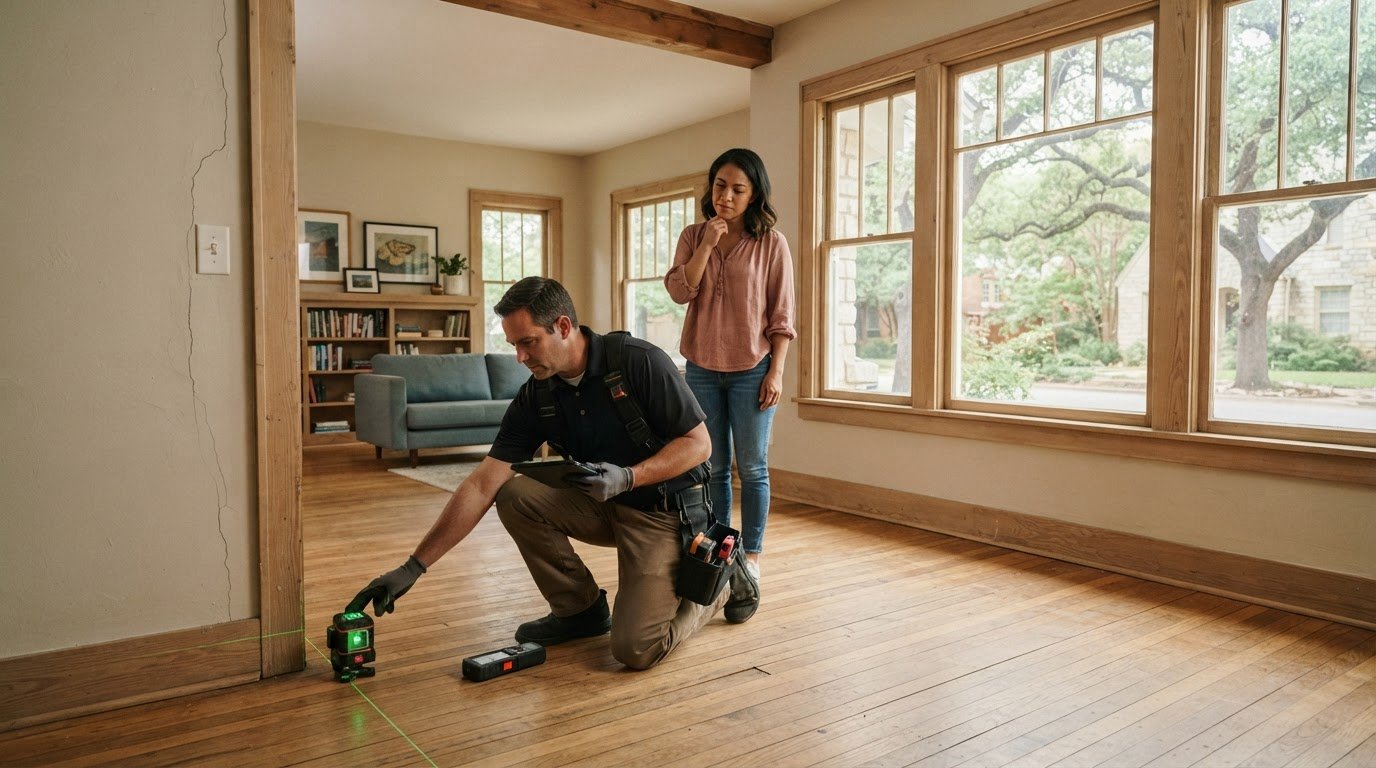
What if a sloping floor is a warning sign, but not proof that your foundation is failing? If you’re researching “uneven floors in old house Austin,” it’s understandable to worry about movement beneath your home, especially when you can’t tell whether the change is new or has always been there. Flooring wear, aging framing, and foundation movement can all affect how a floor feels.
You don’t have to guess. This guide explains common causes of uneven floors in older Austin homes, clues that may point to structural movement, and signs that make a foundation assessment worthwhile. It also explains why a flooring or framing issue calls for a different fix than a shifting foundation, and why settled concrete may need concrete leveling rather than structural foundation repair.
We’ll compare the repair paths for slab and pier-and-beam homes. The goal is to help you understand what may be happening and choose a practical next step without assuming the worst.
Key Takeaways
- Uneven floors in old house Austin homes can result from foundation movement, framing, or surface issues, so the slope alone doesn’t identify the cause.
- Notice whether unevenness is isolated or appears across multiple rooms, and record changes in nearby doors, walls, or ceilings.
- Track where and when floor changes occur before choosing a repair, and avoid cosmetic updates until you understand whether movement is ongoing.
- Slab foundation repair, pier-and-beam foundation repair, and concrete leveling address different conditions. The right approach depends on what’s causing the unevenness.
- Look at the full pattern of symptoms to decide whether a foundation assessment is a sensible next step.
Uneven Floors in an Old Austin House: What the Symptom Can, and Cannot, Tell You
An uneven floor deserves attention, but it doesn’t automatically mean the foundation is failing. In an older home, the floor may slope gradually across a room, dip in one concentrated area, feel springy underfoot, or change noticeably in height between rooms. Those sensations can have different causes, so describe what you’re noticing before deciding what it means. When searching for “uneven floors in old house Austin,” focus on the floor’s pattern and history rather than relying on a quick label.
How do uneven floors look and feel in older Austin homes?
A gradual slope may be easiest to notice when a ball rolls or furniture seems tilted. A localized dip feels like one low area, while a springy spot gives slightly underfoot and may point to an issue in the floor assembly. These are clues, not diagnoses. Look around the same area for changes in doors, trim, or wall openings, and note whether the floor has felt this way for years or seems to be changing.
The timeline can help put the symptom in context. A long-standing variation may reflect the home’s original construction, age, or wear. A newly noticed slope may also have been present for some time, but changes that continue or appear alongside other symptoms deserve closer attention. Note where the floor feels different and whether the pattern extends into other rooms.
Why an uneven floor does not automatically mean foundation damage
The floor is a layered system. Finish flooring can wear or settle unevenly; the subfloor beneath it may shift or deteriorate; and joists in a framed floor can sag or flex. Foundation movement can also change the level of the structure above it. Because these causes can feel similar, one photo, measurement, or squeak can’t establish what’s happening. An uneven floor is a symptom to investigate, not a diagnosis.
Foundation settlement describes movement as the ground or supporting structure changes beneath a building. For background on the term, see What is foundation settlement. The concept can help explain why a floor changes, but it doesn’t show whether settlement is occurring in a particular home. Consider the wider evidence rather than assuming every low spot has the same cause.
Look for patterns, changes over time, and related symptoms. A single dip may be limited to flooring or framing; unevenness across several areas, especially with changes nearby, may make a foundation assessment worthwhile. This distinction is the first step toward choosing a repair that addresses the source instead of hiding the surface symptom.
Why Old Austin Homes Develop Uneven Floors: Foundation, Framing, and Local Conditions
Several parts of a home can contribute to an uneven floor, and age alone doesn’t identify the cause. A foundation may shift, framing may sag or flex, or the floor covering and subfloor may have changed over time. Past renovations and original construction differences can also leave one area higher or lower than another. The useful question is which part of the structure is responsible, not simply whether the floor feels uneven.
Foundation movement, soil, and moisture changes around Austin
Parts of the Austin area have expansive clay soil, which can swell as it takes on moisture and shrink as it dries. If soil conditions vary beneath a home, those changes may contribute to uneven support and foundation movement. Local soil is only one factor, however. Drainage, the property itself, the foundation type, and the home’s history all matter. An Austin address by itself can’t establish why a particular floor slopes or how serious the cause may be.
With a slab foundation, movement in the supporting ground can affect the concrete and, in turn, the floors and nearby finishes above it. Changes in floor level may occur alongside visible changes elsewhere, though no single symptom proves settlement. Consider how the floor pattern relates to the rest of the home rather than assuming soil conditions explain every dip.
Slab versus pier-and-beam: why the foundation type matters
A slab home rests on a concrete foundation, while a pier-and-beam home has a raised structure supported by piers and beams, with floor joists carrying the floor above. In a pier-and-beam house, unevenness may relate to the supports, beams, joists, or floor layers. In a slab home, the concrete foundation may be part of the picture. These are different structural systems, so the same floor symptom doesn’t point to the same cause or repair.
Flooring wear, a changed subfloor, or an older alteration may also create a local change in level without indicating foundation movement. For a deeper look at the slab system and related considerations, see Slab Foundation Repair Guide: Protecting Your Texas Home in 2026. The distinction matters: structural foundation repair addresses movement in the home’s support, while a surface or framing issue calls for a different response.
If several signs seem connected, a focused foundation assessment can help clarify whether structural movement is involved. Hercules Foundation Repair is family-owned and serves South Texas. Learn more about foundation repair in Austin as you consider the next step.
Do Uneven Floors Mean a Foundation Problem?
Not necessarily. A small dip confined to one area may relate to flooring or subflooring, while a slope that continues through connected rooms or appears alongside changes in walls, doors, or trim may warrant a closer look. Neither pattern confirms a foundation problem on its own. Gather useful observations rather than trying to diagnose the cause from a single symptom.
Which accompanying signs make a foundation assessment more relevant?
Several changes occurring together provide more context than an uneven floor alone. Note whether doors or windows have begun sticking, cracks have appeared or changed in walls or ceilings, or gaps have opened near trim. These observations can have more than one explanation, so treat them as clues to document, not proof of foundation movement. If changes are sudden, substantial, or interfere with safe use of the home, seek professional attention promptly.
What observations can help distinguish flooring from structural movement?
Map where the floor feels uneven and note whether the change stops within one room, follows a flooring transition, or continues across connected spaces. A concern limited to one flooring material may point toward that surface or what lies beneath it, while a broader pattern deserves consideration in the context of the whole structure. Record dates and changes over time. Avoid forcing doors, pulling up flooring, or relying on a DIY measurement as a diagnosis. A qualified foundation assessment is needed to determine whether structural repair is appropriate.
| Observation | Possible explanations | Why it may deserve follow-up |
|---|---|---|
| A dip limited to one small area | Floor covering, subfloor, or localized framing issue | Track whether it changes or spreads beyond that spot. |
| A slope continuing through connected rooms | Floor framing or broader structural movement | The pattern across spaces gives more context than one low spot. |
| Unevenness with sticking doors or changing cracks | Several possible causes, including structural movement | Document where and when the changes appear together. |
| A sudden, substantial change | A developing condition that needs prompt attention | Get professional guidance, especially if safe use is affected. |
For homeowners concerned about uneven floors in old house Austin properties, a simple written record can make the next conversation more productive. Note the room, the approximate location, when you first noticed the issue, and any related changes. Patterns and timelines help frame the concern, but they don’t replace an assessment of the home’s foundation and floor structure.

What Austin Homeowners Can Do About Uneven Floors Before Choosing a Repair
Before choosing a fix, build a clear record of what you’re seeing. A short timeline and a simple room-by-room map can help distinguish a stable floor variation from a condition that may be changing. This is especially useful when you’re concerned about uneven floors in old house Austin homes, where age and construction differences can make symptoms harder to interpret.
A simple documentation checklist for uneven floors
- 1. Mark the locations. Write down which rooms are affected and where the slope, dip, or springy area begins and ends. Note whether it stops at a doorway or continues across connected spaces.
- 2. Record when you notice changes. Add dates and brief descriptions to your notes. Include whether the floor feels different than before and whether the change seems stable or is becoming more noticeable.
- 3. Note related observations. Record new or changing cracks, gaps near trim, sticking doors or windows, and noticeable shifts at flooring transitions.
- 4. Take consistent photos. Photograph visible cracks or gaps from the same position when possible, and include a date in your records. Pictures can help show change, but they can’t establish the cause or replace an in-person assessment.
Hold off on replacing or covering the finish floor until you have a better sense of whether movement is continuing. A new surface may conceal useful clues without addressing the reason for the unevenness. That doesn’t mean every flooring project must wait indefinitely. It means you should understand the underlying condition before treating cosmetic work as the solution.
When to consider professional foundation repair guidance
A professional foundation assessment becomes more useful when several symptoms are changing together, unevenness extends across areas, or the cause remains unclear. Share your notes and describe what you know about the home’s foundation type, such as slab or pier-and-beam. The assessment should help clarify the foundation system, the observed movement, and whether the likely repair category involves foundation work or another part of the floor assembly.
The right response depends on the source, not just how noticeable the slope feels. Hercules Foundation Repair serves South Texas with structural foundation repair for slab and pier-and-beam homes. If you’re in Austin and have concerns about possible structural movement, discuss your foundation concerns with Hercules Foundation Repair.
Foundation Repair and Concrete Leveling Options for Uneven Floors in Austin
The right fix depends on what’s uneven and why. A floor slope associated with movement in the home’s foundation calls for a different approach than a sunken concrete walkway or driveway. The home’s foundation type matters, too. Repair methods aren’t interchangeable, and choosing one before identifying the source can leave the underlying problem unaddressed.
When slab or pier-and-beam foundation repair may be relevant
If an assessment identifies movement in a slab foundation, slab foundation repair may be an appropriate structural path. A pier-and-beam home has a raised floor system supported by piers and beams, so repairs need to suit that distinct structure. In either case, the observed symptoms alone don’t establish which repair is needed. An assessment should clarify what has moved and what approach fits the home and its condition.
This distinction matters for homeowners researching uneven floors in old house Austin properties. A dip in the finish floor doesn’t automatically mean the foundation needs repair, and a foundation concern shouldn’t be treated as a flooring problem without understanding the broader pattern. Structural repair is appropriate when the evidence points to movement in the foundation, not simply because a floor feels out of level.
When concrete leveling may address the uneven surface
Concrete leveling serves a different purpose. It can address suitable sunken concrete surfaces, such as an uneven section of an exterior walkway or patio. It isn’t a universal solution for sloping interior floors, and it doesn’t replace foundation repair when the home’s structure is moving. The key distinction is whether the concrete surface itself is the issue or whether the floor change reflects a broader structural condition.
For a closer look at how concrete leveling approaches can differ, read Concrete Leveling: How to Compare Your Options and Choose the Right Fix. Keep the scope in mind: leveling addresses an appropriate concrete surface, while slab or pier-and-beam foundation repair addresses structural needs specific to those foundation systems.
Connect the symptoms you’ve documented with the home’s foundation type and understand the likely cause before settling on a repair. Hercules Foundation Repair serves Austin with structural repair for slab and pier-and-beam foundations, as well as concrete leveling. The company also serves homeowners and businesses in San Antonio, Houston, and Victoria.
Take the Next Step Toward a Clearer Answer
An uneven floor is a reason to look closer, not a diagnosis of foundation failure. Pay attention to where the change occurs, whether it’s getting worse, and whether doors, walls, or trim show related changes. Those patterns can help clarify whether the cause may involve flooring, framing, or the foundation.
The right repair depends on what’s happening beneath the surface. Slab foundation repair, pier-and-beam foundation repair, and concrete leveling address different conditions, so understanding the cause comes first.
If you’re concerned about uneven floors in old house Austin, talk with Hercules Foundation Repair about your Austin home’s foundation concerns. Hercules provides foundation repair and concrete leveling in Austin, San Antonio, Houston, and Victoria.
A careful assessment can replace uncertainty with a practical next step. You don’t have to figure it out alone.
Frequently Asked Questions
Are uneven floors in an old Austin house always a sign of foundation problems?
No. Uneven floors can result from foundation movement, but flooring layers, subfloor changes, aging joists, past alterations, or original construction can cause similar sensations. A low spot limited to one area may have a different explanation from a slope spanning several rooms. Note whether the floor is changing and whether doors, windows, or nearby finishes have changed too. Those patterns offer context, but they don’t confirm the cause.
Can Austin soil cause uneven floors in an older house?
Yes, soil conditions can contribute to foundation movement in parts of Austin. Expansive clay may swell when wet and shrink as it dries, which can affect support beneath a foundation. Local conditions vary, though, and soil type alone can’t explain the slope in a specific home. Foundation type, drainage, construction, and the pattern of symptoms also matter. A property’s location isn’t a diagnosis.
How can I tell if uneven floors are caused by the foundation or the flooring?
You can look for clues, but you can’t reliably determine the cause from one measurement or photo. If unevenness is limited to one flooring material or a small area, the floor covering, subfloor, or framing may be involved. A pattern across connected rooms, especially alongside changing cracks, sticking doors, or gaps, makes a broader assessment useful. A qualified foundation assessment can help determine whether structural repair is appropriate.
What should I do first if my old house has uneven floors?
Start by recording which rooms and areas feel uneven, when you noticed the condition, and whether it has changed. Note related changes around doors, windows, cracks, trim, or floor transitions. Dated photos can help track visible changes, but they can’t replace an assessment. Avoid covering the floor with a cosmetic replacement until you understand whether movement is continuing. If changes are sudden or affect safe use, seek professional attention promptly.
Can concrete leveling fix uneven floors inside an old house?
Sometimes, but concrete leveling is suited to appropriate uneven concrete surfaces, not every interior floor problem. It may address a sunken concrete slab, such as an exterior walkway or patio. A sloped interior floor could instead involve the foundation, framing, subfloor, or finish material. If structural movement is causing the floor change, leveling a surface won’t substitute for foundation repair. The cause and surface type determine which approach fits.
What happens if I ignore uneven floors in an older Austin home?
The outcome depends on the cause. A stable variation related to construction or flooring may remain unchanged, while ongoing structural movement may lead to additional changes in floors or nearby finishes. Ignoring the symptom doesn’t reveal which situation applies. Keep a record of its location and any changes, and consider an assessment if the pattern spreads or appears with other symptoms. Early clarity can help you choose a suitable next step.
Does an uneven floor mean my old house needs foundation repair?
No. Foundation repair is appropriate when evidence points to structural movement, not simply because a floor feels sloped or bouncy. A professional assessment can help distinguish foundation concerns from flooring or framing issues and clarify whether slab repair, pier-and-beam repair, or another approach may fit. Hercules Foundation Repair serves Austin, San Antonio, Houston, and Victoria with structural foundation repair and concrete leveling.