
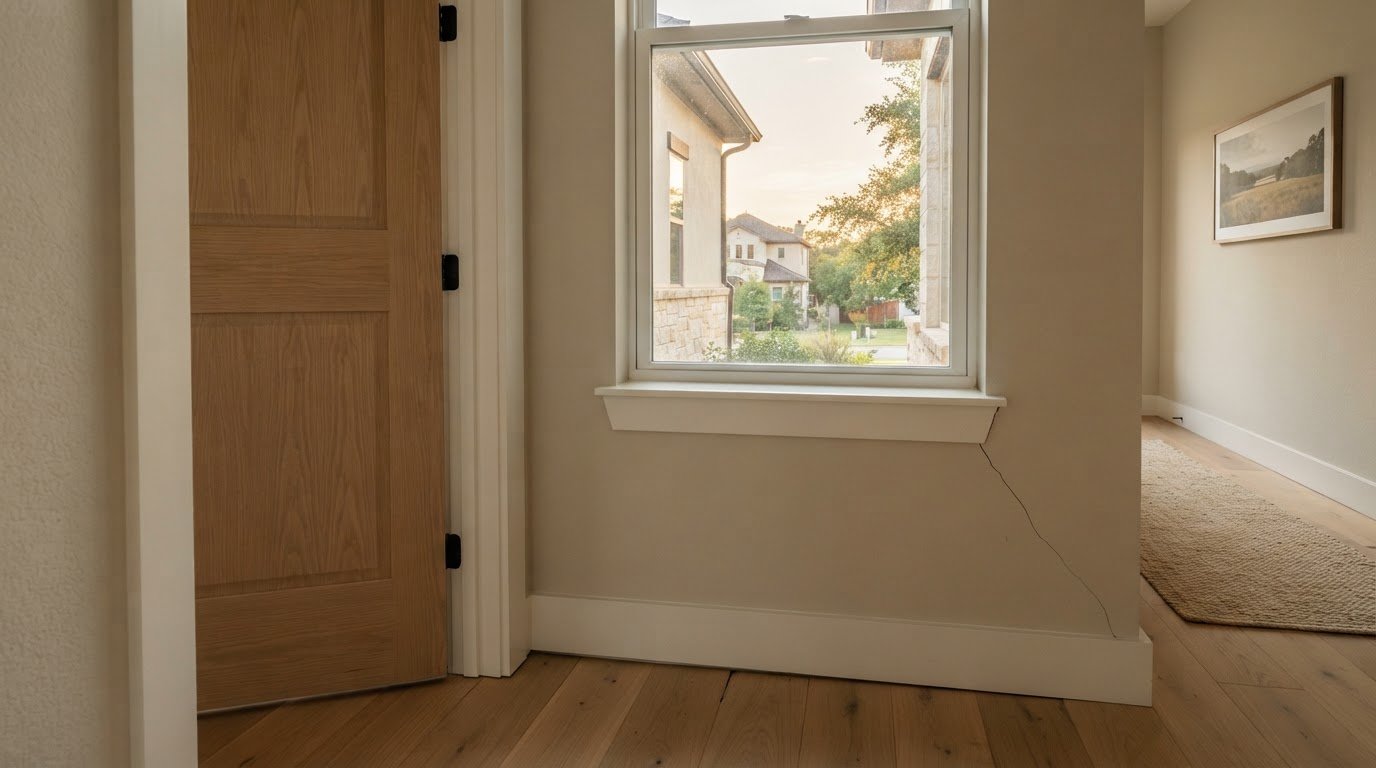
A sticking door or window doesn’t automatically mean foundation trouble, but sticking doors and windows can signal foundation issues when several openings start binding or the problem steadily worsens. Foundation movement can shift the frame around an opening, while seasonal humidity or worn hardware can also make doors and windows difficult to use. Nearby diagonal drywall cracks, uneven floors, or gaps between walls and ceilings make a structural cause more concerning.
It’s frustrating when a door won’t latch or a window takes force to open, especially when the cause isn’t obvious. This guide explains how to distinguish common moisture or hardware issues from signs that may point to foundation movement, and how cracks around openings add useful context. You’ll also learn what to consider when choosing a foundation repair company, so you can make a more informed decision about what to do next.
Key Takeaways
- One sticking door may have a simple cause, but several openings binding or a problem that worsens over time deserves closer attention.
- Seasonal humidity and worn hardware can affect doors and windows; consider whether the trouble persists across seasons and appears in multiple areas.
- Diagonal cracks near door or window corners, especially alongside uneven floors or gaps, can add context when assessing possible foundation movement.
- When the signs point to a structural concern, choose a foundation repair company that focuses on the foundation, not just the doors and windows.
Is a sticking door or window serious?
One difficult door may have a simple hardware or moisture-related cause. Several openings binding, or trouble that steadily worsens, can point to structural movement.
Signs of Foundation-Related Door and Window Problems
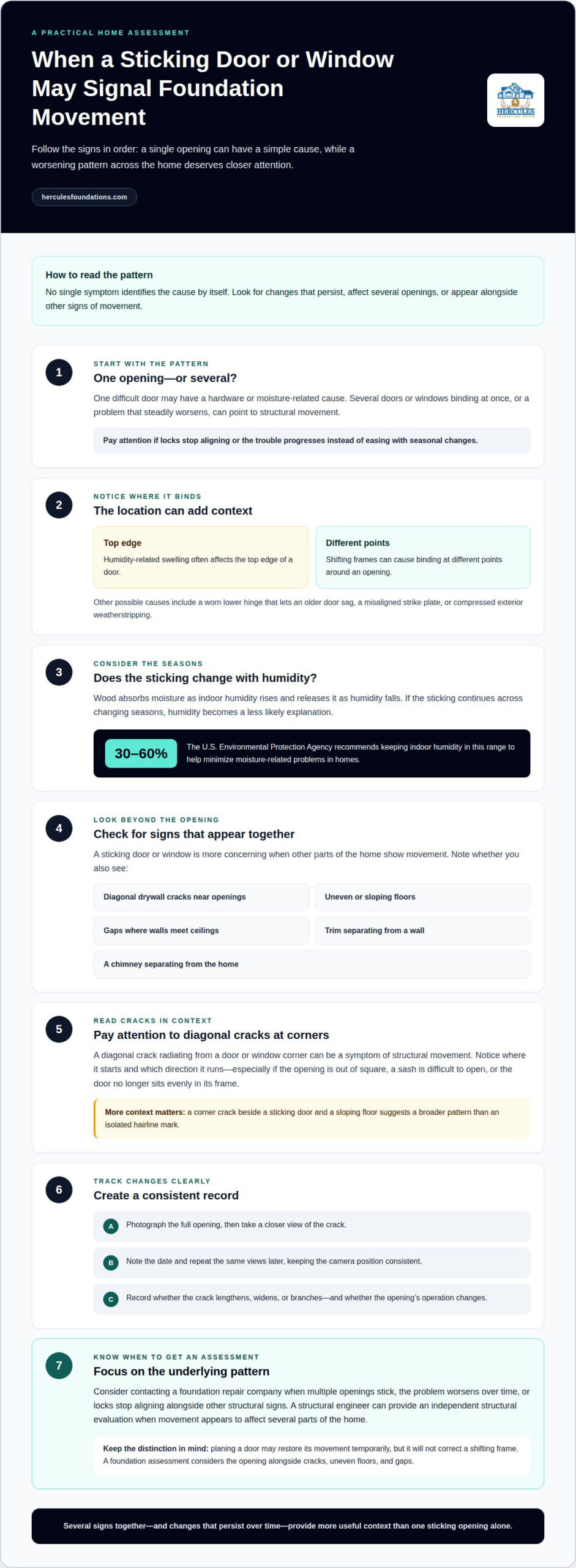
Foundation movement can pull a home’s frame out of square, changing how doors and windows fit. Pay attention if several openings stick at once, locks no longer align, or the problem progresses instead of easing with seasonal changes. These patterns make sticking doors and windows a possible sign of foundation issues, especially when other parts of the home show movement.
Notice where the door binds. Humidity-related swelling often affects the top edge, while shifting frames can cause binding at different points. A worn lower hinge can also make an older door sag, and a misaligned strike plate may prevent latching even when the door is square. Compressed exterior weatherstripping can create a similar sensation without any frame movement.
Seasonal changes matter. Wood absorbs moisture as indoor humidity rises and releases it as humidity falls. The U.S. Environmental Protection Agency recommends keeping indoor humidity between 30 and 60 percent to help minimize moisture-related problems in homes. If sticking continues across changing seasons, humidity becomes a less likely explanation.
Repair Costs and When to Seek Help
There’s no single typical cost to repair or replace a sticking door or window. The work might involve adjusting hardware, repairing the frame, or replacing the unit. Cost depends on the specific repair and materials, so a general figure would not reliably describe an individual job.
Contact a foundation repair company when multiple openings stick, the problem worsens over time, or locks stop aligning alongside other structural signs. Seek a structural engineer’s assessment when movement appears to affect several parts of the home or you need an independent structural evaluation. Planing a door may restore its movement temporarily, but it won’t correct a shifting frame.
Also note uneven floors, gaps where walls meet ceilings, or a chimney separating from the home. Alongside persistent sticking, these signs warrant attention to possible foundation problems.
What Causes Windows And Doors To Stick Or Jam?
Foundation settlement, shifting crawl-space supports, moisture, and poorly compacted soil can all distort framing. Soil conditions, regional climate, and local building-code requirements influence foundation design and how movement may affect a home.
Settlement and Shifting Soil
Settlement occurs when soil beneath a foundation compresses or shifts, changing how the structure is supported. If one area moves more than another, framing can bend or twist, affecting doors and windows above it. Poorly compacted fill may compress under a home’s weight, while changes in soil moisture can alter support. These factors can also contribute to cracks or sloping floors.
Loess and Differential Settlement
Differential settlement on loess occurs when separate areas of a foundation move by different amounts. That uneven movement matters because framing follows the foundation, so openings may become distorted even if the whole home has not shifted uniformly. Where soil moisture or compaction varies beneath the structure, support can change from one area to another. The result may include binding doors or windows in particular parts of the house.
Soil, Climate, and Regional Building Codes
Soil type and climate affect conditions beneath a home, while regional building codes establish local foundation design requirements. In New Hampshire and Massachusetts, changes in soil moisture and compaction can contribute to settlement. A door problem in one region may therefore have different underlying soil conditions from a similar problem elsewhere. Local requirements and site conditions both matter when assessing movement.
For a settling foundation, steel piers can be driven or screwed into deeper soil to connect the structure with bedrock or load-bearing strata. Reaching a solid supporting layer may allow the structure to be lifted toward its original level. If signs point to foundation movement, foundation repair may address the underlying support issue rather than only the affected opening.
Diagonal drywall cracks around doors and windows
A diagonal crack radiating from a door or window corner can be a symptom of structural movement. Openings interrupt the wall, making the surrounding area more vulnerable to stress, particularly in load-bearing exterior walls. When foundation settlement changes how the wall is supported, that stress can appear as cracking around the opening.
Notice the crack’s position and direction. A line starting at the upper corner of a window or door deserves attention, especially if the opening is also out of square. The sash may become difficult to open, or the door may no longer sit evenly in its frame. These details help distinguish a crack connected with movement from a mark elsewhere on the wall.
Look for symptoms that appear together. A diagonal crack near a frame carries more significance if nearby floors feel uneven, trim separates from the wall, or a gap forms where the wall meets the ceiling. For example, a corner crack beside a sticking door and a sloping floor suggests a broader pattern than an isolated hairline mark. No single symptom identifies the cause by itself.
Track changes instead of relying on memory. Take a clear photograph that includes the full opening, then capture a closer view of the crack and note the date. Repeat the same views later, keeping the camera position consistent. Record whether the crack lengthens, widens, or branches, and whether the window or door’s operation changes over that time.
A foundation assessment considers the crack alongside other visible symptoms, including uneven floors, gaps, and distorted openings. This wider view matters because patching drywall can hide a surface mark without addressing movement beneath the structure. If cracks grow or several signs appear together, arrange an evaluation focused on the foundation and how the structure is supported. Describe what changed and where, rather than reporting only that a wall has cracked.
Choosing a foundation repair company
Choose a company focused on foundation work, not just the visible door or window. A sticking latch may be a hardware issue, but several distorted openings alongside cracks or uneven floors call for a broader structural assessment. The goal is to understand what is moving before deciding which repair fits.
Have foundation concerns assessed by a foundation repair company rather than relying on a general contractor or handyman. A door specialist can adjust a latch or frame, but that work won’t establish whether the foundation or its supports are shifting. For example, adjusting one door won’t explain why windows elsewhere also bind.
A useful assessment connects symptoms across the home. The company should consider where openings stick, nearby diagonal cracks, uneven floors, and gaps between walls and ceilings. These details help distinguish an isolated opening problem from a pattern that may involve structural movement. A clear explanation should identify the observed signs and how they relate to the proposed repair.
Before settling on a repair plan, look for a scope that describes the affected area and the foundation condition being addressed. For a slab home, the concern may involve the slab; a pier-and-beam home has a different support system. Established building and structural specialists such as Metro Reconstruction Services, Inc. emphasize that the repair approach should match the home’s foundation type and the movement observed, rather than treating every sticking door as the same problem.
- Foundation focus: The assessment centers on foundation movement, not only door adjustments.
- Whole-home context: Openings, cracks, floors, and gaps are considered together.
- Clear scope: The proposed work relates to the identified area and foundation type.
If binding openings appear alongside other structural signs, take the next step toward understanding the foundation. Discuss your foundation concerns with a team focused on foundation repair.
Hercules Foundation Repair: Foundation Repair
Hercules Foundation Repair provides Foundation Repair for homeowners dealing with signs that may point to foundation movement. When sticking doors or windows appear alongside uneven floors, shifting frames, or cracks, addressing the foundation may matter more than adjusting one opening. The right repair depends on the home’s foundation type and the movement involved.
For homes with slab foundations, Slab Foundation Repair addresses concerns specific to that structure. Pier and Beam Foundation Repair is for homes built with a pier-and-beam support system. These options connect the repair to the foundation beneath the affected rooms, rather than treating every home the same way.
If several structural signs are affecting your home, contact Hercules Foundation Repair to discuss your foundation concerns.
Take the Next Step Toward a Clear Answer
Before arranging cosmetic adjustments, decide what you need resolved: a door that won’t latch, a window that binds, or a broader concern about the home’s structure. That distinction helps keep the next conversation focused on the cause, not just the most visible symptom. If you’re weighing whether sticking doors and windows point to foundation issues, describe the pattern you’ve noticed and what you want assessed.
A focused conversation can help clarify whether the concern calls for foundation-related work or an adjustment to an individual opening. Hercules Foundation Repair can discuss your foundation concerns and the next step for your home. Share the locations affected and the changes that led you to seek help, so the discussion starts with the details that matter to you.
Contact Hercules Foundation Repair to talk through your concerns and move forward with greater clarity.
Frequently Asked Questions
What other signs of foundation damage occur with sticking doors and windows?
Other signs can include separated chimneys, floor gaps, and visible changes around masonry or interior finishes. In historic properties where movement causes exterior cracking and facade wear, masonry specialists like progressivecontractingny.com can help restore damaged stonework once structural concerns are resolved. Notice how symptoms relate across rooms: for example, a sticking upstairs door paired with a widening gap near a downstairs floor suggests more than one opening may be affected. Note each location and change so an assessment can consider the home’s overall pattern instead of one isolated symptom.
How can you tell foundation movement from humidity or seasonal swelling?
Compare when the sticking occurs, where it binds, and whether other openings are affected. A door that binds along its top during humid conditions may reflect wood swelling; a problem that continues through changing seasons or affects several frames has a different pattern. Also consider ordinary hardware: a worn hinge or misaligned strike plate can interfere with latching without indicating foundation movement.
What causes doors and windows to stick when a foundation shifts?
Uneven foundation movement can change the shape of the structure above it. If one section settles differently, walls and framing may shift, altering the alignment of nearby openings. A window frame can become difficult to operate, while a door may no longer meet its latch correctly. In homes with crawl spaces, settling supports can also affect the floors and framing above them.
How do professionals inspect sticking doors and windows for foundation issues?
A foundation-focused assessment considers openings alongside other structural clues. A professional can compare which doors and windows bind, note whether frames appear out of square, and examine nearby cracks, floors, and gaps. The foundation type matters too: slab and pier-and-beam structures have different support systems. Sharing dated photos and a location-by-location symptom list can help explain changes over time.
What foundation repair methods fix doors and windows that stick?
The repair method depends on the foundation and the source of movement, not simply on which door sticks. Steel piers may support a settling foundation by reaching deeper load-bearing soil. In a crawl space, jacks with concrete bases can support and lift the structure. Once support is addressed, framing alignment may change, but adjusting or replacing an opening alone won’t correct a moving foundation.
Is it safe to keep using a home with sticking doors and windows and foundation cracks?
Sticking openings and cracks alone don’t establish whether a home is safe to occupy. Pay attention to whether doors or windows still operate, whether cracks are changing, and whether additional areas show movement. If several structural signs occur together or changes progress, arrange an assessment by a foundation repair company or structural engineer. Keep clear notes and photos to communicate what has changed.