
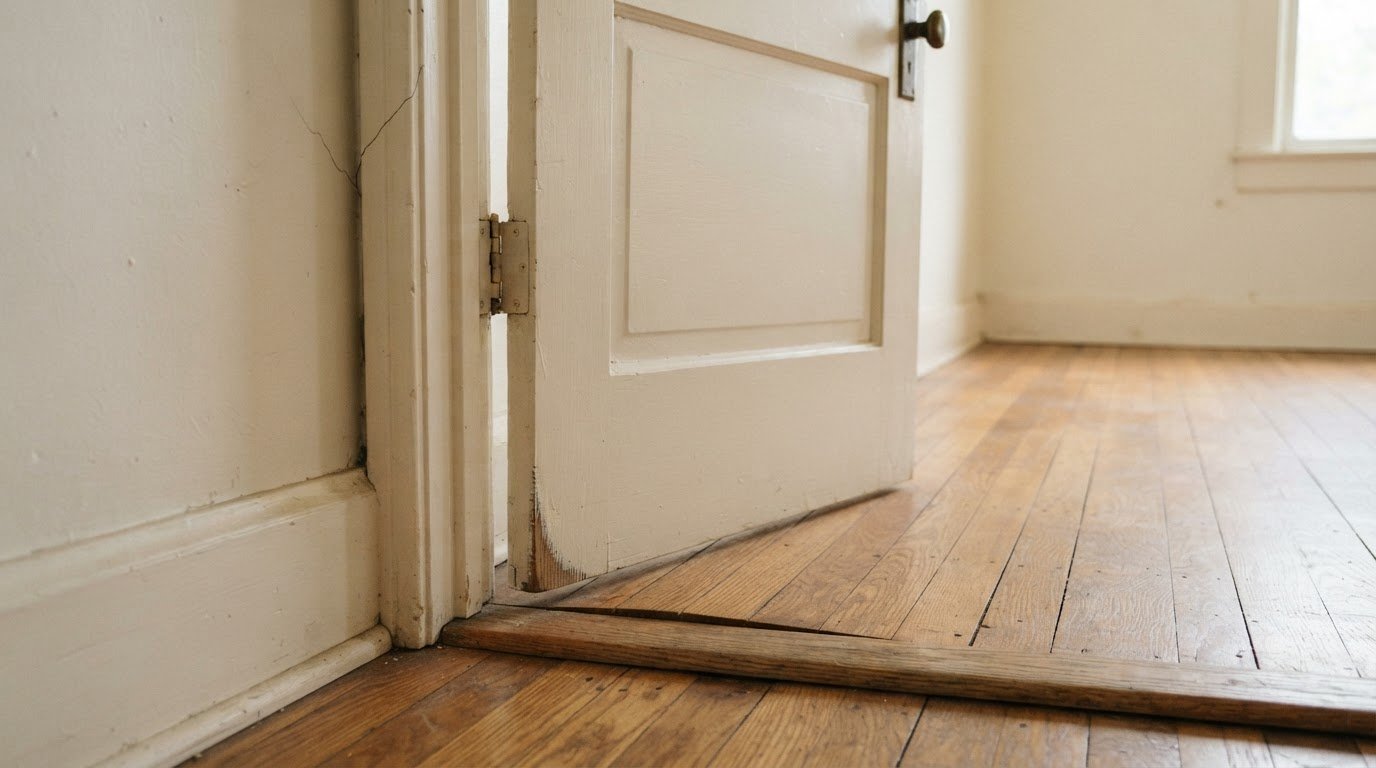
Shimming a pier-and-beam foundation in Houston means placing a small steel or composite piece between a beam and its support pier to restore contact or stabilize a settled area. It may help close a localized gap when the pier, beam, and nearby framing are sound. It won’t fix a sinking pier, damaged wood, or the cause of soil movement. Shim repairs may need adjustment or reinforcement every couple of years.
An uneven floor can signal foundation movement, but the right repair depends on what’s happening beneath the house. Houston’s changing soil moisture, drainage issues, and crawl-space conditions can affect soil support and wood framing, so adding shims alone may not address the underlying problem. This article covers signs of an uneven pier-and-beam foundation, common causes of settlement, when shimming may be appropriate, and what to assess before adjusting shims. The repair should match the condition of the supports, beams, and surrounding structure.
Key Takeaways
- Sloping floors, sticking doors, or cracks can point to movement, but the pattern of symptoms helps identify where to look.
- Shimming suits only some localized support issues; weakened beams, damaged joists, or unstable piers call for a different repair approach.
- Careful elevation checks and gradual adjustments help reveal how the structure responds during repair.
- Understanding what’s driving settlement can help prevent a temporary adjustment from becoming a recurring problem.
How often does a pier and beam house need re-shimming?
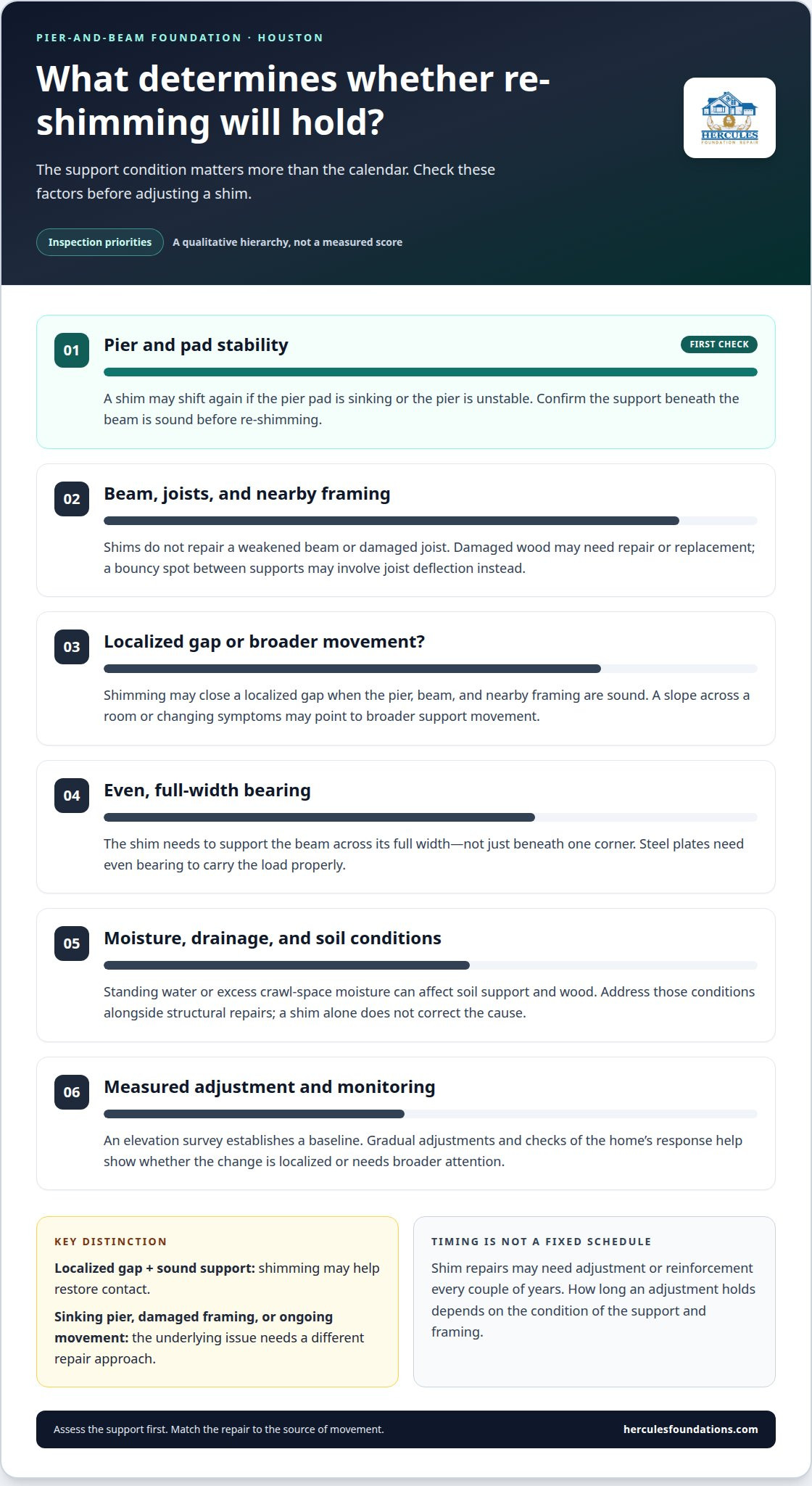
There’s no fixed calendar for re-shimming every pier-and-beam home. Shim repairs may need adjustment or reinforcement every couple of years, but support condition matters more than the schedule. An adjustment may hold longer when the pier is stable and the framing is sound. If the pier pad is sinking, replacement shims may shift again. Assess the support beneath the beam before re-shimming.
Shimming can close a localized gap between a beam and a sound pier. Steel plates need even bearing. Wood shims may serve as a temporary adjustment when moisture and deterioration aren’t compromising the support. Neither material repairs a failing pier, weakened beam, or damaged joist. Shims need to bear across the beam’s full width, not just beneath one corner, to support the load properly.
Match the repair to the source of movement. A dropped pier or unstable pad may need support work, while a weakened beam may need repair or replacement. A bouncy floor between supports can point to joist deflection, which shimming a pier won’t correct. Standing water or excess crawl-space moisture can also affect soil and wood, so address those conditions alongside structural repairs.
A professional assessment can start with an elevation survey, followed by checks of the pier pad, beam, joists, and accessible crawl-space framing. The repair plan may include leveling beams, adding support piers, replacing damaged wood, or addressing drainage and crawl-space moisture. Adjustments are made gradually while the crew monitors the home’s response. This helps distinguish a small support gap from broader foundation movement.
Have a professional assess foundation shimming when floors are changing, framing is damaged, or a pier appears unstable. A careful process measures elevations, inspects supports, identifies the cause, selects a suitable repair, and monitors the structure during adjustment. Whether permits or building codes apply in Houston depends on the project’s scope and applicable local requirements, so resolve that before work begins.
Signs of an uneven pier-and-beam foundation
Movement in a raised foundation can show up inside the home, around doorways, or beneath the floor. Look for patterns across rooms, rather than treating one isolated symptom as a diagnosis.
Warning Signs of Raised-Foundation Movement
Uneven or sloping floors, soft or bouncy spots, and sticking doors can signal movement in a raised foundation. Drywall cracks, gaps above baseboards, or windows that become harder to open may appear as framing shifts. A musty odor can point to crawl-space moisture, which may also affect wood and soil support. Several signs together deserve attention because differential movement can stress beams, joists, and subflooring.
Signs of Failed or Displaced Shims
If a previously adjusted floor dips again near the same support, a shim may have shifted or lost its bearing. From the crawl space, a professional may find a tilted shim, a visible gap between beam and pier, or contact limited to one corner. These clues don’t prove the shim caused the movement. The pier pad, beam, and nearby framing also need assessment before another adjustment.
Pay attention to where symptoms occur. A single soft area between supports may involve a joist or subfloor, while a slope extending across a room can suggest broader support movement. Sticking doors on one side of the home, together with nearby floor changes, offer a more useful pattern than either symptom alone. In older Houston homes, minor floor variation may reflect years of material movement and past adjustments.
Visible changes matter more when they progress or appear together. A new baseboard gap, widening drywall crack, or worsening floor slope can indicate ongoing movement. A crawl-space inspection can help compare accessible piers, beams, and framing with the affected rooms above. This helps distinguish a localized issue from broader foundation concerns and guides the repair plan. For persistent symptoms, a professional foundation assessment can help identify the source before another shim is added.
Gradual structural adjustments and monitoring
Adjust a raised foundation deliberately, while monitoring the home’s response. An elevation survey provides a baseline, showing which beam lines have dropped and by how much. During the work, those readings help track changes instead of relying on one floor slope or door gap. The goal is controlled adjustment, not a sudden correction that shifts stress elsewhere.
Before changing a shim, inspect the pier, pad, beam, and nearby framing. A steel shim plate doesn’t rot or compress, but it needs even bearing to carry its load properly. Composite shims resist moisture, though they can creep under long-term pressure. Material matters, but neither type can stabilize a pier that keeps sinking or repair a weakened beam.
Make adjustments in measured stages. After each change, the crew can compare the structure’s response with the original elevation readings and check whether the beam has stable contact across the support. For example, if one beam line rises while nearby framing shifts, that response is useful evidence. It may show that the support system needs broader attention, not more shim material at one point.
Monitoring helps distinguish a localized correction from a repair that needs reinforcement. A shim that moves again may point to a changing pier pad, moisture-related soil movement, or deteriorating framing. Replacing the shim without addressing the cause can bring the same unevenness back. A stable result depends on matching the adjustment to the conditions found during inspection.
For a re-shimming job involving three support stacks in one room, the work can take an afternoon. That example describes the adjustment itself, not a standard timeline for every foundation. The number of affected supports, access, and condition of the beam and piers all influence the work. Continued observation of floor elevations and support contact helps show whether the repair remains stable or needs further assessment.
Causes of pier-and-beam foundation settlement
Shimming a pier-and-beam foundation in Houston may close a support gap, but it won’t explain why the support moved. Expansive soil responds to changing moisture levels, and dry periods can shift soil moisture around a raised home. These changes may affect pier support and contribute to uneven floors. Connect visible movement with conditions beneath the house before choosing a repair.
Moisture can affect soil and wood framing at the same time. Poor drainage may keep soil wet near a foundation, while high crawl-space humidity can expose beams and joists to damp conditions. A plumbing leak can introduce moisture in one area, and standing water may affect nearby supports and framing. Because these causes differ, the repair needs to address the actual condition, not just the floor symptom.
Wood rot and pest damage can weaken beams or joists, while deficient support piers may fail to carry the structure steadily. Shimming a pier-and-beam foundation in Houston won’t restore deteriorated wood or stabilize a pier that continues to shift. A bouncy spot between supports may also involve joist deflection, which calls for a different repair than a gap at the pier.
Several causes can overlap. Poor drainage, for example, can increase crawl-space moisture while changing soil conditions beneath a support. A crawl-space inspection and comparison of floor elevations can help distinguish localized movement from broader settlement. Before shimming, assess pier and pad condition, beam and joist integrity, drainage, and moisture. The findings help determine whether to level beams, add support piers, replace damaged wood, or improve drainage.
Shimming is most useful when the pier, beam, and nearby framing remain sound and the gap is localized. If floor changes persist, request pier-and-beam foundation repair to address the cause as well as the visible movement.
Hercules Foundation Repair: Pier and Beam Foundation Repair
Hercules Foundation Repair provides Pier and Beam Foundation Repair for homes with uneven floors, shifting supports, or damaged framing. If symptoms return after shimming or movement appears in several areas, a broader repair may be needed instead of another shim adjustment. The right work depends on the foundation’s condition and the source of settlement.
Repairs may involve leveling beams, adding support piers, or replacing damaged wood components. Addressing drainage or crawl-space moisture can also matter when those conditions contribute to movement. An assessment of the accessible structure connects visible floor changes with the supports beneath the home and helps identify a suitable repair approach.
If you’re seeing recurring movement or changes across multiple rooms, contact Hercules Foundation Repair to discuss your pier-and-beam concerns.
Choose a Clear Next Step for Your Home
To decide whether shimming a pier-and-beam foundation in Houston is appropriate, first clarify what you need the repair to accomplish. A temporary adjustment may restore contact at a support, but the next step should account for the home’s condition and the cause of movement. Note where changes appear and when you noticed them to make a conversation about the structure more focused.
You don’t have to choose a repair method before seeking guidance. Describe the areas that concern you and any changes you’ve observed, then discuss what an assessment can clarify. A measured plan helps you move forward without relying on repeated adjustments alone.
Contact Hercules Foundation Repair to talk through your foundation concerns. A clear first conversation can help you take the next step with confidence.
Frequently Asked Questions
What is shimming?
Shimming means placing a thin support piece at a connection to fill a gap or secure contact. In a raised foundation, this usually means placing it between a beam and its pier. Think of it as adjusting the meeting point between two structural parts, not rebuilding either one. It won’t correct a floor that bounces because a joist flexes between supports.
Can I shim my own floor?
Professional help is the safer choice for foundation supports. A floor that feels low may involve a shifted pier, weakened beam, or damaged joist. Adding a shim without identifying the cause can worsen instability. A professional can assess the support system and how the home responds to adjustment. Don’t treat a change in floor level as a simple household fix.
Is shimming a real repair or a temporary fix?
Shimming can close a localized support gap, but it’s only temporary if the underlying cause remains. For example, replacement material won’t prevent recurring movement if a pier pad continues to sink. If the pier, beam, and nearby framing remain sound, an adjustment can restore contact at that point. Whether that’s enough depends on whether the support is stable or needs broader repair.
What does shimming a pier and beam foundation involve?
The work begins by identifying the affected support and determining whether the beam and pier can carry the load. A crew then selects suitable shim material, positions it to bear evenly across the beam, and makes a measured adjustment. The structure is monitored during the work. A joist that flexes between piers needs a different repair from a gap directly over a support.
How can I tell if a pier and beam foundation in Houston needs shimming?
A recurring dip near one support, a gap between a beam and pier, or a newly sloping floor can signal a support issue. Sticking doors, drywall cracks, and baseboard gaps may also accompany foundation movement, but they don’t by themselves show that shimming is the remedy. In Houston, San Antonio, Austin, and Victoria, the condition of the supports and framing determines which repair fits.
What materials and tools are used to shim floor joists and beams?
Common shim materials include steel plates and composite or plastic pieces; wood shims may also be used for short-term adjustment. Steel needs even bearing, while composite material can creep under long-term load. Professionals use elevation measurements to locate dropped beam lines and inspect accessible crawl-space supports before choosing a material. The right shim supports the beam, not just one corner or a joist span.