
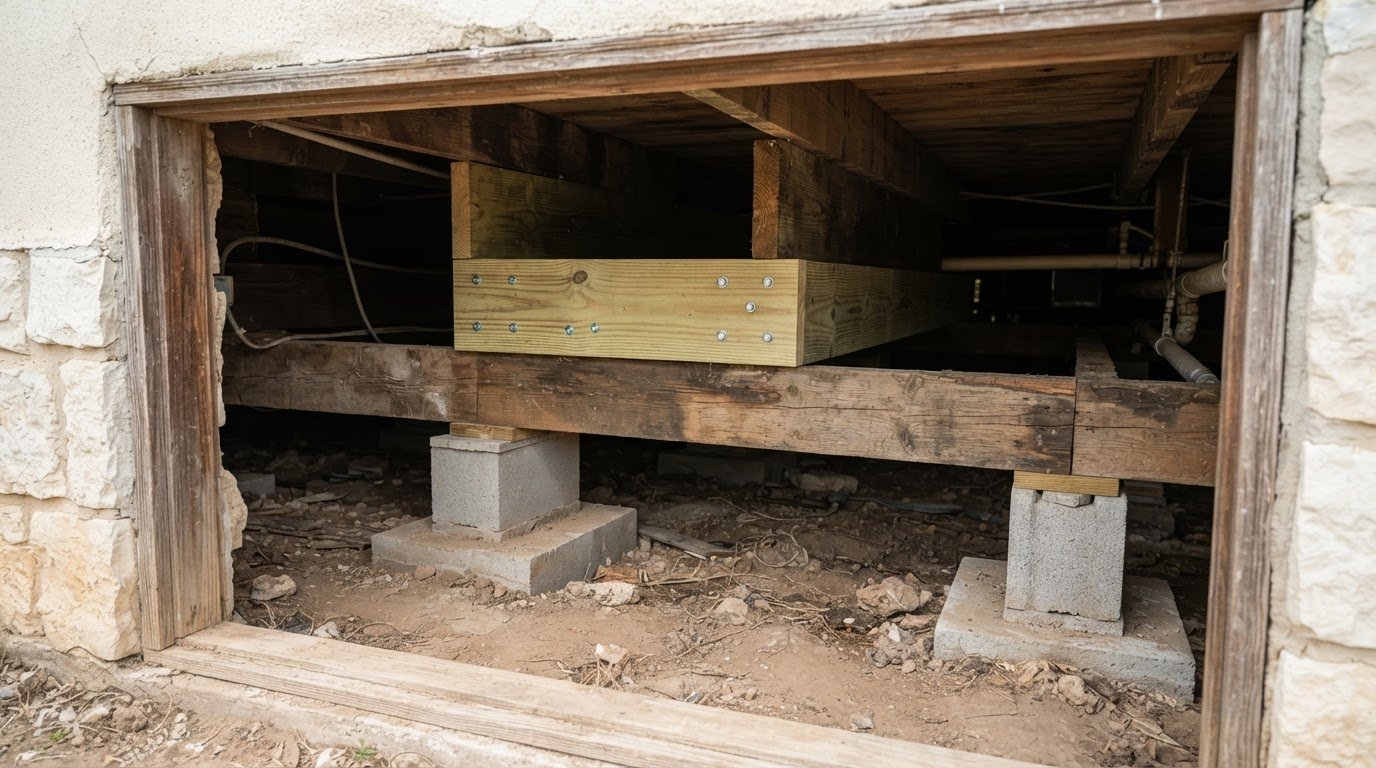
A floor that dips or feels springy can point to a problem beneath the room, but it doesn’t reveal which support has shifted or weakened. Repairing pier and beam foundation problems starts with understanding how piers, beams, floor joists, and the crawl space work together. A single crack or squeak can have more than one cause, so the pattern matters.
It’s natural to feel concerned when doors stick, floors slope, or cracks appear. This guide explains how a pier-and-beam foundation is built, which interior changes may signal movement, and when an inspection can clarify what’s happening. You’ll also learn how repairs can address underlying issues, from adjusting supports to replacing deteriorated wood. Understanding the structure and warning signs helps you take a measured next step instead of guessing from one symptom.
Key Takeaways
- Understand how piers, beams, and the crawl space support the home, and why moisture below the floor can affect wood and tile.
- Look for patterns such as sloping floors, widening cracks, and sticking doors rather than assuming one symptom proves foundation movement.
- Know when several changing signs make a professional inspection a sensible next step.
- Learn how repairs may address the underlying cause, from adjusting support to replacing damaged structural wood.
What is a Pier and Beam Foundation?
A pier-and-beam foundation raises a home above the ground on piers and horizontal beams. Concrete piers transfer the home’s weight toward stable soil, while beams support the floor joists and subfloor. The crawl space provides access to plumbing, electrical wiring, and HVAC equipment. Unlike a basement, it generally isn’t designed as a finished living area.
In San Antonio, Austin, Houston, and Victoria, drainage, soil conditions, and local weather can affect repair needs. Poor drainage or changing soil moisture may contribute to ground movement and uneven support. An assessment considers the conditions at the property rather than assuming every home in the region responds the same way.
Crawl-space conditions can affect both the foundation and the floors above it. Poor ventilation, persistent moisture, or standing water can damage wooden beams, joists, and subflooring. Leaky pipes, surface runoff, and seasonal groundwater can introduce water. Rainwater and plumbing leaks are drawn toward foundations by gravity, according to the U.S. Environmental Protection Agency. A vapor barrier can help limit ground moisture reaching the wood.
Moisture damage may show up as soft or spongy floor areas, but it isn’t the only possible cause. Wood rot can weaken beams and joists, and mold or pests may accompany damp conditions. Cracked tile or grout doesn’t automatically mean the foundation has moved. Humidity and crawl-space moisture can also contribute to grout cracks, so consider tile symptoms alongside other changes.
Repair decisions depend on what an inspection finds beneath the floor. Damaged wood may need replacement, while shifted or poorly supported areas may need adjusted shims or added piers. Addressing water intrusion and drainage is also important. Leaving moisture at its source may expose wooden components to further decay.
Common interior signs of foundation movement
Interior symptoms are more meaningful when they appear together or change over time. A floor that slopes across a room, develops a new dip, or feels bouncy may reflect uneven support below. New squeaks can point to shifting floor components, though loose boards or other issues may cause them. Note where each change appears, such as a low spot near an exterior wall or a squeak along a hallway, to show whether symptoms cluster.
Changes to walls, doors, and windows offer further clues. Diagonal cracks extending from a door or window frame can form as settlement pulls on part of a wall. A door that sticks, no longer latches, or swings differently may indicate its frame has moved out of square. Gaps between walls and ceilings, or cracks that grow wider, provide added context. One small crack alone doesn’t establish the cause, but several changes in the same area deserve attention.
A pier can settle if the ground beneath it loses support or shifts. Expansive soil changes volume as its moisture changes, which may alter support beneath piers. Poor drainage can leave soil saturated near the home, while erosion can wash soil away from a pier or perimeter stem wall. Either condition may reduce stability. Wooden beams can then shift or lose even contact with their supports, creating uneven floors above.
Look for a pattern, not a single clue. If sloping floors occur alongside sticking doors and widening cracks, record where each appears and whether it changes. That information helps connect interior symptoms with movement below the structure. For a closer evaluation of these signs, foundation movement concerns can be reviewed as part of a professional assessment.
When to seek a pier-and-beam foundation inspection
Arrange an inspection when several changes appear together or keep progressing. Sloping floors combined with widening cracks, sticking windows, and doors that no longer latch suggest more than an isolated finish issue. A plumbing leak, musty crawl-space odor, or visible water intrusion adds another reason to investigate. A professional assessment can distinguish foundation settlement from damage limited to flooring or framing.
Shimming can restore contact when a beam has shifted but its supporting pier remains sound. A leaning, sinking, or damaged pier may need stabilization or replacement. New support piers can help where existing supports no longer carry the load adequately. The repair choice depends on the condition and position of the piers, beams, and soil.
Repair generally starts by identifying the cause and locating weakened or displaced supports. The work may involve adjusting shims, reinforcing or replacing damaged components, or adding piers. Addressing drainage or crawl-space moisture may also be important if water contributed to the damage. The sequence and scope depend on conditions beneath the home.
Choose a contractor experienced in pier-and-beam repairs, which require specialized knowledge and equipment. A sound assessment explains the observed settlement, the affected supports, and how the proposed repair addresses the cause. For example, replacing a rotten beam alone won’t correct a pier that has lost soil support.
Permit and engineering requirements vary with local rules and the repair scope. An engineering assessment can help identify the underlying cause and suitable structural response, while local requirements determine whether permits apply.
Homeowners shouldn’t attempt structural pier-and-beam repairs without specialized knowledge and equipment. Shoring, lifting, or replacing supports affects the load path beneath the home, so improvised jacks or tools can create additional instability. For non-structural fixes such as easing sticking doors, repairing cosmetic drywall cracks, or securing loose floorboards, turning to a trusted service like American Handyman is a practical way to manage routine household maintenance safely.
Repair duration varies with the damage, access beneath the home, weather, and required permits. Long-term performance depends on sound supports and addressing contributing conditions, such as drainage problems or recurring moisture, rather than correcting only the visible floor symptom.

Pier-and-beam foundation structure
The load path explains why each part matters. In typical construction, concrete spread footings sit near ground level and support concrete piers. Those piers carry beams, which support wooden floor joists and the subfloor. A concrete beam or stem wall may run around the perimeter. Building contractors such as Pronamic Construction Limited design and install these foundational elements to ensure proper load distribution from the ground up. Together, these components transfer the home’s weight downward and help keep the floor structure aligned.
The crawl space separates the raised floor from the ground and provides access to structural components and utilities. Its clearance also affects how repairs can be carried out. If a beam shifts off a pier, the floor above may lose support at that point. If a pier settles, connected parts can shift as the load redistributes through the structure.
Different supports serve different roles. Concrete piers provide bearing points, beams bridge between them, and joists span beneath the subfloor. Adjustable screw jacks can support beams, but their performance depends on the ground beneath them. Helical piers offer another support method. The right approach depends on which component has moved and whether the soil can continue to provide stable bearing.
Connection and alignment matter as much as the components themselves. A shifted beam may need repositioning and secure brackets or supports. Added support posts or jacks can improve stability in affected areas. Failed shims may need replacement, while damaged beams or joists may require repair or replacement. Each measure addresses a different weakness, so adding support without correcting the underlying condition may not resolve the source of movement.
Think of the foundation as a connected load path, not a row of independent posts. A door that no longer closes properly may reflect movement transmitted from a pier through a beam and floor framing. Repairs should therefore match the movement’s location and cause. Explore pier and beam foundation repair for help addressing support problems in this type of structure.
Hercules Foundation Repair: Pier and Beam Foundation Repair
Hercules Foundation Repair provides Pier and Beam Foundation Repair for homes with shifting supports, damaged beams, or uneven floors. When several signs point to movement, a professional assessment can identify which parts of the structure need attention and connect the symptoms to their cause.
Repair needs vary. A project may involve adjusting support, adding piers, or addressing deteriorated structural components. The appropriate work depends on the foundation’s condition and the affected areas. Hercules Foundation Repair also provides Foundation Repair, Slab Foundation Repair, and Commercial Foundation Repair for other foundation concerns.
If you’re seeing changes in your floors, walls, or doors, contact Hercules Foundation Repair to discuss your foundation concerns.
Move Forward With a Clear Plan
A useful next step is to describe what has changed in your home and how it affects daily life. When repairing pier and beam foundation problems, the aim is to address the condition affecting the structure, not just make a visible symptom less noticeable. A clear discussion can help you understand the concern and consider what action makes sense for your home.
You don’t need to diagnose the cause on your own. Share what you’ve noticed and where it appears, then let the conversation start there. Contact Hercules Foundation Repair to discuss your foundation concerns and possible next steps. Taking a measured step toward answers can help you feel more confident about caring for your home.
Frequently Asked Questions
What are common signs of pier and beam foundation problems?
Common signs include floors that slope or feel unusually springy, new cracks, doors that stick, and windows that no longer operate normally. Consider how symptoms relate: a door that suddenly catches near a sloping floor may offer more context than either change alone. Note where symptoms appear and whether they progress. That record can help an inspector assess the pattern.
What causes pier and beam foundations to shift or sag?
Soil movement, moisture changes, and uneven soil compaction can affect support beneath a foundation. Temperature changes can also contribute to foundation damage. In San Antonio, Austin, Houston, and Victoria, the property’s drainage, soil conditions, and crawl-space moisture all matter when tracing the cause. A leak or runoff problem may affect one area differently from another, so the source and location help guide the assessment.
How do you inspect a pier and beam foundation and identify the problem?
A professional inspection connects visible symptoms with conditions beneath the home. The assessment can examine pier alignment, beam and joist condition, shims, and signs of moisture or wood decay, then compare those findings with floor or wall changes. A qualified engineer can help diagnose the underlying cause and recommend solutions. This can distinguish a support problem from a floor finish issue or isolated plumbing leak.
How much does pier and beam foundation repair cost in the United States?
There isn’t one price for every U.S. home. Cost depends on the case, including the home’s size and location, the extent of damage, and the type and complexity of repairs. In San Antonio, Austin, Houston, or Victoria, the work required still depends on the affected structure and conditions at the property. Pricing is provided after a quote request.
What are the risks of DIY foundation repair or delaying repairs?
DIY structural work can create further instability if lifting or shoring changes how the home’s weight is carried. Pier-and-beam repairs require specialized knowledge and equipment to assess and support the structure. Delaying attention can also allow movement or moisture-related damage to worsen. For example, a deteriorating beam may affect more than one floor area as it loses support.
Can homeowners repair pier and beam foundations themselves, and what tools are needed?
Homeowners shouldn’t attempt structural pier-and-beam repairs without specialized knowledge and equipment, because lifting or replacing supports can destabilize the home. The work requires specialized equipment, and improvised jacks or tools can create additional instability.