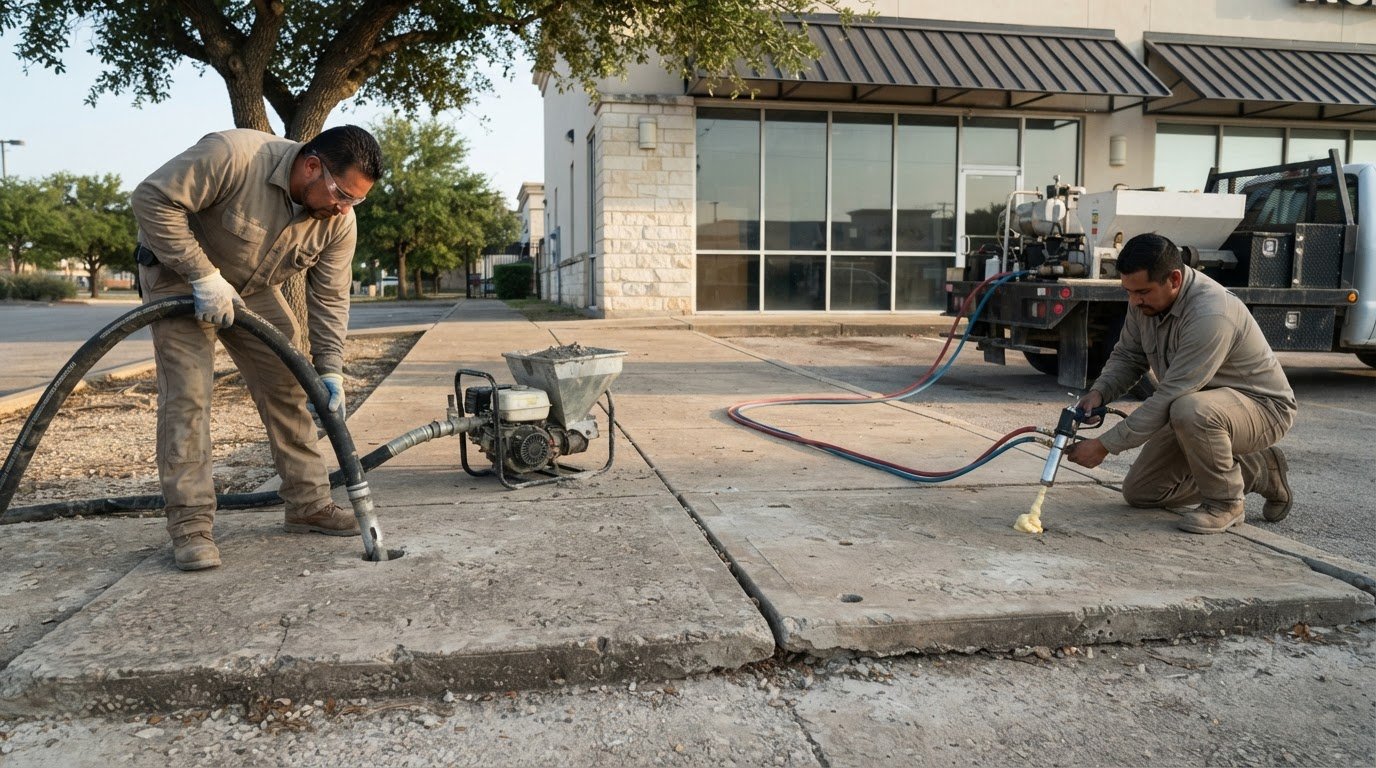
The lower-cost lifting method on paper may not be the better fit for your slab. A useful comparison of mudjacking vs. polyjacking cost in Texas looks beyond the material bill: mudjacking uses less expensive, heavier slurry, while polyjacking uses pricier, lightweight foam that’s typically ready for traffic within 15 to 30 minutes.
It makes sense to focus on upfront cost when a sunken driveway, patio, or sidewalk needs attention. But the project size, slab condition, and how soon you need the area back in use all help determine which method may fit.
This guide compares how the two materials work, what can affect project costs, and how their installation and return-to-traffic times differ. You’ll also find a practical way to weigh the trade-offs and decide when concrete lifting may suit the problem.
Key Takeaways
- See how project size and the type of concrete surface shape the overall cost comparison.
- Understand how each lifting material’s weight can affect its fit beneath a settled slab.
- Learn to distinguish initial set time from when a surface can handle foot or vehicle traffic.
- Use slab condition, site needs, and long-term value to guide your choice, not upfront cost alone.
Mudjacking slurry and polyurethane foam material costs
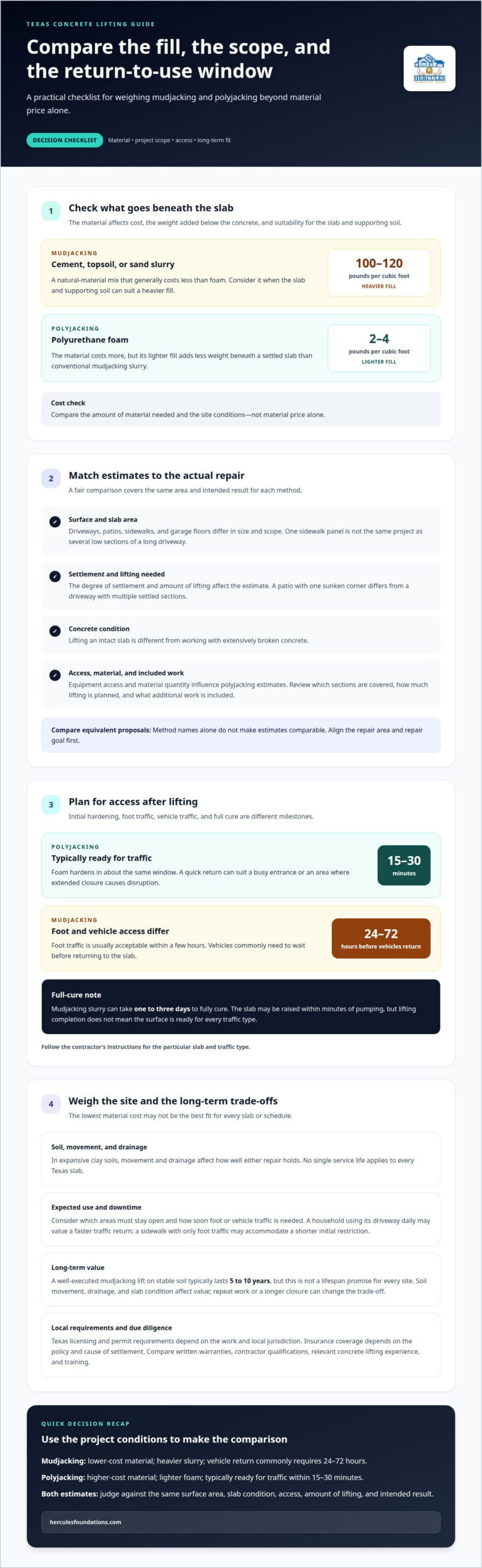
The lifting material affects cost, the weight beneath the slab, and the method’s suitability for the repair. In Texas, compare the material alongside the slab’s condition and the soil below it.
Mudjacking Slurry Costs
Mudjacking pumps a slurry of cement with topsoil or sand beneath settled concrete. The mixture weighs about 100 to 120 pounds per cubic foot, so it adds more weight below the slab than polyurethane foam. Its natural-material mix is generally less costly than the foam material. That can make mudjacking worth considering when the slab and supporting soil suit a heavier fill.
Polyurethane Foam Costs
Polyjacking injects polyurethane foam beneath the concrete slab. Polyurethane foam is a lightweight material compared with conventional mudjacking slurry. Its material costs more, but the lighter fill adds less weight beneath a settled slab. The best budget comparison considers the amount of material needed and site conditions, not material price alone.
| Method | Material | Weight | Cost consideration |
|---|---|---|---|
| Mudjacking | Cement, topsoil, or sand slurry | About 100 to 120 pounds per cubic foot | Lower-cost material; heavier fill |
| Polyjacking | Polyurethane foam | 2 to 4 pounds per cubic foot | Higher-cost material; lighter fill |
Choose by matching material weight and project conditions to the slab’s support needs.
For Houston, Austin, and San Antonio, project costs can vary with slab size, access, and the amount of lifting required. When evaluating mudjacking vs polyjacking cost Texas homeowners should note that those factors help explain why a local estimate may differ between projects, even within one metro area.
Texas licensing and permit requirements depend on the work and local jurisdiction, so rules can vary by project. In expansive clay soils, movement and drainage affect how well either repair holds. There is no single service life that applies to every Texas slab.
Homeowners insurance coverage depends on the policy and the cause of the concrete settlement. Before choosing a method, compare written warranties and contractor qualifications, including relevant concrete-lifting experience and training from trusted specialists like Hercules Foundation Repair.
Costs for driveways, patios, sidewalks, and other projects
Estimates reflect the slab area, degree of settlement, site access, and amount of material needed. For a fair comparison, make sure each estimate covers the same repair area and intended result.
Mudjacking Costs by Project
Mudjacking estimates vary for driveways, patios, sidewalks, and garage floors because each surface has a different size and scope. Lifting one settled sidewalk panel is not the same project as raising several low sections of a long driveway. Cracks matter, too: lifting an intact slab is different from working with extensively broken concrete.
Polyjacking Costs by Project
Polyjacking estimates depend on the area being raised, the amount of material required, and equipment access. A patio with one sunken corner differs from a driveway with multiple settled sections. Since installation methods also affect the estimate, compare equivalent areas and repair goals rather than method names alone.
For homeowners in San Antonio, Austin, Houston, and Victoria, the mudjacking vs polyjacking cost comparison depends on project conditions, not just the city. Access, slab size, and the amount of lifting can change the scope from one property to another. So, mudjacking vs polyjacking cost Texas homeowners compare should reflect the actual surface and work required.
Stone slurry grout leveling is another method, with costs shaped by its material needs and project scope. As with mudjacking and polyjacking, the area treated and repair required affect the estimate. Compare proposals on the same basis by reviewing which sections they cover, how much lifting is planned, and what additional work is included.
For a project-specific assessment of settled concrete, concrete leveling can help identify the repair scope and relevant cost factors.
Curing and return-to-traffic times
Polyurethane foam and cement slurry have different schedules after concrete leveling. Foam hardens in about 15 to 30 minutes, while mudjacking slurry can take one to three days to fully cure. That distinction matters when planning access to a driveway, sidewalk, or garage, especially if vehicles need to use the slab soon after lifting.
For polyjacking, the surface is typically ready for traffic within 15 to 30 minutes after injection. That quick return can suit a busy entrance or smaller area where extended closure causes disruption. Mudjacking repairs commonly need 24 to 72 hours before vehicles return, even though foot traffic is usually acceptable within a few hours. Follow the contractor’s instructions for the particular slab and traffic type.
“Ready for traffic” and “fully cured” aren’t interchangeable. Polyurethane foam hardening within 15 to 30 minutes doesn’t describe mudjacking cement slurry, which may need one to three days to cure fully. Mudjacking can raise a settled slab within minutes of pumping, but the concrete’s return to use depends on curing, not simply on when lifting ends.
For a mudjacking return-on-investment comparison, weigh the upfront project cost against how long the repair serves its purpose and how much downtime it avoids. A well-executed mudjacking lift on stable soil typically lasts 5 to 10 years, but that estimate isn’t a lifespan promise for every Texas site. Soil movement, drainage, and slab condition affect long-term value. A method with a lower initial cost may be less attractive if repeat work or a longer closure disrupts access.
Before scheduling, map out which areas need to remain open. For example, a household using its driveway daily may value polyjacking’s 15-to-30-minute traffic readiness, while a sidewalk with only foot traffic may accommodate mudjacking’s shorter initial access restriction. The proper choice balances curing time, expected use, and repair needs.
Mudjacking and polyjacking cost comparison
The lowest material cost does not automatically mean better value. Before choosing a method for settled concrete, compare the scope, access, slab condition, and how the area will be used.
An estimate reflects more than surface area. The amount of lifting, equipment access, and number of settled sections can change the work required. One low patio corner is a different project from several sunken panels along a long driveway. Compare estimates only when they describe the same areas and repair goals.
Mudjacking and polyjacking differ in material and installation. Slurry is heavier, while polyurethane foam is lighter and may be ready for traffic sooner. These characteristics help determine which method may fit a slab and site, but they do not establish the total project cost. Material quantity and repair conditions matter, too.
Consider replacement when concrete is extensively damaged rather than simply settled. Lifting can address uneven slabs, but it will not restore concrete that has broken apart or resolve every cause of ongoing movement. A settled patio with sound panels presents a different decision from a badly cracked driveway. Match the repair scope to the concrete’s actual condition.
- Compare the same driveway, patio, or sidewalk sections.
- Look for the stated lifting scope and material method.
- Account for access and the slab’s condition.
Project pricing depends on these factors, and the estimate is provided after a quote request. A useful cost comparison weighs the work included, not just the method name or lowest initial figure. Also consider how soon the area can return to use and the repair’s intended service life.
If sunken concrete needs a closer assessment, request a project assessment to discuss the repair scope.
Hercules Foundation Repair
Hercules Foundation Repair helps Texas property owners assess whether uneven concrete points to a slab concern or a broader foundation issue. If a settled surface is near your home or part of a commercial property, the surrounding foundation condition may matter as much as the choice between lifting methods. Consider the full problem, not only the visible low spot.
Hercules Foundation Repair offers Foundation Repair and Slab Foundation Repair for structural concerns beyond the choice between mudjacking and polyjacking materials. If you’re unsure whether the problem is limited to a concrete surface or connected to the foundation, contact Hercules Foundation Repair to discuss your property’s needs.
Choose the Next Step With Confidence
Let the concrete’s condition guide your next move, not the method that sounds newest or least expensive. When comparing mudjacking vs polyjacking cost in Texas, first consider how the settled area affects daily use and whether the issue appears limited to the surface or involves the surrounding structure. That distinction can shape a more useful repair discussion.
Before reaching out, note where the concrete has shifted, what has changed, and how the area is used. These details help focus the conversation on the problem and the options that may fit. If the issue seems broader than one slab, mention that, too.
Contact Hercules Foundation Repair to discuss your concrete or foundation concerns and take a practical next step. A clear understanding of the problem can make the path forward easier to choose.
Frequently Asked Questions
What Is Mudjacking?
Mudjacking lifts settled concrete by pumping slurry beneath a slab to raise it closer to level. Crews drill access holes, inject material into low areas, and adjust the slab as it rises. The method may suit sunken flatwork, such as a sidewalk or patio, when the concrete remains intact. It will not rebuild broken concrete or address every cause of foundation movement.
Can mudjacking damage underground plumbing or utility lines?
Drilling for mudjacking can pose a risk if an access hole or injected material encounters a buried line. The risk depends on where lines run and where the slab needs lifting. Before work begins, share any known utility or plumbing routes and point out where a line enters the building. If you see signs of a leak, address that concern before treating the slab as a simple leveling problem.
Does mudjacking work on a sinking house foundation?
Mudjacking may lift settled concrete, but it is not a general fix for a sinking house foundation. A porch or walkway can settle independently, while cracks, shifting walls, or sticking doors may point to a broader structural issue. Lifting a surface slab will not correct every foundation problem. For structural settlement, foundation repair addresses the building concern rather than only the uneven concrete surface.
How do I know if my slab needs lifting or replacement?
An intact slab that has settled unevenly may be suitable for lifting. Widespread crumbling, broken sections, or severe cracking can make replacement more appropriate because lifting does not restore damaged concrete. A sound patio panel sloping toward one corner differs from a driveway breaking into pieces. The key question is whether the slab is mainly out of position or has lost its structural integrity.
How is concrete lifting cost calculated?
Concrete lifting cost depends on the area being treated, how far it has settled, site access, and the amount of lifting material required. A small, accessible section and a large slab with several low points involve different scopes. Costs also vary by method and project conditions. The estimate is provided after a quote request, with scope, material needs, and access shaping the price.
How soon can I use my driveway after the repair?
Follow the repair instructions for the method and type of traffic. A polyjacked driveway is typically ready for traffic within 15 to 30 minutes, while mudjacking commonly requires keeping vehicles off the slab for 24 to 72 hours as slurry cures. Foot traffic may be possible sooner after mudjacking, but vehicle weight is different. Plan around the longer restriction if the method is mudjacking.