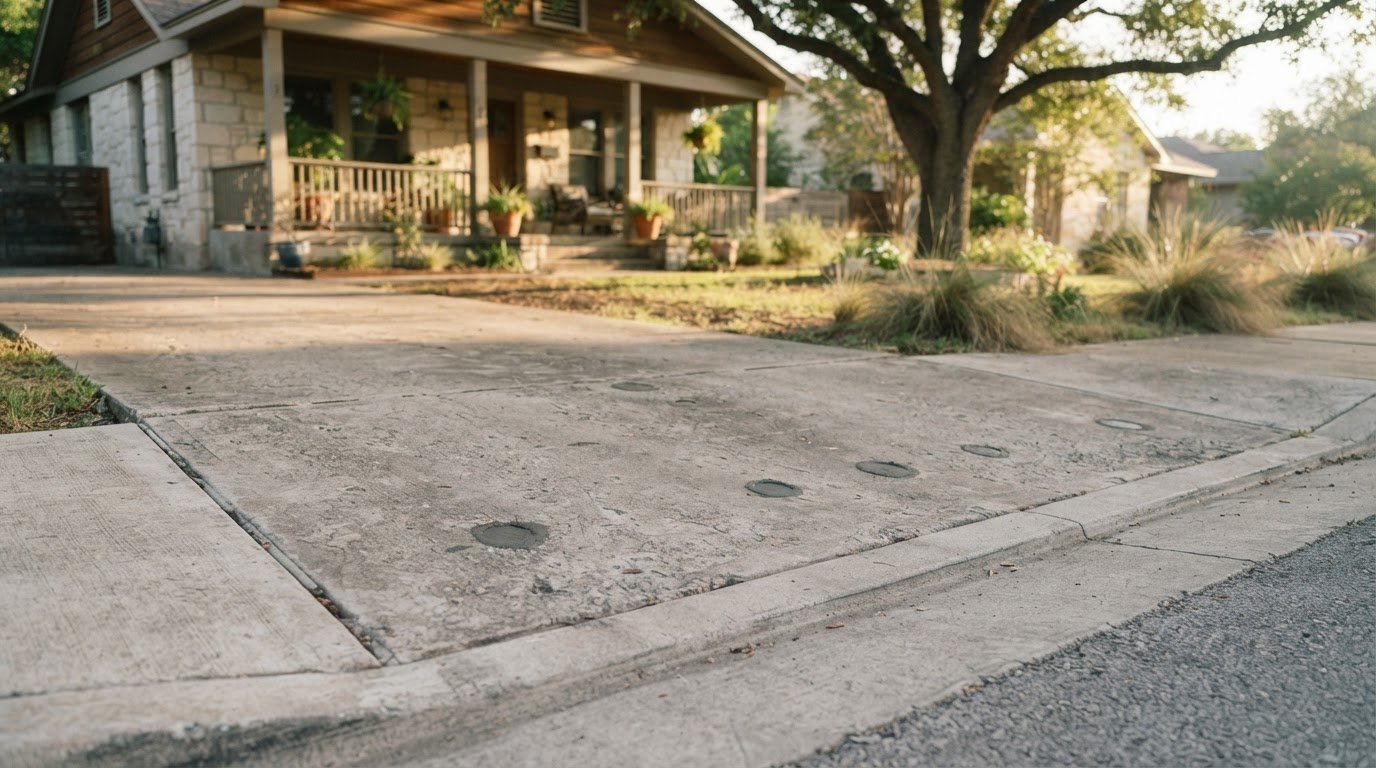
A sunken Austin driveway can be raised with mudjacking when the concrete slab is structurally sound. Mudjacking services in Austin pump grout beneath settled concrete to fill voids and lift the slab, offering an alternative to replacing the driveway.
A driveway that slopes, sinks, or separates can be frustrating, but identifying the cause is essential before choosing a repair. Austin’s clay soil, erosion, and poor drainage can contribute to settlement beneath concrete. Raising the surface alone may not address the underlying problem.
This article explains how mudjacking works, when it may suit a driveway, and when another repair may be more appropriate. It also covers what to look for in an assessment and estimate so you can make an informed decision about your slab.
Key Takeaways
- Learn how drainage patterns, erosion, and soil movement can contribute to driveway settlement, and why the cause matters to a lasting repair.
- Understand which contractor qualifications and insurance details help you assess whether a professional is suited to the work.
- Use an estimate’s explanation of the slab’s condition, repair scope, and site factors to make a more informed comparison.
- See when lifting settled concrete may be appropriate and when the condition of the slab points toward a different repair approach.
Causes of slab settlement, including erosion and poor drainage
Austin driveways can settle when the soil supporting the concrete shifts or erodes. Identifying the cause can help explain why one slab sinks while a nearby one stays level.
Erosion Beneath Concrete Slabs
Erosion occurs when water carries soil from beneath a slab, leaving gaps in its support. As a driveway section spans a growing void, it may sink or shift under its own weight and vehicle use. A low area beside the driveway, for example, may show where water repeatedly flows. Filling the void and lifting the slab may address the surface, but it may not resolve the soil loss.
Poor Drainage and Slab Settlement
Poor drainage can let water collect or flow where it disturbs the soil beneath concrete. A downspout emptying beside a driveway or runoff following its edge can concentrate water in one area, contributing to settlement and uneven sections. The location of low spots and water pathways can help distinguish a drainage-related problem from an isolated slab issue.
Austin’s black clay soil can contribute to concrete settlement. When the soil beneath a driveway settles unevenly, some sections lose support before others. The slab may slope toward one edge or no longer meet the next section evenly. These visible changes can indicate shifted support, but the surface alone won’t reveal why it happened.
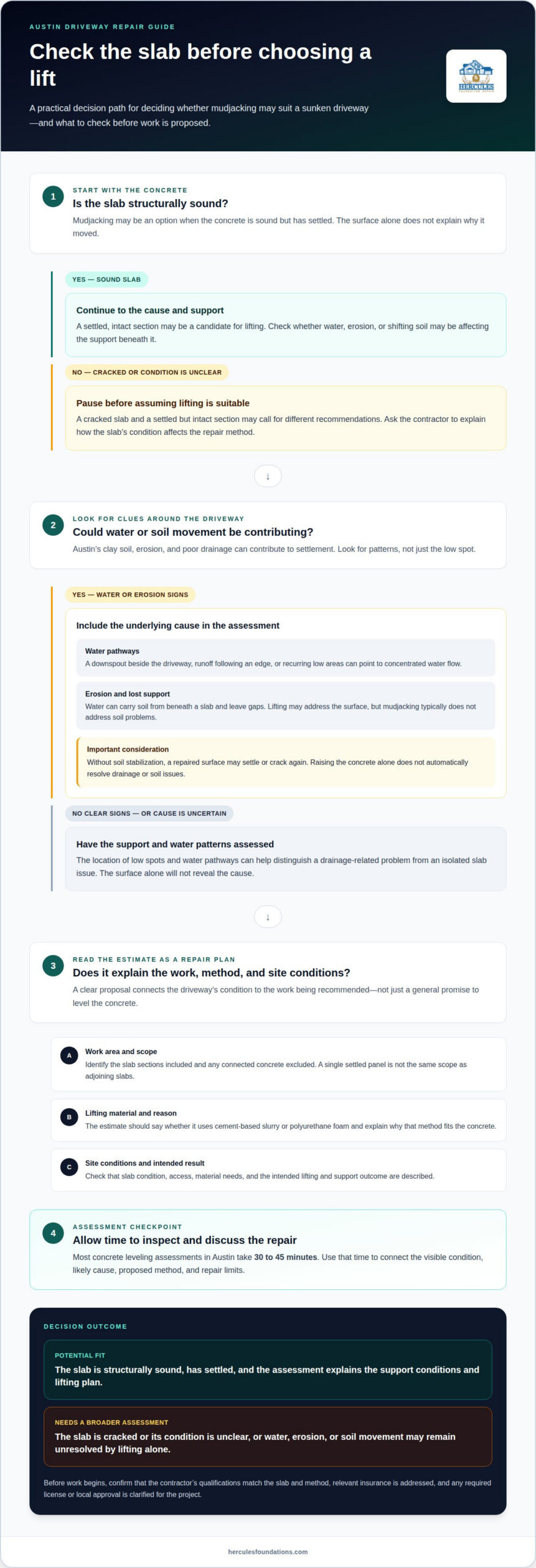
The cause matters because lifting concrete doesn’t automatically resolve soil or drainage problems. Mudjacking typically doesn’t address soil problems, and without soil stabilization, the repaired surface may settle or crack again. An assessment should consider where water travels, whether erosion has created voids, and how much of the driveway has moved. Polyurethane injection is another concrete-lifting material, but the right method depends on the slab and its underlying support.
Contractor licensing, insurance, and qualification checks
For residential mudjacking in Austin, choose a contractor qualified for the specific slab and repair method. Property owners should confirm appropriate insurance, any required license, and qualifications for the work.
Permit and local-rule requirements can depend on the work and property location. Don’t assume every residential leveling project is exempt. Clarify how requirements apply to the proposed scope before work begins.
Insurance matters because concrete work takes place on your property and may involve equipment, drilling, and access across a driveway or patio. A clear estimate should identify the slab, lifting method, and work area, and distinguish a single settled section from repairs involving connected slabs. This makes it easier to understand the proposed work rather than relying on a general promise to “level the concrete.”
A contractor’s qualifications should match the job. Someone assessing a driveway should explain how its condition affects the method, whether the slab is suitable for lifting, and whether signs point to a broader foundation concern. A cracked slab and a settled but intact section, for example, may call for different recommendations. A sound explanation connects the visible condition to the proposed repair instead of treating every uneven surface alike.
- Scope: The estimate names the concrete area and describes the planned work.
- Method: The contractor explains the leveling approach in plain language.
- Qualifications: The contractor’s experience and credentials relate to the type of slab being repaired.
- Insurance and permits: Relevant insurance and any required license or local approval are addressed for the project.
These details help you assess whether a proposal fits your property and the work involved. For a settled slab, concrete leveling information can help clarify the repair approach and the questions a project assessment should address.
Free assessments and contractor estimates
An on-site assessment connects the driveway’s visible condition with the proposed repair. Most concrete leveling assessments in Austin take 30 to 45 minutes, giving the contractor time to examine the affected surface and discuss the work.
A useful estimate identifies the slab sections needing attention and describes the lifting method. It should state whether the proposal uses cement-based slurry or polyurethane foam and explain why that method fits the concrete. For example, an estimate for one sunken driveway panel should distinguish it from adjoining slabs that remain level. A clear scope helps you compare proposals without mistaking different work plans for equivalent estimates.
The project price depends on the slab’s condition and area, site access, and material needs. General cost ranges can’t replace an assessment of the specific slab. A narrow, accessible section may involve different work conditions from a wide area with limited equipment access. The estimate should connect those site conditions to the proposed scope, so you can see what the work includes.
Use the assessment to understand the repair plan, not just the final figure. Check that the estimate describes:
- Work area: The driveway sections included and any connected concrete excluded.
- Method: Whether the proposal uses slurry or polyurethane foam, and its purpose.
- Site considerations: Access, slab condition, and material needs affecting the scope.
- Expected result: The intended lifting and support outcome for the identified surface.
Before agreeing to work, compare the written scope with what the contractor explained during the assessment. Ask for unclear terms to be explained in plain language. An estimate that identifies the surface, method, and repair limits gives you a practical basis for deciding whether the proposed concrete leveling suits your driveway’s condition.
Mudjacking in Austin, Texas
Austin driveway projects depend on the slab’s dimensions, intended use, and repair needs. Homeowners considering mudjacking services in Austin can use these factors to understand what the method may address and what to expect afterward.
Concrete Types for Mudjacking
Mudjacking can be used on settled driveways, sidewalks, porches, patios, pool decks, parking lots, basements, garage floors, and concrete steps. For driveways, patios, and pool decks, the method is described as suitable for slabs 3 to 6 inches thick. Structurally sound slabs settled less than 4 to 6 inches are recommended for leveling. These dimensions help frame whether a concrete surface fits typical use for the method.
Project Duration and Concrete Use
Most concrete leveling projects in Austin take 1 to 3 hours, depending on the work involved. Heavy use should wait until the concrete has cured for 24 to 48 hours. That difference matters for household planning: a crew may finish the lifting in a few hours, while cars still need to remain off the driveway during the curing period.
Repair Longevity and Warranties
Mudjacking results can last up to a decade in most cases. Properly leveled concrete may last 8 to 15 years or longer when underlying drainage and soil issues are addressed. Most Austin concrete leveling contractors offer workmanship warranties of 1 to 5 years. A warranty period and the possible service life describe separate considerations, so review the written coverage alongside the repair scope.
Risks and Repair Limitations
Mudjacking changes a slab’s position; it doesn’t rebuild concrete that has broken apart or restore the material’s strength. That distinction matters if a driveway has extensive cracking or missing sections, since lifting alone addresses level rather than damaged concrete. A contractor evaluating mudjacking services in Austin should explain how the slab’s visible condition affects the repair approach and whether lifting fits the work needed.
For a settled driveway, discuss concrete leveling and the repair approach suited to the slab.
Hercules Foundation Repair
Hercules Foundation Repair helps Austin property owners address concrete settlement and related structural concerns. If a driveway has sunk, the key question is whether the slab can be raised or whether the movement points to a broader foundation problem.
Hercules Foundation Repair’s foundation repair and slab foundation repair services address structural issues beyond an uneven surface. Understanding the difference can help you choose an approach suited to your property’s condition instead of treating every low spot as the same problem.
Contact Hercules Foundation Repair to discuss your concrete or foundation concerns.
Choose a Clear Path for Your Driveway
Before choosing a repair, consider how you use the driveway and whether the problem appears limited to its concrete surface. If the movement seems connected to broader structural concerns, discuss the property’s condition and repair options with a foundation professional. This can help distinguish a concrete-leveling need from a foundation issue and clarify which work fits the situation.
Hercules Foundation Repair offers Foundation Repair, Slab Foundation Repair, and Pier and Beam Foundation Repair. Each service addresses different structural needs, so the right direction depends on the problem. For homeowners considering mudjacking services in Austin, focusing on the cause of the movement can make the next decision clearer.
Share what you’ve observed and discuss a suitable next step with Contact Hercules Foundation Repair. A clear conversation can help you move forward with confidence.
Frequently Asked Questions
Can a sunken driveway be raised in Austin?
A sunken driveway can be raised if its concrete is suitable for lifting. For example, a driveway panel that sits lower than the garage entrance may need attention to how it meets adjacent slabs. The finished surface should provide a useful transition, not simply lift one section while leaving an abrupt height difference at the edge.
Does Mudjacking Increase Home Value?
Mudjacking itself doesn’t establish a higher home value. It can improve an uneven driveway’s appearance and usability, but it isn’t a home appraisal or a promise about resale value. If you’re preparing to sell, consider concrete repair as one part of property maintenance, alongside other visible conditions prospective buyers may notice.
How much does concrete leveling cost in Austin, TX?
Concrete leveling prices depend on the specific job, and the actual price is provided after a quote request. Factors include the area being repaired, the slab’s condition, material requirements, and access for equipment. For example, a narrow driveway section with clear access presents different site conditions from a larger surface with restricted access, so a general estimate may not match your project.
Is mudjacking or foam lifting better in Austin, TX?
Neither method is automatically better; the slab and site conditions guide the choice. Mudjacking uses a cement-based slurry, while foam lifting injects polyurethane foam beneath concrete. The materials differ in weight: mudjacking slurry weighs more than 100 pounds per cubic foot, while lifting foam weighs 2 to 4 pounds per cubic foot. The estimate should explain which material suits the repair.
What is Mudjacking?
Mudjacking is a concrete-lifting method that pumps cement-based slurry beneath a settled slab to fill voids and raise the surface. Also called slabjacking or pressure grouting, it uses small holes to deliver material beneath the concrete and support the slab as it rises. The method addresses settled surfaces rather than rebuilding the entire driveway.
Why You Should Repair It Now?
Repairing an uneven driveway can make it more usable for parking, walking, and moving items between the home and street. A height change where the driveway meets a walkway can also make everyday use awkward. Addressing the condition lets you define the affected area and consider a repair before another project makes access more complicated.