
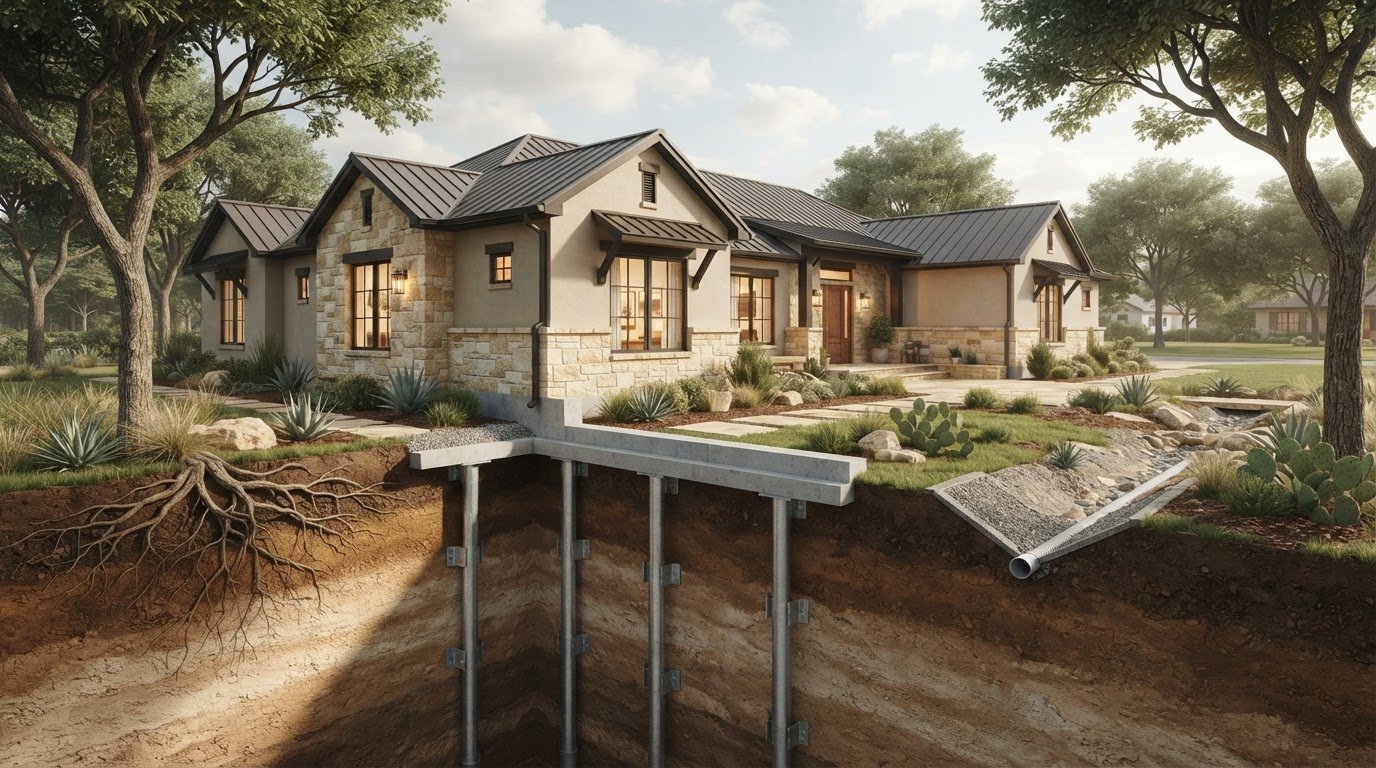
Foundation repairs can provide lasting protection when they address both structural damage and its underlying cause. The most reliable long-term solutions for foundation problems account for soil movement and water around the home, not just visible cracks. A durable repair starts with identifying what is driving the movement.
If you’re concerned that a repair might only cover up the symptoms, that’s a fair concern. Foundation issues can affect more than a wall or floor. Delaying attention may allow damage to progress and make everyday parts of the home harder to use.
This article explains what helps foundation repairs last, how postponing work can affect your home and its value, and how push piers, helical piers, and caissons differ. You’ll also learn why the right approach depends on the foundation type, soil conditions, and severity of movement, so you can better understand what a durable repair involves.
Key Takeaways
- Address drainage, nearby tree roots, and plumbing leaks alongside foundation damage to reduce the chance of recurring movement.
- Track changes in cracks, floors, and doors; worsening symptoms can signal that soil or moisture problems are progressing.
- A foundation evaluation can help connect visible damage to its cause, giving you a clearer basis for repair decisions that may affect your home’s value.
- Push piers, helical piers, and caissons support foundations in different ways, so soil conditions and the type of settlement matter when comparing them.
Do Foundation Repairs Permanently Fix the Problem?
A properly selected and installed repair can provide lasting protection by addressing structural damage and its underlying cause. Durable long-term solutions for foundation problems also account for water and soil conditions that can keep shifting beneath a home.
Addressing Drainage, Tree, and Plumbing Issues
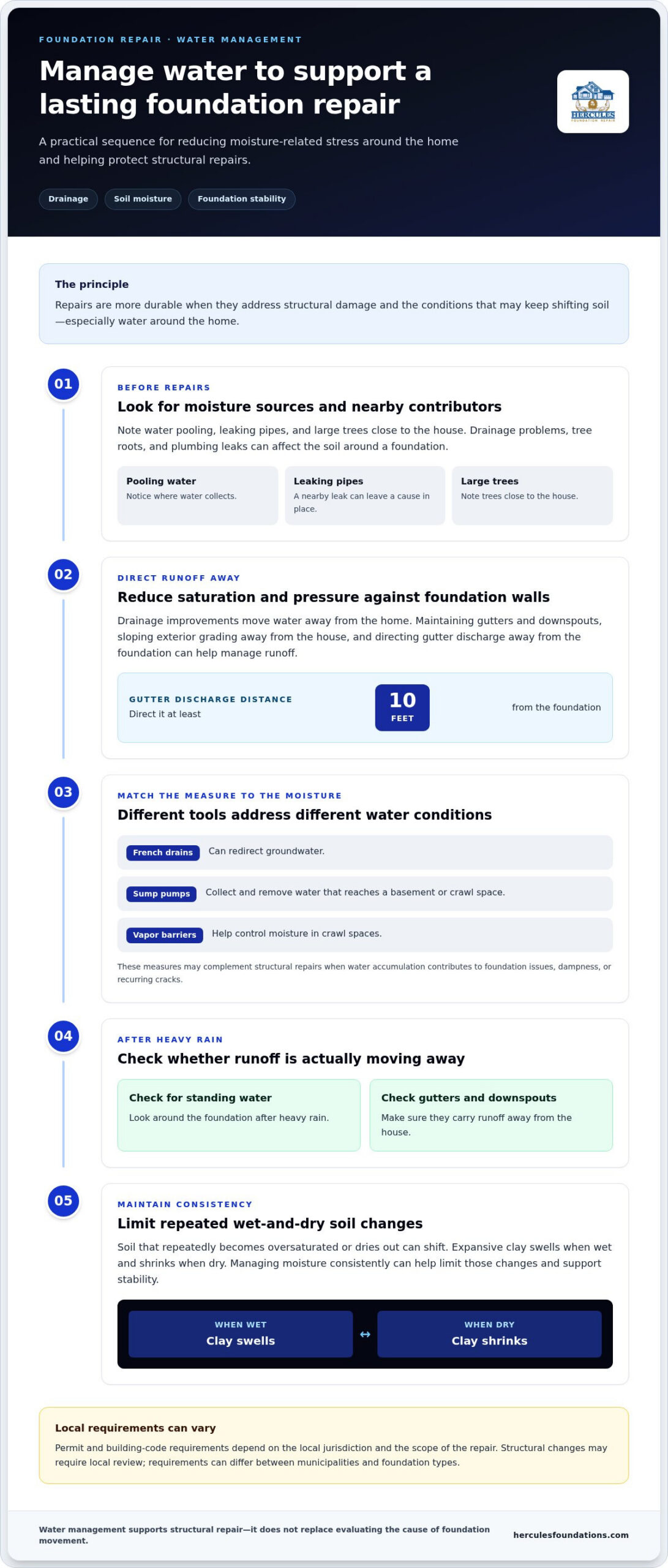
Drainage issues, nearby tree roots, and plumbing leaks can affect soil around a foundation. Repairing a crack without addressing a nearby leak, for example, leaves a possible cause in place. Before repairs, note water pooling, leaking pipes, and large trees close to the house. Addressing these contributing conditions can help protect stability and reduce the risk of recurring cracks or uneven floors.
Drainage Improvements and Hydrostatic Pressure
Drainage improvements move water away from the home, reducing soil saturation and hydrostatic pressure against foundation walls. That pressure can contribute to cracks and movement, so managing runoff supports the repair rather than leaving walls exposed to the same stress. Maintain gutters and downspouts, slope exterior grading away from the house, and direct gutter discharge at least 10 feet from the foundation.
Different drainage measures address different moisture conditions. French drains can redirect groundwater, while sump pumps collect and remove water that reaches a basement or crawl space. Vapor barriers help control moisture in crawl spaces. These measures may complement structural repairs when water accumulation contributes to foundation issues, dampness, or recurring cracks.
After heavy rain, check for standing water around the foundation and make sure gutters carry runoff away from the house. Soil that repeatedly becomes oversaturated or dries out can shift. Expansive clay, in particular, swells when wet and shrinks when dry. Managing moisture consistently can help limit those changes and support stability.
In the United States, permit and building-code requirements depend on the local jurisdiction and the scope of the repair. Structural changes may require local review. Identify the work involved and consult the building department responsible for the property. Requirements can differ between municipalities, including for work on slab, basement, and crawl-space foundations.
Risks of delaying foundation repairs
Foundation movement can progress even when visible symptoms seem minor. Expansive soil swells when wet and shrinks when dry, placing repeated stress beneath a home. Water intrusion can weaken supporting soil, while lateral soil pressure can push basement walls inward. As movement continues, small cracks may widen and doors or windows may become harder to operate.
Track changes rather than judging a crack by appearance alone. Stair-step cracks in brick, bowing walls, uneven floors, jammed doors, or a chimney separating from the house can indicate movement. If cracks widen, floors dip further, or doors become harder to close, record the changes and arrange a foundation evaluation. Two or more warning signs warrant a structural engineer’s assessment.
Repair options depend on the cause and severity of movement, soil conditions, and foundation type. Slab, basement, and pier-and-beam structures respond differently to shifting soil. A crack associated with a localized leak, for example, calls for a different response than sinking across a broad section of a slab. Treating only the visible crack can leave unstable soil beneath it.
Crack repair and soil stabilization address different parts of a problem. Sealing a non-structural crack can help limit water entry, while ongoing settlement may require support to stabilize the foundation. An evaluation can distinguish surface damage from structural movement and identify whether moisture, soil conditions, or poor compaction are contributing factors.
A custom-designed repair plan connects the observed symptoms to their likely cause, the building’s foundation type, and the pattern of movement. Document cracks, floor changes, and door alignment over time; those details help show whether damage is progressing. Effective long-term solutions for foundation problems focus on restoring support, not simply hiding evidence. If warning signs are worsening, explore options for foundation concerns.
Will Foundation Repair Increase My Home’s Value?
Foundation repair addresses structural concerns that can affect how a home functions and how buyers assess its condition. It does not guarantee a specific increase in sale price. Its practical value is in correcting documented movement, moisture damage, or uneven floors. During a sale, clear records of the work and its cause give buyers useful context instead of leaving visible cracks unexplained.
A foundation inspection helps identify what may be stressing the structure. The evaluation considers visible cracks, floor changes, sticking doors, water intrusion, soil conditions, and foundation type. A crack alongside damp basement walls, for example, points to different possible contributing conditions than a dipping floor above a crawl space. The goal is to distinguish structural movement from surface damage and relate symptoms to ground or moisture conditions.
Make maintenance more useful by documenting changes. Photograph cracks, note whether doors become harder to close, and record leaks or damp spots. Inspect the foundation at least once a year and after extreme weather such as heavy rain or drought. If cracks widen, floors dip further, or doors become harder to close, arrange a professional evaluation. A structural engineer’s assessment is warranted when two or more warning signs appear.
During an inspection, expect the visible damage and surrounding conditions to be reviewed together. A written estimate should describe the proposed repair, the areas involved, and how the work relates to the identified cause. Compare its scope with your photographs and notes. A plan that addresses a crack but not related water intrusion, for instance, may leave important context out. Keep inspection records, repair documentation, and maintenance notes together for future reference.
Regular inspections help homeowners notice changes before they become harder to explain or manage. In areas prone to winter storms, inspections every couple of years add another maintenance checkpoint. The appropriate schedule and repair plan depend on the home’s condition, foundation type, moisture exposure, and observed movement. Addressing those factors supports a clearer record of care when the property’s condition is reviewed.
Underpinning with push piers, helical piers, or caissons
Underpinning strengthens an existing foundation by extending support into deeper, more stable soil. Push piers, helical piers, and caissons provide this deeper support. Slab jacking instead lifts settled concrete by injecting material beneath the slab.
Steel Push Piers for Settlement
Steel push piers are driven beneath a settling foundation until they reach load-bearing soil or bedrock. The building’s weight helps push each pier downward, transferring structural loads away from unstable ground. This approach can stabilize a sinking foundation and, in some cases, lift it closer to its original position. It may suit homes with settlement-related movement and uneven floors when support needs to reach a deeper bearing layer.
Helical Piers for Foundation Support
Helical piers use steel shafts with spiral plates that screw into the ground to support a foundation. The shaft advances into suitable soil, where the plates help carry the building’s load. Unlike push piers, helical piers are rotated into place rather than driven using the structure’s weight. They can support foundation work on unstable soil and may also be used in new construction when traditional concrete piers aren’t feasible.
Comparing Push Piers, Helical Piers, and Caissons
Each method transfers weight below weaker soil, but installation differs. Push piers are pressed down using the structure’s weight; helical piers are screwed into the ground. Caissons, also called drilled concrete piers, are made by excavating holes and pouring concrete to create deep supports. Soil conditions, foundation construction, and the pattern of settlement help determine which approach suits the structure.
Underpinning typically involves excavation, a longer timeline, and more property disruption than less invasive concrete lifting. Slab jacking fills accessible voids beneath sunken concrete, while underpinning supports the home itself on deeper soil. Proper drainage remains important because water can contribute to soil movement around either repair. For help considering foundation support options, discuss foundation repair options.
Hercules Foundation Repair: Foundation Repair
Hercules Foundation Repair helps property owners address foundation movement with repair options suited to the structure. Homeowners in San Antonio, Austin, Houston, and Victoria can turn to the company for concerns such as widening cracks, sloping floors, or sticking doors. Slab Foundation Repair and Pier and Beam Foundation Repair address different foundation types.
The right repair depends on the foundation, the pattern of movement, and contributing conditions such as drainage or soil changes. Noting where cracks appear and how symptoms have changed can help clarify the situation and next steps. A lasting approach addresses the cause as well as the visible damage.
For help with foundation concerns, contact Hercules Foundation Repair or visit herculesfoundations.com.
Make Your Next Foundation Decision With Confidence
Turn what you’ve noticed into a clear picture of your home’s needs. Keep photos, repair records, and notes about changes together so conversations about the property start with useful details. That record can also help you track changes as you plan.
Durable decisions begin with matching the work to the structure and its condition. Hercules Foundation Repair offers Foundation Repair, Slab Foundation Repair, and Pier and Beam Foundation Repair for different foundation types. The goal is to move from uncertainty toward a practical plan based on the home’s specific concerns, not a one-size-fits-all answer.
For a next step, contact Hercules Foundation Repair to discuss your foundation concerns. A measured decision today can help you move forward with greater clarity and confidence.
Frequently Asked Questions
Can You Really Fix a Foundation Without Replacing It?
Yes. Most foundation movement can be repaired without replacing the entire foundation. Full replacement is generally considered only when failure affects the foundation broadly, damage is beyond feasible repair, or major reconstruction is planned. The right repair depends on the cause and extent of movement. A localized sunken concrete area may be lifted, while widespread settlement may need support extending into stable soil.
What Affects Long-Term Performance?
Long-term performance depends on whether the repair matches the movement, soil, and foundation design, and whether the original stress continues. Stabilizing a settling section while runoff still saturates nearby soil, for example, leaves a potential recurring trigger. Keep gutters clear, track new changes, and address leaks or drainage problems. Soil moisture swings, expansive clay, and shifting loads can all influence stability over time.
What Causes Foundation Problems in Older Homes?
Older homes can develop foundation problems from soil settlement, poor compaction, moisture changes, and temperature shifts. Building age alone doesn’t identify the cause. A house built on fill, for example, may settle differently from one on firmer ground; a leaking line or altered yard drainage can contribute to soil movement later. Construction type and maintenance history help explain why damage appears.
What can affect the cost of foundation repair?
Repair cost depends on the work required and the conditions that make it necessary. Factors include foundation type, the severity and location of movement, soil stability, access to the affected area, and whether related drainage or water issues need correction. The price depends on the individual case and is provided after a quote request. A written scope helps show what the estimate covers.
What should homeowners do if they think they may need foundation repair?
Document the signs and arrange a professional foundation evaluation if they worsen or affect daily use. Photograph each crack and note its location, record when doors stick, and note dampness or water entry after rain. Keep those observations together rather than relying on memory. A recurring crack may involve soil movement or moisture, so patching alone may not address the cause.
How do professionals diagnose the cause and severity of foundation damage?
Professionals assess the structure and conditions around it. They review crack patterns, wall alignment, uneven areas, and doors or windows, then consider foundation construction, soil movement, drainage, and moisture. Comparing symptoms across rooms can help distinguish localized damage from broader shifting. The assessment connects the observed severity to possible causes, such as settlement, expansive soil, water infiltration, or poor compaction, and informs repair selection.