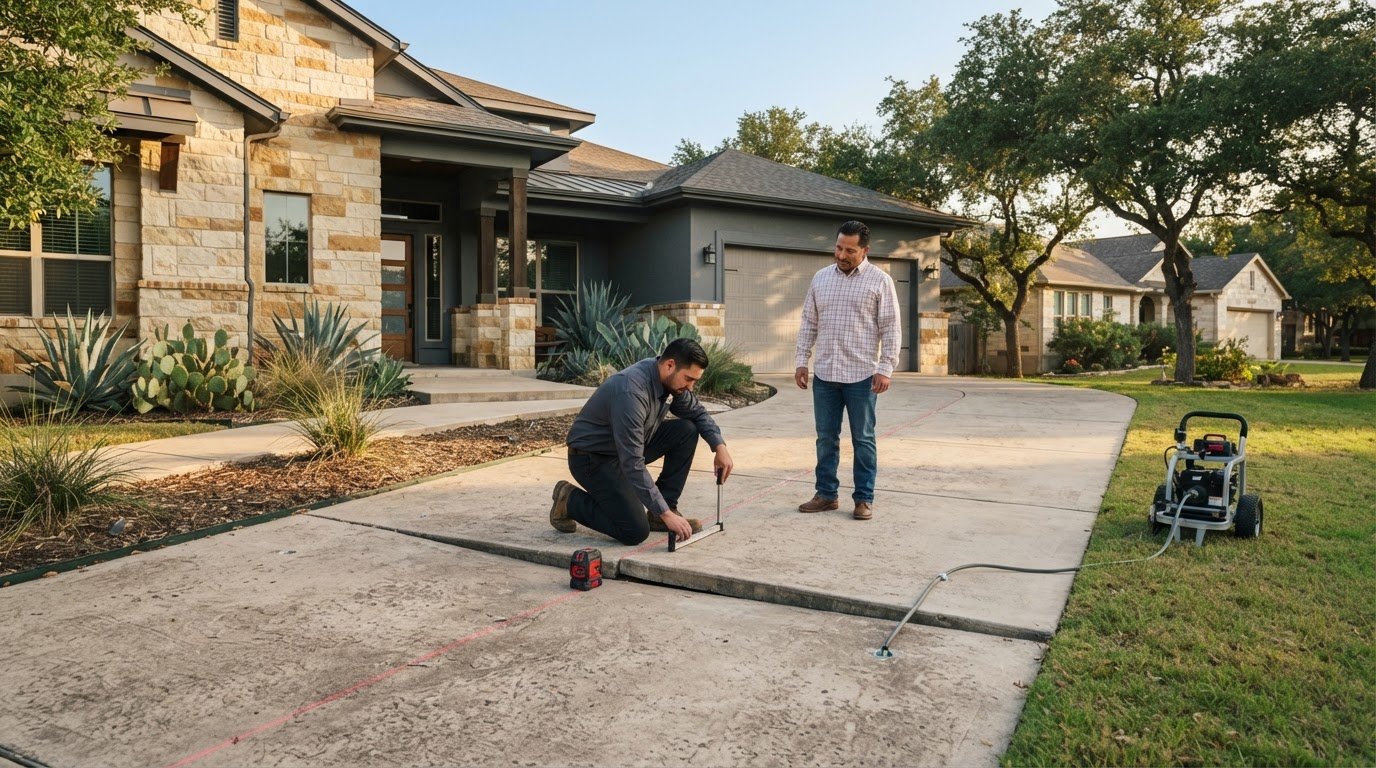
What if an uneven spot outside your home isn’t a foundation problem at all? A sunken driveway, tilted patio, or raised slab can create a trip hazard and make outdoor spaces harder to use, but the right repair depends on what has moved. When you’re researching leveling home surfaces, first distinguish a settled concrete slab from signs of broader foundation movement.
You don’t have to diagnose the cause yourself. This guide explains how to spot the difference, what professional concrete leveling can address, and when a slab may need a different repair or a foundation assessment. You’ll also learn how common options compare and where their limits lie. Hercules Foundation Repair provides concrete leveling and foundation repair for homes and businesses in San Antonio, Austin, Houston, and Victoria. Use the signs below to describe what you see and choose a sensible next step.
Key Takeaways
- In this guide, leveling home means correcting uneven concrete, not automatically lifting the whole house.
- Photograph the uneven area, note when it changed, and check whether nearby concrete shows similar movement.
- Compare leveling, replacement, and a foundation assessment based on the slab’s condition and the pattern of movement.
- Prepare for a professional assessment by clearing access, noting drainage patterns, and gathering questions and observations.
- Use what you observe to distinguish an isolated concrete concern from possible foundation movement or a different repair need.
Leveling a Home: What Is Uneven, and Why Does It Matter?
Here, leveling a home means correcting uneven concrete surfaces, not automatically raising the entire house. Concrete leveling addresses a settled or tilted slab, while structural foundation repair addresses movement affecting the home’s foundation. The right next step depends on what has moved and the condition of the concrete.
Uneven concrete can make familiar spaces harder to use. A raised edge may catch a foot or wheel, while a changed slope can affect how water moves across a driveway or patio. These issues don’t automatically mean there’s a serious structural problem, but understanding them can help you choose an appropriate repair.
Which home surfaces can become uneven?
Driveways, walkways, patios, stoops, garage slabs, and other exterior concrete can settle or tilt. The change may appear at a slab’s edge, across a joint, or where concrete meets the home. For example, a patio may pull away from a step, or one section of walkway may sit lower than the next and create an awkward transition.
These visible changes show where to look, but they don’t prove the cause. A shifted slab may have a problem with its support. Movement near the house may warrant considering whether other parts of the property show related changes.
When is an uneven surface a foundation concern?
An isolated low spot in an exterior walkway is different from uneven concrete accompanied by changes inside the home. Note whether doors have started sticking, floors seem sloped, or wall cracks keep returning or appear to widen. These observations help describe the situation, but no single symptom establishes that the foundation is damaged.
Look at the pattern. If several interior and exterior signs appear together or seem to change over time, a foundation-focused assessment can help distinguish a surface repair from broader movement. For an overview of how foundations support structures, see Foundation engineering.
For leveling home surfaces, the key is to determine whether the concern appears confined to concrete or connected to the structure. Hercules Foundation Repair provides professional concrete leveling and residential foundation repair, so the repair can be considered in light of the specific problem rather than treating every uneven spot the same way.
How to Assess Uneven Concrete Around Your Home Before Repair
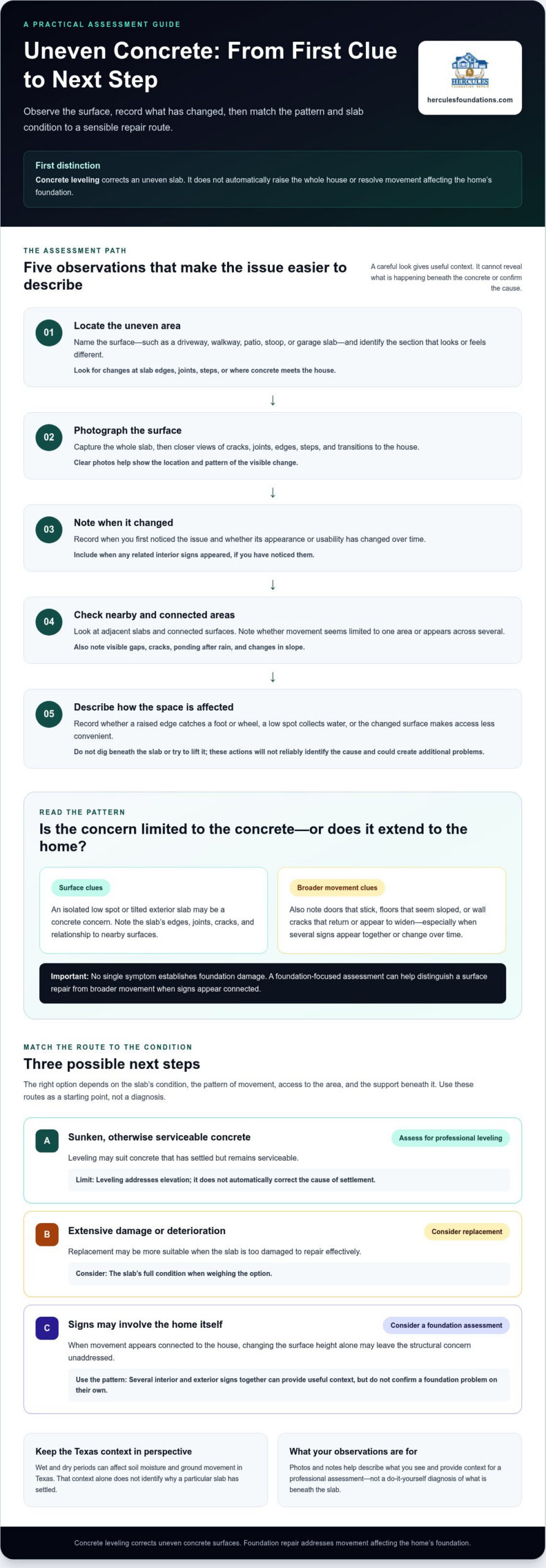
A careful first look can help you describe the problem and show whether it appears limited to one slab or spans connected areas. It won’t reveal what’s happening beneath the concrete, but photos and notes can give a professional assessment useful context. Before deciding how to approach leveling home surfaces, use this checklist:
- Locate the uneven area. Note whether it’s a driveway, walkway, patio, or another slab, and identify the section that looks or feels different.
- Photograph the surface. Take a clear view of the whole slab, then closer shots of cracks, joints, edges, steps, and transitions to the house.
- Note changes over time. Record when you first noticed the issue and whether its appearance or usability has changed.
- Check adjacent areas. Look at nearby slabs and connected surfaces. Note whether the movement seems isolated or appears across several areas.
- Consider how you use the space. Record whether a raised edge catches a foot, a low spot collects water, or the changed surface makes access less convenient.
A practical visual check for driveways, walks, and patios
Look without disturbing the slab. Note ponding after rain, visible gaps, cracks, and changes in slope. Include nearby joints and the points where concrete meets a step or the house. Avoid digging beneath the slab or trying to lift it. Those actions won’t reliably identify the cause and could create additional problems.
Drainage, soil movement, and the slab’s condition may all be relevant. In Texas, wet and dry periods can affect soil moisture and ground movement, but that context alone doesn’t identify why a particular slab has settled. Treat what you see as clues to record, not as a diagnosis.
Record clues that may point beyond the concrete
Along with exterior changes, note interior cracks, doors that stick, or floors that seem uneven. Record when each symptom appeared and whether it changes alongside the concrete concern. Several observations together provide useful context, but they can’t confirm a foundation problem on their own.
If your notes include symptoms involving the home’s slab foundation, read this slab foundation repair guide for more context. You can also discuss your observations with Hercules Foundation Repair, which provides concrete leveling and foundation repair.
Concrete Leveling vs. Replacement: Which Fix Fits the Surface?
An uneven slab doesn’t point to one automatic solution. Professional concrete leveling may suit concrete that has settled but remains serviceable. Replacement may be considered if the slab is too damaged to repair effectively. If movement appears to involve the house itself, changing the surface height alone may leave the structural concern unaddressed.
The right option depends on the slab’s condition, the pattern of movement, access to the area, and the support beneath it. Use this comparison as a starting point, not a diagnosis:
| What you observe | Possible route | Key limitation |
|---|---|---|
| A sunken section of otherwise serviceable concrete | Assess for professional leveling | Leveling addresses elevation; it doesn’t automatically correct the cause of settlement. |
| Concrete with extensive damage or deterioration | Consider whether replacement is more suitable | The slab’s full condition and the scope of damage need to be assessed. |
| Uneven exterior concrete alongside signs of house movement | Investigate possible foundation movement | Changing the slab’s height alone may not address a structural cause. |
When professional concrete lifting may be considered
A professional can assess sunken concrete for leveling when the slab appears serviceable and the main concern is its changed elevation. The aim is to address the height difference, but the slab’s condition and underlying support still matter. Cracks, deterioration, access, and the pattern of settlement all inform whether concrete leveling suits the surface.
When replacement or foundation repair may be more appropriate
If concrete is severely damaged or otherwise unsuitable for leveling, replacement may be considered. For projects requiring brand-new flatwork or repouring, concrete specialists like Born Integrated Construction provide complete slab work and paving solutions. If movement is also reflected in the home’s structure, the focus shifts from the surface to the foundation. Foundation repair addresses a different problem from leveling an exterior slab, so the assessment should consider what has moved rather than treating surface height as the whole issue.
For more context on different approaches, read the concrete leveling options guide. Hercules Foundation Repair provides professional concrete leveling and foundation repair. The appropriate next step depends on the specific project. You can discuss your concrete or foundation concerns with the team.
How to Prepare for Professional Home Concrete Leveling
A little preparation can make a leveling home assessment more productive. You don’t need to diagnose the cause or test the slab yourself. Make the area accessible and gather a clear record of what you’ve noticed. Photos and notes can show how the surface has changed and how it affects everyday use.
What to document before a site assessment
Gather dated photos of the uneven concrete and nearby surfaces. Include the full slab, close-ups of visible cracks or gaps, adjacent joints, and transitions to steps or the house. If you’ve photographed the area before, keep those images too. Comparing them may help show whether the condition has changed.
Then note the practical details:
- Where water collects after rain, and whether the same areas stay wet or pond.
- Which part of the slab appears to have shifted, and whether nearby concrete looks affected.
- Any related changes inside the home, such as recurring cracks, sticking doors, or floors that seem uneven.
- How the surface affects walking, parking, or using a patio or entryway.
If you can do so safely, clear access by moving vehicles, outdoor furniture, or other items. Keep your photos and notes together, including when you first noticed the issue and when it seemed to change.
What a project-specific assessment should clarify
Hercules Foundation Repair assesses concrete leveling needs and considers whether observed symptoms point to broader foundation concerns. A project-specific assessment should clarify the proposed scope, the slab’s condition and limitations, and any preparation the work may require. Ask what area the work would address, what it would not address, and whether access or site conditions affect the plan.
Work details and scheduling depend on the project, so don’t assume every slab follows the same process. Drainage patterns, adjacent surfaces, and signs of movement can all inform a recommendation. Clear answers about scope and limitations help you understand the next step before work begins.
Learn more about Hercules concrete leveling services.
Choosing the Right Next Step for Leveling Your Home in South Texas
The right repair starts with identifying what has moved. A dip in one patio section may call for a concrete-leveling assessment, while changes inside and outside the home together may warrant a foundation assessment. If the concrete is widely damaged, leveling may not be the best fit. These are different concerns, so the next step should match the pattern and condition you’ve observed.
Local conditions can add context. South Texas soil and shifts between wet and dry periods may contribute to ground movement, but they don’t reveal the cause at a specific property. An assessment considers the slab, nearby surfaces, and related symptoms before recommending work.
Match the concern to the right kind of assessment
Use your observations to frame the question, not to make a diagnosis. An isolated sunken driveway or patio is a reason to assess whether concrete leveling may suit the slab. If interior changes appear alongside exterior movement, a foundation repair assessment can help clarify whether the home’s structure is involved. With widespread slab damage, replacement may also be considered, but it isn’t automatic.
- One uneven exterior area: Assess whether the slab may be suitable for concrete leveling.
- Interior and exterior symptoms together: Consider an assessment focused on possible foundation movement.
- Extensive concrete damage: Evaluate the slab’s condition before deciding between leveling and replacement.
Get experienced local guidance without rushing the decision
Hercules Foundation Repair is a family-owned business with over 45 years of experience, serving homeowners in San Antonio, Austin, Houston, and Victoria. A useful first step is to understand the concern and its scope. That means considering whether the issue appears limited to concrete or may involve the foundation, rather than treating every uneven surface as the same problem.
For leveling home surfaces, a clear description of what you’ve seen helps make the discussion more specific. Bring your photos and notes, including when the unevenness appeared, what has changed, and whether other symptoms are present. You don’t need to arrive with a diagnosis. The next step is to understand the condition and discuss an approach suited to the project.
Talk with Hercules about your home’s uneven concrete.
Take the Next Step Toward a Safer, More Usable Surface
The right fix starts with identifying what’s uneven. If movement appears limited to a concrete slab, professional concrete leveling may be worth assessing. If exterior changes come with signs inside the home, a foundation-focused assessment can help clarify whether the concern extends beyond the surface. If the concrete is badly damaged, replacement may be part of the discussion.
Keep your photos and notes handy, including when you first noticed changes and how they affect everyday use. That record can make a conversation about leveling home surfaces more specific and support a project-based next step.
Hercules Foundation Repair is family-owned and operated, with over 45 years of experience providing concrete leveling and foundation repair for homes and businesses in San Antonio, Austin, Houston, and Victoria. To discuss the uneven concrete at your property, contact Hercules Foundation Repair.
Frequently Asked Questions
How do I know if my home needs leveling?
Look for a concrete surface that has settled or tilted, such as a driveway section sitting lower than its neighbor or a patio edge that no longer meets a step evenly. Photograph the area, note when you noticed the change, and check nearby slabs. If you also see sticking doors, uneven floors, or recurring wall cracks, record those symptoms too. “Leveling home” surfaces may mean addressing concrete, not raising the whole house.
Can a sunken driveway or patio be leveled instead of replaced?
Sometimes. Professional concrete leveling may suit settled concrete that remains serviceable, with the aim of correcting the slab’s elevation. The slab’s condition matters: widespread cracking, deterioration, or other damage may make replacement worth discussing. The support beneath the concrete and access to the area also affect the options. A project-specific assessment helps determine whether leveling, replacement, or further investigation is more appropriate.
What causes concrete around a home to sink or become uneven?
Uneven concrete can relate to changes in the ground supporting it, including soil movement or conditions that affect how well the slab is supported. Drainage and water patterns may also be relevant. Visible settlement alone can’t establish the cause, and more than one factor may be involved. Note where the concrete has moved, whether water collects nearby, and whether connected surfaces show similar changes. A professional assessment can help evaluate those clues.
Is uneven concrete a sign of foundation problems?
Not necessarily. A single sunken walkway or patio may be an isolated concrete concern. Foundation movement becomes more relevant to investigate when uneven exterior surfaces appear alongside changes inside the home, such as recurring wall cracks, sticking doors, or sloping floors. These signs don’t prove structural damage on their own. Record when and where they occur, especially if several symptoms appear together, and seek a foundation-focused assessment to clarify the concern.
How does professional concrete leveling work?
A professional assessment considers the slab’s condition, how its elevation has changed, access, and the surrounding support. If leveling is suitable, the work is intended to lift and stabilize the uneven concrete. The specific approach and project details depend on the surface and site conditions, so they shouldn’t be assumed in advance. Hercules Foundation Repair provides professional concrete leveling for homes and businesses, with recommendations based on the needs of each project.
Can I level a concrete slab myself?
DIY methods may be limited to minor, non-structural surface issues; lifting a settled slab is a different task. Trying to raise concrete without understanding its condition and support can lead to further damage, including cracking. Avoid digging beneath the slab or attempting to lift it yourself. If the surface is noticeably sunken, cracked, or difficult to use, document what you see and have the repair options professionally assessed.
Does Texas soil affect home concrete and foundation movement?
It can. Expansive clay soils found in parts of Texas can change with shifts in moisture, so wet and dry periods may be relevant context when concrete or foundations move. That doesn’t prove soil conditions caused a particular problem at your home. In San Antonio, Austin, Houston, and Victoria, note drainage patterns and when changes appeared, then have the specific concrete or foundation concern assessed rather than assuming one cause.