

What if the crack that worries you isn’t the most important clue? If you’re wondering how to tell if foundation issues are serious, look beyond one mark or sticky door. A single symptom can have several causes, but changes that spread, appear together, or affect how your home functions deserve closer attention.
It’s understandable to worry that a small crack could signal a larger structural problem, or to wonder whether moisture and routine wear are to blame. The pattern over time often tells you more than one snapshot. This guide explains which warning signs call for prompt attention, what to document and monitor, and when a professional assessment can help clarify what’s happening.
You’ll learn how to distinguish concerning patterns, such as widening wall cracks, sloping floors, or doors that increasingly stick, from changes that may have another explanation. We’ll also cover what a qualified foundation contractor can evaluate on site. That assessment can help connect visible symptoms to your home’s foundation and local conditions, so you can choose a sensible next step without relying on guesswork.
Key Takeaways
- To understand how to tell if foundation issues are serious, look for symptoms that progress, occur together, or interfere with how your home functions.
- Record where and when changes appear so you can compare them over time and share useful details if you seek advice.
- Use the pattern of symptoms to decide whether to keep monitoring or ask a qualified professional to assess the situation.
- A site specific assessment considers your foundation type, building conditions, and property context rather than relying on a single visible symptom.
- Learn how structural foundation repair differs from concrete leveling, and which type of concern each may address.
How to tell if foundation issues are serious: start with the pattern
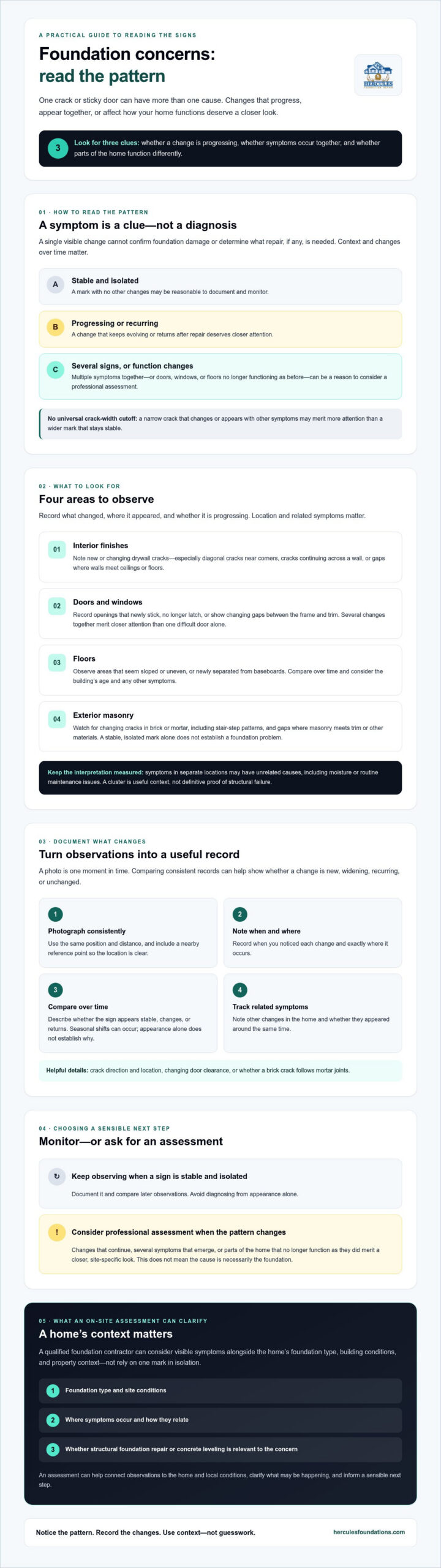
To judge how to tell if foundation issues are serious, look for changes that progress, appear in related areas, or affect how the home functions. A new crack or a door that sticks can have causes other than foundation movement. One symptom alone can’t confirm damage or show what repair, if any, is needed. Foundations vary in design and conditions; this building foundation overview offers useful background.
Seriousness depends on progression, symptom patterns, and effects on the building. A stable, isolated mark with no other changes may be reasonable to document and monitor. A symptom that keeps changing, returns after repair, or occurs alongside difficulty opening doors or uneven floors deserves closer attention. Don’t rely on a crack width threshold or appearance alone to decide what’s happening.
Consider seeking a professional assessment if changes continue, several symptoms emerge, or the home’s doors, windows, floors, or other parts no longer function as they did. That doesn’t mean the cause is necessarily the foundation. It means the pattern merits a closer, site specific look rather than guesswork.
Why changes over time matter more than one snapshot
A photograph captures one moment. Comparing dated photos can reveal whether a crack is new, widening, recurring, or unchanged. Take pictures from the same position and distance, and include a nearby reference point so the location is clear. Note what you observe and when; these records can help you explain the pattern to a qualified professional.
Symptoms may look different across seasons, but appearance alone can’t establish why they changed. Record those shifts without assuming a cause. If a mark remains stable and isolated, keep monitoring it. If it progresses or other changes appear, consider asking for an assessment.
When several symptoms appear together
Related changes in different parts of the home call for more attention than a single isolated sign. For example, a wall crack appearing around the same time as a sloping floor and a door that newly sticks gives more context to discuss than any one symptom by itself. Still, even a cluster isn’t definitive proof of structural failure.
Symptoms in separate locations may have unrelated causes, including moisture or routine maintenance issues. Note where each change occurs, when you first noticed it, and whether it’s progressing. A professional can consider those details alongside the home’s foundation type and site conditions to help determine an appropriate next step.
Which foundation warning signs deserve closer attention in a Texas home?
Visible changes can help you decide what to document and whether to seek advice, but they aren’t a diagnosis. An observable symptom is a clue to assess, not confirmation of structural foundation damage. Location, whether the change is progressing, and any related symptoms all matter. As you look around, note changes in four areas:
- Interior finishes: Look for new or changing drywall cracks, especially diagonal cracks near corners or cracks that continue across a wall. Gaps where walls meet ceilings or floors are also worth recording.
- Doors and windows: Note openings that newly stick, no longer latch, or show changing gaps between the frame and trim. A single difficult door may have another explanation; several changes appearing together deserve closer attention.
- Floors: Record areas that seem sloped, uneven, or newly separated from baseboards. Compare observations over time and consider the building’s age and other symptoms.
- Exterior masonry: Watch for changing cracks in brick or mortar, including stair step patterns, and gaps where masonry meets trim or other materials. Stable, isolated marks don’t establish a foundation problem on their own.
There’s no universal crack width cutoff that can determine whether a home needs foundation repair. A narrow crack that changes or occurs alongside other symptoms may merit more attention than a wider mark that remains stable. Describe what you see, where it is, and whether it has changed rather than trying to diagnose it from appearance alone.
Cracks, gaps, and changes around doors or windows
Pay attention to direction, location, and progression. For example, document whether a drywall crack extends from a window corner, whether a brick crack follows mortar joints, or whether a door’s clearance has changed. Photographs taken from the same position can make comparisons easier. If changes continue or coincide with other building symptoms, consider seeking a professional assessment.
Uneven floors and South Texas soil conditions
A sloping floor needs context. Building age, the location of the uneven area, and whether it’s changing can all help a professional evaluate it. Expansive clay soils, common in Texas, can swell as they absorb moisture and shrink as they dry, potentially affecting ground movement around a foundation. Moisture variation is a possible factor, not a diagnosis.
Conditions can vary between Houston, Austin, San Antonio, and Victoria, as can the characteristics of an individual property. If you’re asking how to tell if foundation issues are serious, consider the full pattern rather than attributing a floor slope or crack to soil alone. Homeowners in these cities can learn more about foundation repair services from Hercules Foundation Repair, a South Texas family owned business serving the region for over 45 years.
Is it a serious foundation problem or a symptom to monitor?
A crack alone doesn’t prove that your foundation needs repair. The more useful question is whether a symptom is stable, changing, or part of a pattern that affects how the home works. Use the guide below to choose a proportionate next step, not to diagnose the cause from a distance.
Stable and isolated
What you notice: One mark or gap appears unchanged, with no related changes elsewhere and no effect on doors, windows, or floors.
What to do: Photograph it with the date and location, then compare it with future observations. Don’t dismiss it indefinitely. Reassess if it changes or another symptom develops.
Changing over time
What you notice: A crack or gap appears to widen, extend, or return, or a previously minor change becomes more noticeable.
What to do: Keep dated records and note where the change occurs. Consider seeking a professional assessment, particularly if the progression continues or other symptoms appear.
Multiple or function affecting symptoms
What you notice: Changes occur in several areas, or doors and windows become harder to open, close, or latch as expected.
What to do: Arrange an on site assessment to help evaluate the building and possible causes. Share your observations and photographs rather than trying to select a repair based on symptoms alone.
This comparison is a practical observation tool, not a substitute for an on site assessment. Similar looking symptoms can have different causes, and the same home may show more than one issue. A qualified professional can consider the building’s conditions and the pattern of changes before discussing what they may mean.
Signs that may be documented and monitored
If one isolated symptom remains unchanged, keep a record instead of assuming it’s harmless or that it confirms structural damage. Compare dated photos from similar positions, and note any new changes elsewhere in the home. Monitoring gives you a clearer history. If the symptom progresses or additional concerns emerge, reassess whether professional advice is appropriate.
Patterns that justify a professional assessment
Ongoing changes, several connected symptoms, or problems with normal door and window operation are good reasons to seek an on site evaluation. That visit allows a qualified professional to consider the structure and context, rather than relying on a single photo or description. If you’re deciding how to tell if foundation issues are serious, look at the pattern and impact, then get informed guidance when those concerns persist.
What should you do when foundation symptoms appear?
A clear record can make it easier to explain what you’ve noticed and how it has changed. Keep your observations factual: note dates, locations, photographs, and any effects on how the home functions. This won’t confirm the cause, but it can help a qualified professional understand the pattern and decide what to assess on site.
Create a useful foundation symptom record
For each concern, take a close photograph and a wider shot that shows where it is in the room or on the exterior. Add the date and location, then repeat photos from a similar position if you’re comparing changes. Write down when you first noticed the symptom and whether it has changed since then.
- Record related changes, such as a door becoming harder to close or a floor seeming uneven.
- Note moisture or drainage changes you’ve observed near the home, without assuming they caused the symptom.
- Keep entries brief and specific, such as “new gap above the bedroom door” or “existing wall crack appears longer.”
Look for related signs elsewhere in the home, but don’t treat a group of symptoms as proof of foundation damage. Avoid covering cracks before documenting them, and don’t attempt structural repairs based on online instructions. A repair could conceal useful evidence without addressing the underlying issue.
Know when to ask a foundation professional
Consider seeking an assessment if a symptom is progressing, recurring, or appearing alongside other changes, especially if doors or windows no longer operate normally. Share your photos and timeline so the conversation can focus on what has changed, where it’s happening, and what else you’ve observed. A remote description can’t replace an on site evaluation of the building and its conditions.
If you’re researching how to tell if foundation issues are serious, use your record to support a measured next step rather than trying to diagnose the home yourself. Hercules Foundation Repair serves South Texas, including San Antonio, Austin, Houston, and Victoria. You can talk with Hercules Foundation Repair about your concerns and share the changes you’ve documented.
What a foundation assessment can clarify, and what repair options may follow
A professional assessment helps connect visible symptoms to the home’s construction and site conditions. Instead of choosing a repair based on one crack or uneven area, the evaluator can consider the foundation type, the building’s condition, where symptoms appear, and how they’ve changed. This gives you a clearer basis for discussing whether further evaluation or repair may be appropriate.
Questions a site specific evaluation should help answer
An on site review can help establish what foundation system the home has and document the changes that are visible. It can also help distinguish a progressing or connected pattern from symptoms that may have separate causes. Bring your dated photos and notes about changes in how doors, windows, or floors function. They give the professional useful context, but the assessment needs to account for the property itself.
Useful questions to discuss include:
- What foundation type does the home have, and what conditions are visible?
- Do the symptoms appear stable, progressive, connected, or potentially unrelated?
- Based on the findings, is further evaluation or a repair discussion appropriate?
The goal is not to jump to a repair recommendation from a distance. It’s to understand what the available evidence supports and what a sensible next step may be.
Matching the next step to the foundation and symptoms
Slab and pier and beam foundations are built differently, so an evaluation and any potential foundation repair need to account for the home’s specific construction. A description or photograph can’t determine which method, if any, is suitable. A qualified foundation contractor can assess the property and discuss options in light of the actual findings.
Concrete leveling is a separate service. It addresses uneven concrete surfaces, such as a slab or walkway, but it isn’t a substitute for evaluating every structural concern. The right conversation starts with identifying what’s uneven and whether the concern involves a concrete surface, the home’s foundation, or both.
If you’re still considering how to tell if foundation issues are serious, an on site assessment can replace guesswork with property specific information. Hercules Foundation Repair provides foundation repair for slab and pier and beam foundations, as well as concrete leveling, in San Antonio, Austin, Houston, and Victoria. For a calm next step, connect with Hercules Foundation Repair for guidance on your foundation concerns.
Take the next step with confidence
Knowing how to tell if foundation issues are serious starts with the pattern, not a single crack. Changes that progress, appear together, or affect how doors, windows, or floors function deserve closer attention. Dated photos and clear notes can help you track what’s changing, but only an on site assessment can evaluate your home and its likely causes.
You don’t have to diagnose the problem alone. Hercules Foundation Repair is family owned and operated, serving South Texas for over 45 years. The company provides residential and commercial foundation repair, along with concrete leveling, in San Antonio, Austin, Houston, and Victoria.
Talk with Hercules Foundation Repair about your foundation concerns and share the changes you’ve documented. A thoughtful assessment can help clarify your options and make the next step feel more manageable.
Frequently Asked Questions
How can I tell if a foundation crack is serious?
A crack deserves closer attention if it’s changing, recurring, or appearing alongside other changes in the home. Note its location and direction, take dated photos, and watch for related signs such as new gaps or doors that don’t operate as they used to. A crack by itself doesn’t confirm foundation damage. An on site evaluation can consider the building and its symptoms together.
Can a small foundation crack become a serious problem?
It can change over time, but a small crack doesn’t automatically mean a serious problem is developing. Record its appearance and compare dated photos taken from a consistent position. If it widens, extends, returns, or coincides with other changes, consider seeking professional advice. Don’t rely on size alone to decide whether repair is needed; the location, progression, and building context all matter.
Are uneven floors always a sign of foundation problems?
No. An uneven or sloping floor can have different explanations, and it doesn’t prove the foundation is damaged. Consider the home’s age, where the unevenness occurs, whether it’s changing, and whether other symptoms are present. In San Antonio, Austin, Houston, and Victoria, local site conditions also vary. Document what you notice, then seek an on site assessment if the change progresses or affects how the home functions.
When should I call a professional about foundation issues?
Consider contacting a qualified foundation professional when symptoms keep changing, recur, appear in several connected areas, or affect normal use of doors and windows. Share dated photos, locations, and notes about what has changed. That information helps focus the conversation, but it can’t establish the cause remotely. Hercules Foundation Repair serves San Antonio, Austin, Houston, and Victoria, with residential and commercial foundation repair among its services.
Can Texas clay soil cause foundation movement?
Yes. Expansive clay can swell as it absorbs moisture and shrink as it dries, which may contribute to ground movement around a foundation. That possibility doesn’t confirm the cause of a particular crack or floor change. Soil and moisture conditions vary by property and across San Antonio, Austin, Houston, and Victoria. A site specific assessment is needed to consider symptoms alongside local conditions.
What happens during a foundation assessment?
An assessment generally considers the foundation type, visible symptoms, building conditions, and the property’s context. The professional can review where changes occur, whether they appear stable or progressive, and whether symptoms may be connected or unrelated. Your timeline and photographs can help explain what you’ve observed. The findings can guide a discussion about whether further evaluation or foundation repair may be appropriate.
Can foundation problems be serious even if doors and windows still work?
Yes. Doors and windows that operate normally don’t rule out a foundation concern. Other changes, such as progressive cracks, gaps, or uneven floors, may still warrant attention, especially if they appear together or continue to change. Keep track of symptoms across the home rather than relying on one sign. If a pattern concerns you, an on site evaluation can help clarify what the observations may mean.