
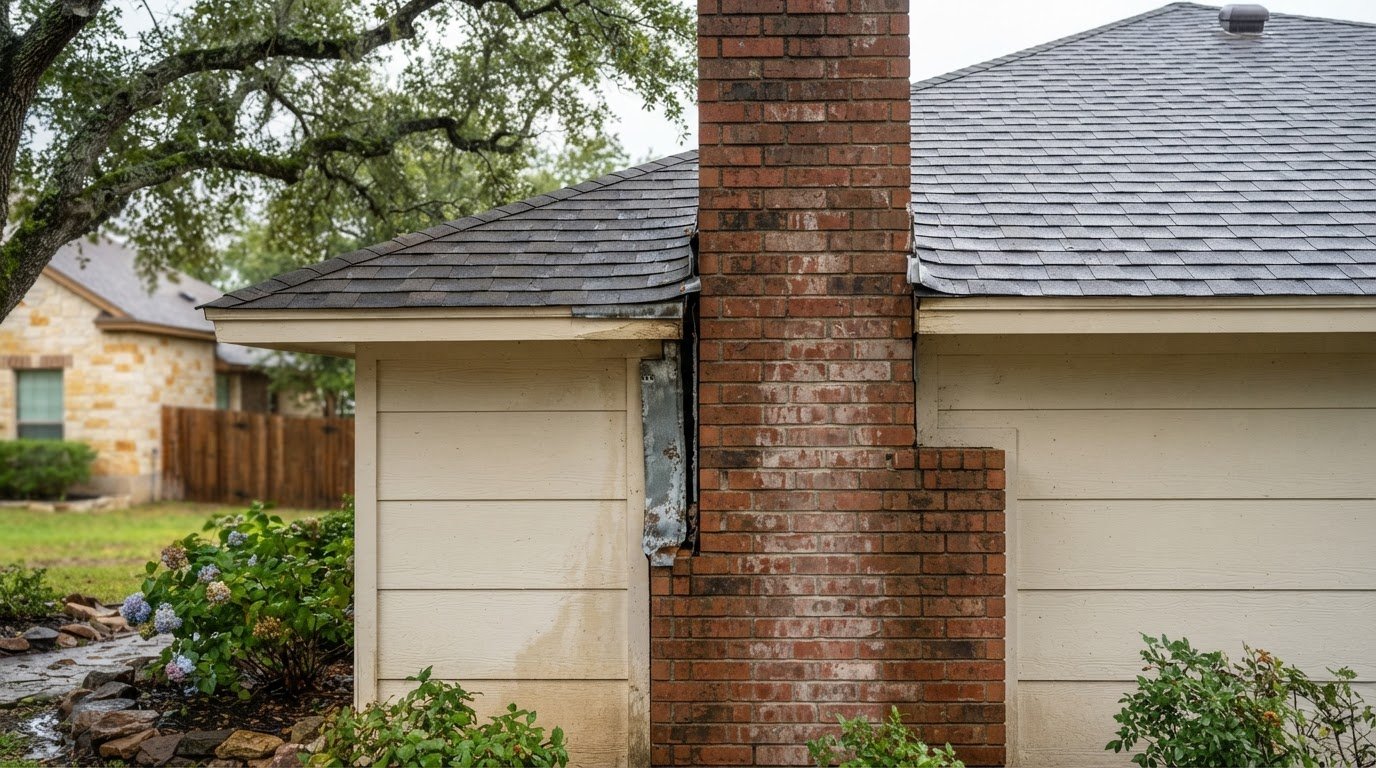
A hurricane can be linked to a newly visible gap between a chimney and house siding, but the gap alone doesn’t prove the storm caused movement. A chimney may settle differently from the house because it can rest on its own footing. Storm-related water can also draw attention to existing drainage or flashing problems. The key is to distinguish movement from a leak or a stable seam.
It’s understandable to worry when you notice a change after severe weather, especially if you also see leaning, displaced brick, or water entry. This article explains what those signs can mean, how to look for clues safely, and why caulking the gap may hide the symptom without fixing its cause. You’ll also learn when the condition points to a foundation concern and when the opening may be related to roof flashing instead.
Key Takeaways
- A hurricane may reveal chimney movement, but a gap alone doesn’t show whether the storm caused it. Look at changes in alignment and signs of water entry.
- Roof flashing and the chimney crown can let water in, creating symptoms that may resemble structural separation.
- Compare visible signs over time from a safe position, and don’t climb onto the roof or push on loose masonry.
- Caulk or mortar may cover the opening without addressing its cause; foundation repair may be relevant when movement points to a footing or foundation concern.
Can a hurricane cause a chimney to separate from the house?
Yes. A hurricane can contribute to chimney movement, but a new gap doesn’t prove the storm caused it. Many masonry chimneys rest on their own footing rather than the home’s main foundation. If that footing settles or rotates differently, the chimney can pull away while much of the house still looks stable. Wind and heavy rain may reveal existing movement or worsen water problems around the footing.
For siding near a chimney, maintain the clearance appropriate to the chimney’s construction and materials; don’t assume siding can safely touch hot masonry. NFPA 211 calls for chimneys, fireplaces, and vents to be inspected at least once a year for soundness, deposits, and correct clearances. The standard’s inspection guidance emphasizes checking the actual clearance, rather than relying on a generic measurement.
Failed sealant can look like separation. Sun, weather, and repeated temperature changes can crack or loosen sealant at the siding or roofline, leaving an opening without showing that the chimney has shifted. A narrow, unchanged seam with intact masonry, for example, may point to deteriorated sealant. Caulk can temporarily hide the opening, but it can’t stop a footing from moving.
Structural movement has different clues. From the ground, look for a leaning chimney, displaced or cracked brick, a widening seam, or water entering near the opening. A gap between chimney and house siding that changes over time deserves attention, especially when other signs are present. Don’t climb onto the roof or push loose masonry while checking.
From a safe position, compare the seam with earlier photographs. A four-foot level held vertically against the chimney can help show whether it’s out of plumb, but don’t climb to reach it. If the chimney appears unstable, avoid using the fireplace until it has been evaluated. A visibly leaning or damaged chimney needs an in-person assessment.
After a hurricane, note whether the opening changed and whether bricks shifted. The Chimney Safety Institute of America calls for a Level 2 inspection after a weather event that may have caused damage. Professional specialists such as Best Chimney Services conduct these evaluations to check for flue leakage, masonry cracks, and crown wear. Separately, the Consumer Product Safety Commission recommends annual professional inspections of fuel-burning appliances, including checks of chimneys, flues, and vents for leakage, blockage, and loose or disconnected connections. A review of separation can assess whether the footing is settling or rotating.
Water intrusion at flashing or the chimney crown
A gap at the roofline can let rainwater reach the roof deck, wall, or framing. However, water near the chimney doesn’t always mean the chimney has moved. Damaged or poorly seated flashing can cause a leak that looks like separation, even when the masonry remains in place. Cracks or deteriorated edges in the chimney crown can also let water in.
Flashing is the weatherproof transition around the chimney where it passes through the roof. If its metal pieces lift, corrode, or separate from adjacent surfaces, runoff can enter at the joint. For example, a ceiling stain below the roofline after rain may point to a flashing leak, which a specialized roofing contractor such as UEC Roofing can help locate and repair. Water can travel along framing before it becomes visible, so the stain may not be directly below the entry point.
The crown is the top masonry surface that sheds water away from the chimney opening. Cracks or worn joints can let moisture into brick and mortar. Watch for:
- White, powdery deposits on brick, which can indicate moisture moving through masonry.
- Soft or crumbling mortar around the chimney or roofline.
- Interior staining that appears after rain or snowmelt.
- Water collecting beside the chimney after runoff reaches the roof.
Repeated wetting can worsen masonry deterioration. In cold conditions, trapped moisture may freeze and expand, stressing brick and mortar. A gap between chimney and house siding may be a water-entry path, a sign of movement, or a separate seam that needs repair. The pattern matters: a leak that follows rainfall differs from a seam that visibly widens or comes with shifted masonry.
From the ground, note where staining appears and whether it follows rain. Don’t climb onto the roof to inspect flashing or the crown. Roof valleys, clogged gutters, and downspouts discharging near the chimney can keep water by its footing. Extending downspouts, correcting grading, cleaning gutters, or managing roof runoff can help reduce water collecting there.
If runoff has also left nearby concrete uneven, concrete leveling addresses that separate surface issue. A roof leak still needs its own repair; sealing siding alone won’t correct damaged flashing, a cracked crown, or persistent drainage.
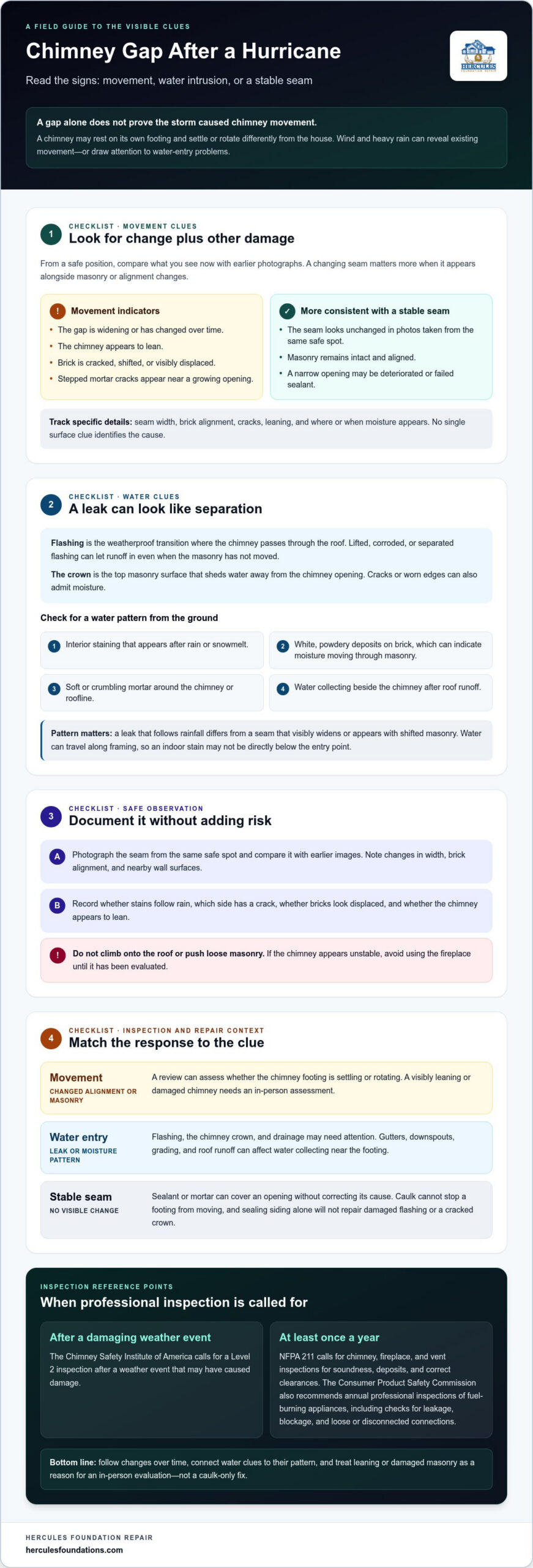
How to distinguish a stable gap from an active problem
A seam alone can’t show whether a chimney is moving or the siding joint has simply changed. Compare it with other clues, including masonry condition, interior moisture, and changes over time.
Signs of a Stable or Active Gap
A stable gap stays similar in appearance, while an active problem changes or comes with other damage. Photograph the seam from the same safe spot and compare dated images. Note changes in width, brick alignment, and nearby wall surfaces. For example, an opening that grows alongside stepped cracks in mortar deserves more attention than an unchanged seam with intact brick.
Also record whether water stains appear indoors after rain or whether the chimney seems to lean. These clues help distinguish a sealant issue from movement, but no single surface sign explains the cause. Keep observations specific: note which side has a crack, whether bricks look displaced, and where moisture appears.
Siding Contact with Brick or Stone
Siding shouldn’t press tightly against a masonry chimney. The junction needs suitable separation and weather protection. Direct contact can trap moisture and make it harder to see whether the siding edge or masonry has shifted.
The right detail depends on the siding and chimney materials, so don’t fill the joint with an arbitrary layer of caulk. Vinyl and wood siding, for example, respond differently to heat and moisture. Follow the product’s installation guidance and keep combustible material away from the chimney as required for that assembly.
Have a visibly leaning or damaged chimney evaluated in person. Arrange professional attention if the seam is widening, bricks are displaced, mortar is cracking, or water enters near the joint. These signs can point beyond a siding defect and warrant examining the chimney’s support and movement.
For a safer check, stay on the ground and use photographs rather than climbing onto the roof. Don’t push loose masonry or use a fireplace if the chimney appears unstable. If the opening remains unchanged and there are no related signs, continue documenting it. If new cracks, water stains, or displacement appear, treat the change as meaningful.
Why caulk or repointing may not address the cause
Caulk closes a visible seam; it doesn’t stabilize a chimney footing or correct waterlogged soil. If the chimney continues moving, the sealed joint can split again or redirect water behind the siding. Before filling the opening, identify whether it reflects failed sealant, masonry damage, roof leakage, or movement beneath the chimney. Each cause calls for a different repair.
Repointing replaces deteriorated mortar between bricks, but it doesn’t stop a footing from settling or rotating. Fresh mortar may crack again, for example, if wet soil shifts below the chimney. Soil that expands when wet and shrinks when dry can move footings, while runoff near the base can keep that cycle going. Repairing only the visible joint leaves the cause of movement untouched.
Use the visible pattern to guide the next step:
- If the opening stays unchanged and the masonry remains aligned, the issue may be limited to sealant or the siding joint.
- If brick shifts, mortar cracks again, or the seam widens, treat movement as a separate concern.
- If staining follows rain, investigate water entry at the roofline or crown before sealing the siding.
- If water collects beside the chimney, address runoff sources such as clogged gutters or nearby downspouts.
These clues help organize observations, but they don’t establish the footing’s condition. A professional review can assess whether the chimney support is settling or rotating and whether drainage contributes. Keep dated photographs and note new cracks or water stains. That record helps distinguish a recurring symptom from a one-time sealant failure.
Don’t use caulk or mortar as a substitute for understanding the cause. If the chimney is visibly leaning or damaged, arrange an in-person evaluation; avoid using its fireplace if it appears unstable. If a nearby concrete slab has settled, explore concrete leveling for uneven concrete. That addresses the slab surface, not chimney movement or a leaking roof joint.
Hercules Foundation Repair: Foundation Repair
Hercules Foundation Repair provides foundation repair when a chimney gap appears alongside signs of movement in the home’s foundation. Cracks in walls, uneven floors, or shifting around the structure can indicate that the concern extends beyond siding or sealant. The right repair depends on the foundation type. Services include slab foundation repair and pier and beam foundation repair.
A chimney may have a separate footing, so work on the house foundation does not automatically correct chimney movement. If the visible gap comes with broader foundation concerns, addressing the home’s foundation can be a relevant part of the solution. If the opening is limited to flashing, crown damage, or siding, those components need attention instead.
Contact Hercules Foundation Repair to discuss foundation concerns related to your home.
Choose a clear next step for your home
A gap between chimney and house siding is a clue to investigate, not a repair plan by itself. Decide what needs attention based on the condition you observed and where it appears. This keeps the next step focused on the actual concern rather than a quick cosmetic fix.
Before arranging work, write down what you want resolved: the visible opening, signs of foundation movement, or an issue elsewhere around the home. A clear description keeps the conversation practical and focused on the part of the property that needs attention.
If foundation concerns are part of the picture, Hercules Foundation Repair can discuss the foundation side of the problem. Reach out to Hercules Foundation Repair to take that next step. A careful, informed decision can help you move forward with greater confidence.
Frequently Asked Questions
Can I just caulk the gap myself?
No, don’t make caulk the first repair. Sealing an opening before identifying its cause can conceal continued movement or divert water behind the siding. From the ground, document the opening and nearby changes instead. If the chimney leans, masonry is loose, or the gap is growing, avoid touching it and arrange an in-person evaluation. An unchanged, narrow joint still needs materials suited to its construction.
How much does it cost to fix a gap between the chimney and the house?
The cost depends on what needs repair, and the price is provided after a quote request. A siding-joint repair differs from work involving roof flashing, masonry deterioration, drainage, or a settling footing. The location and extent of damage also affect the scope. For a home in San Antonio, Austin, Houston, or Victoria, describe the visible symptoms and any related interior damage when requesting a quote.
How urgent is a chimney gap?
Treat a widening opening, leaning chimney, loose bricks, or water entering the home as a prompt repair concern. Keep people away from loose masonry, and don’t use the fireplace if the chimney appears unstable. If the seam looks unchanged and there are no accompanying signs, record its condition and monitor for changes. A photo after rain can help document changes to the opening or nearby staining.
Is a chimney pulling away from the house dangerous?
It can be, particularly if the chimney leans or has loose or displaced masonry. Falling brick can injure someone, while damage to the flue or connections can affect fireplace operation. Keep clear of visibly unstable masonry and stop using the fireplace until the condition has been evaluated. Don’t try to push the chimney back or brace it yourself, as that can disturb loose material.
How do you seal the gap between chimney masonry and siding?
First identify whether the opening is a siding joint, a roofline leak, or evidence of structural movement. The appropriate repair depends on the cause and the materials meeting at the joint. A gap between chimney and house siding that keeps reopening needs more than another surface bead. Don’t cover damaged flashing or moving masonry with sealant; have the affected assembly addressed.
What materials are safe for sealing a chimney-to-siding gap?
There isn’t one sealing material that suits every chimney and siding combination. The right choice depends on the siding type, the masonry, the joint’s location, and required chimney clearances. Use materials specified for that application and follow the relevant product instructions. Don’t pack the joint with mortar or apply ordinary caulk over signs of movement; either can conceal a problem without correcting it.