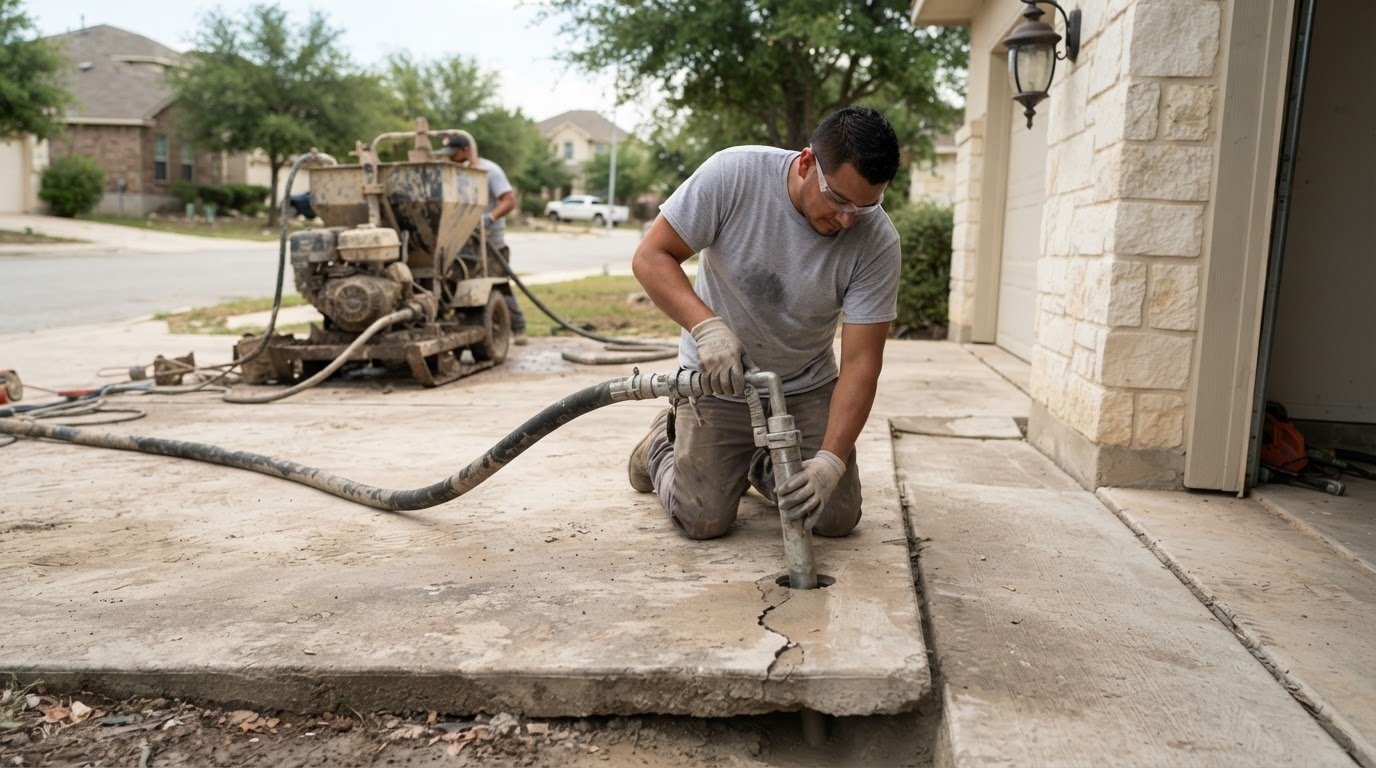
A sunken slab doesn’t always need replacing. Concrete raising in San Antonio lifts settled concrete by injecting material beneath it, filling voids and bringing the slab closer to level. This can address settlement, although existing cracks may remain and require separate repair.
Uneven driveways, sidewalks, patios, and garage slabs can create trip hazards or leave water pooling. Before deciding how to address the concrete, it helps to understand what leveling can and cannot fix.
This article explains how concrete raising works, how mudjacking compares with expanding foam, and what makes a slab a suitable candidate for leveling. It also covers common home surfaces and when a badly damaged slab may need a different repair.
Key Takeaways
- Leveling is most suitable when a settled slab is still worth saving; severe cracking or structural failure may call for a different repair.
- Mudjacking lifts concrete with cement-based slurry, while some newer systems use expanding foam. The method affects how material fills space beneath the slab.
- For uneven driveways, sidewalks, and garage slabs, identifying the cause of settlement helps determine whether leveling can improve the surface and drainage.
- When slab movement points to a foundation concern, Hercules Foundation Repair offers Slab Foundation Repair as a next step.
Concrete raising and slab leveling methods
Concrete raising lifts sunken slabs by filling voids beneath them and bringing the surface closer to level. Crews drill small access points, inject lifting material, and adjust the slab as it rises.
Lifting Sunken Concrete
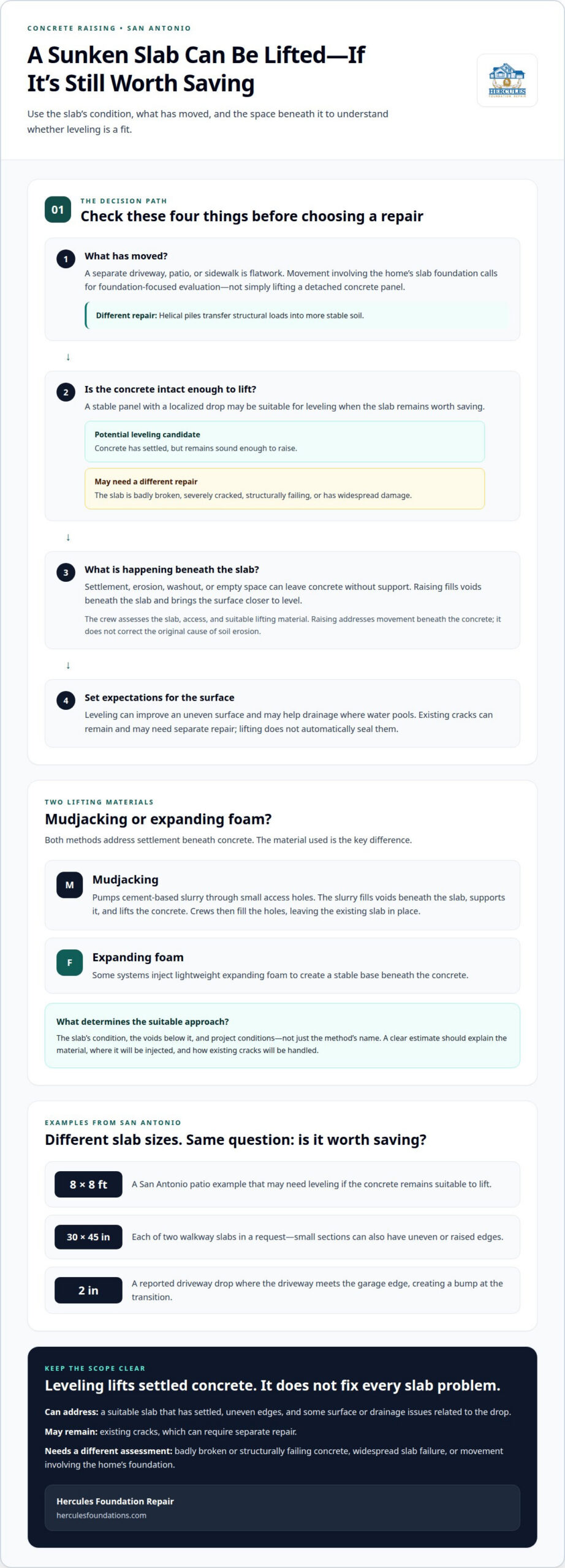
Settlement, erosion, washout, or empty space beneath concrete can cause a slab to sink. Raising can suit a driveway, patio, or walkway when the concrete remains worth saving. A San Antonio patio measuring about 8 by 8 feet is one example of a slab that may need leveling. The key decision is whether the slab is intact enough to lift.
Traditional mudjacking pumps cement-based slurry beneath the slab; some systems use expanding foam to create a base. Leveling addresses movement beneath the concrete, not every surface defect. Existing cracks may remain after lifting and need separate repair, especially if they affect how the slab functions.
Walkway and Sidewalk Leveling
Walkway and sidewalk leveling can lift uneven sections and close raised or sunken edges that create trip hazards. A San Antonio request involving two walkway slabs, each roughly 30 by 45 inches, illustrates how small sections can also need attention. Leveling may improve drainage where water pools, but badly broken or severely cracked concrete may need repair or replacement instead.
For sidewalk concrete repair in San Antonio, permit requirements can depend on whether the sidewalk is in the public right-of-way and what work affects it. Private walkways and public sidewalks may be treated differently, so don’t assume the same requirements apply to both.
Preparation and Surface Use
Before work, clear furniture, vehicles, planters, and other obstacles from the slab and access points. Note where water collects or where the concrete has dropped; these details help pinpoint the area needing attention. The crew can then assess the slab’s condition, access, and suitable lifting material.
Project duration depends on slab size, access, and the method used. When the surface can be used again depends on the lifting material and its setting time, so follow the project-specific access instructions. Raising won’t restore a structurally failing slab or automatically seal existing cracks.
Driveway, sidewalk, and garage slab repair
A dropped driveway edge or uneven garage approach can affect vehicle access, drainage, and safe footing. The repair choice depends on whether the concrete remains sound and what is moving beneath it.
Driveway and Garage Slab Repairs
A San Antonio job request described a 2-inch drop where a driveway meets the garage edge. That kind of height difference can create a bump at the transition and direct runoff toward an unwanted area. Concrete leveling may lift a suitable slab, helping extend its useful life and avoid replacement.
For driveways and garage slabs, distinguish a settled panel from a slab that has broken apart. A crew considers the slab’s condition, uneven joints, and signs of soil loss underneath. Sidewalk sections also need attention when misaligned edges create hazards or interfere with drainage.
Repair or Replace the Slab
Leveling can be an alternative to demolition when a slab has settled but remains worth saving. It avoids removing and replacing sound concrete just because part of the surface sits low. Existing cracks may remain, however, and lifting won’t repair concrete that is badly broken, severely cracked, or structurally failing.
Assess the damage pattern, not just one low spot. A stable panel with a localized drop may be suitable for repair; widespread failure points toward replacement. If movement involves the home’s foundation rather than a separate driveway or sidewalk, the repair needs are different. Helical piles transfer structural loads into more stable soil, unlike lifting a detached concrete panel.
That distinction matters: slab leveling addresses settled flatwork, while foundation movement calls for foundation-focused evaluation. Slab foundation repair relates to the latter when movement affects the home’s slab foundation. Separating these problems helps match the repair to what has actually shifted, rather than treating every uneven surface as the same issue.
Mudjacking
Mudjacking pumps cement-based slurry beneath a settled slab to raise it. Crews drill small access holes and inject the mixture into voids below the surface. As the slurry fills those spaces, it supports and lifts the concrete. Crews then fill the holes, leaving the existing slab in place.
The main difference between mudjacking and foam leveling is the material. Traditional mudjacking uses cement-based slurry; some systems inject lightweight expanding foam to create a stable base. Both methods address settlement beneath concrete, but the materials differ. The suitable approach depends on the slab, the voids below it, and project conditions, not just the method’s name.
Mudjacking may suit a residential driveway, patio, or walkway when the concrete remains worth saving. It doesn’t fix every surface problem: existing cracks can remain, and a badly broken or structurally failing slab may need a different repair. If the concrete has separated into damaged pieces, raising alone won’t restore its integrity.
When comparing concrete leveling contractors in San Antonio, look for a clear explanation of the method, the slab’s condition, and what the repair addresses. A useful estimate identifies whether the plan uses cement slurry or foam, where the material will be injected, and how existing cracks will be handled. Compare the proposed scope, not just the method’s name. The explanation should distinguish a settled slab from damage that lifting cannot correct.
That distinction matters before work begins. A crew needs to locate where support is missing and assess whether the slab can be lifted without worsening its condition. Mudjacking fills space beneath concrete; it doesn’t correct the original cause of soil erosion or guarantee that cracks disappear. Matching the material and repair plan to the slab helps set realistic expectations for the restored surface.
Concrete raising in San Antonio
In San Antonio, concrete lifting can address settlement beneath driveways, sidewalks, patios, and commercial slabs. The suitable method depends on the slab’s condition and the voids below it.
Concrete Raising Price Factors
The cost of concrete raising in San Antonio depends on the project and is provided after a quote request. Key factors include slab size, drilling access, the extent of settlement, and the lifting material selected. A small walkway section and a broad commercial pad require different amounts of material and work. The estimate should tie its scope to those conditions.
Material choice also shapes the work plan. Traditional mudjacking uses cement-based slurry, while some systems use expanding polyurethane foam. The slab’s condition and the space beneath it help determine the suitable method. A clear estimate identifies the repair area, proposed lifting method, and whether existing cracks need separate attention.
Lifted Concrete Longevity and Warranties
There is no single service-life figure for lifted concrete that applies to every San Antonio property. Longevity depends on the slab’s condition, the support restored beneath it, and whether erosion, washout, or another cause of settlement continues. Raising can fill voids and lift concrete, but it doesn’t automatically stop the conditions that created those voids.
Warranty terms vary by contractor and project. Read the written terms to understand what they cover, such as the lifting work, material, or later movement. A driveway slab with ongoing water washout has different durability concerns from a commercial sidewalk with stable support beneath it.
Causes of Sunken Slabs
Soil settlement, erosion, washout, and voids beneath concrete can leave San Antonio slabs sunken. For example, water moving beneath a sidewalk can wash away supporting soil and leave an unsupported space. The visible drop is the result; identifying its cause helps shape the repair approach.
Raising fills voids and restores support beneath a suitable slab, helping address settlement. It won’t repair badly broken or structurally failing concrete, and it may not stop recurring erosion. For a commercial pad or residential walkway, the key questions are whether the surface is worth saving and whether the support problem can be addressed.
Hercules Foundation Repair: Slab Foundation Repair
Hercules Foundation Repair provides Slab Foundation Repair when movement affects a home’s foundation, rather than only a separate driveway, walkway, or patio. The distinction matters: concrete leveling addresses sunken exterior slabs, while foundation repair targets movement in the home’s supporting structure.
If you notice uneven floors, shifting cracks, or changes around the home alongside slab movement, foundation repair may be the more relevant next step. The right approach depends on whether the issue is limited to surface concrete or involves the foundation itself. Hercules Foundation Repair also provides Foundation Repair, Pier and Beam Foundation Repair, and Commercial Foundation Repair.
Contact Hercules Foundation Repair to discuss concrete leveling or foundation concerns at your property.
Choose the Right Repair Path
Start by identifying whether the concern involves a separate concrete surface or movement affecting the home itself. This distinction helps keep the repair plan focused on the structure that needs attention. For concrete raising in San Antonio, describe what has shifted, where it is, and whether you’ve noticed changes inside the home. These details help frame a useful discussion about the problem.
You don’t need to rush a repair decision. Start with the main concern, such as a difficult transition, uneven access, or signs of movement near the house. Then consider whether the issue is isolated or connected to the foundation. Clear information supports a more useful conversation and helps set practical expectations before work begins.
For guidance on the next step, contact Hercules Foundation Repair. A clear understanding of the problem is a strong place to begin, and the right repair path can make the way forward feel manageable.
Frequently Asked Questions
What Is Leveling?
Leveling adjusts a shifted concrete surface to make adjoining areas more even and usable. For example, a walkway panel lower than the next can create an abrupt edge. The repair focuses on the slab’s position, not on making weathered concrete look new. Surface stains, chipped corners, and old cracks may still need separate attention.
How does polyurethane foam concrete lifting compare with mudjacking?
Both methods lift settled concrete, but they use different materials that occupy space beneath the slab in different ways. Polyurethane foam expands to form support, while mudjacking uses cement-based slurry. For a residential walkway or driveway, the slab’s condition, access, and support needs help determine the suitable method. Neither approach repairs damage that lifting cannot address.
Which concrete surfaces can be raised, such as driveways, sidewalks, patios, and pool decks?
Driveways, sidewalks, patios, pool decks, slabs, pads, and some light commercial areas may be candidates for raising. The layout matters: a patio beside a doorway may need a level transition, while a pool deck needs attention to how its sections meet. The concrete must remain suitable for lifting; badly broken surfaces may need a different repair.
When should a sunken concrete slab be replaced instead of raised?
Replacement may be the better option when concrete is badly broken, severely cracked, or structurally failing. A slab fractured into unstable sections may not provide a sound surface after lifting. A crack alone doesn’t automatically mean replacement; the key question is whether the concrete can still be saved. The extent of damage and the slab’s condition guide that decision.