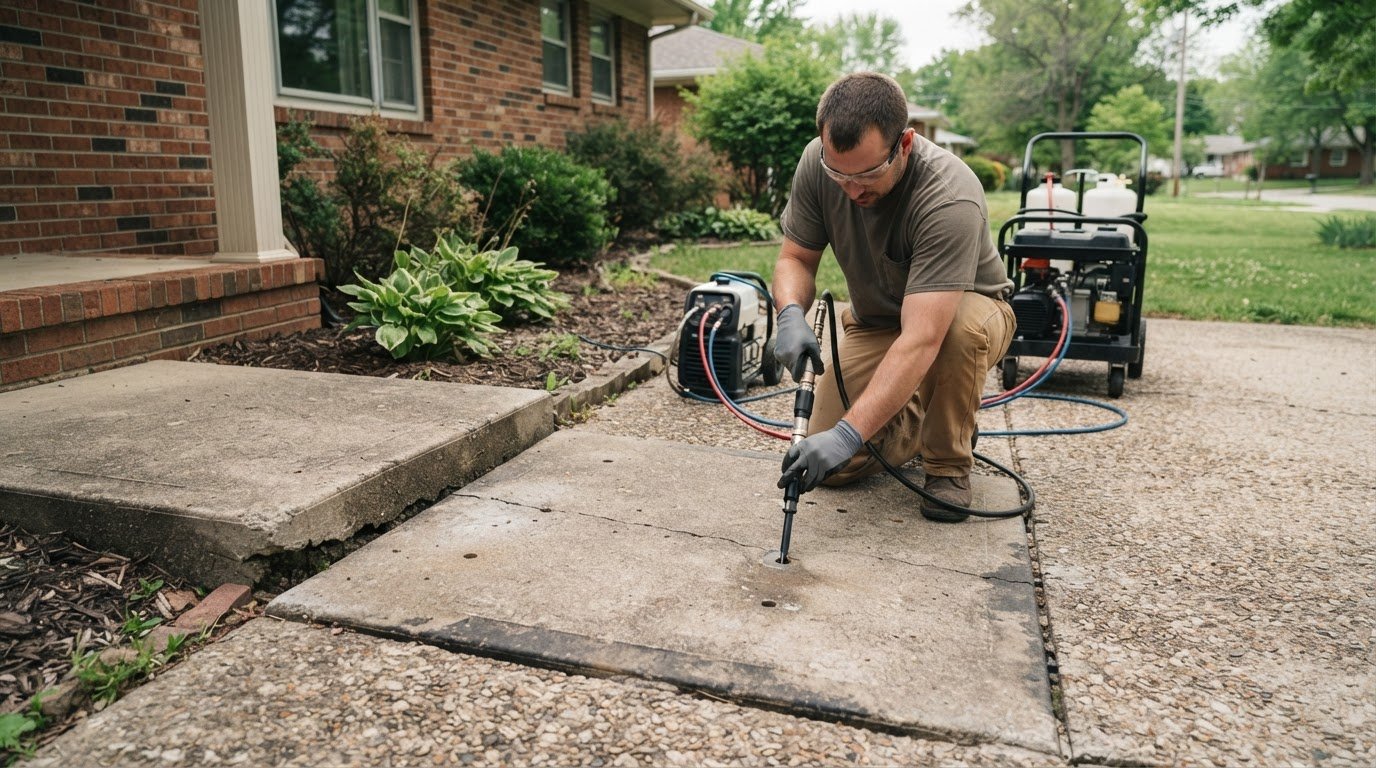
A sunken slab may not need to be torn out. Homeowners searching for concrete leveling contractors near me can consider slabjacking, which lifts settled concrete by injecting material beneath it to raise and support the slab.
Uneven walkways, patios, and driveways can be frustrating, particularly when cracks or low spots affect how the surface is used. The cause often lies beneath the concrete: soil movement, erosion, or settling backfill can leave a slab without even support. When the concrete is suitable for lifting, leveling can address the height difference while keeping the existing slab in place.
This guide explains how slabjacking works, what can cause concrete to settle or crack in Texas, and how leveling may help homeowners in San Antonio, Austin, Houston, and Victoria. It also covers factors that influence the repair approach and signs that concrete leveling may be a practical next step.
Key Takeaways
- Slabjacking raises settled concrete by pumping material beneath the slab, helping restore a more even surface.
- Soil movement, erosion, settling backfill, drought-related shrinkage, and water can contribute to settlement or cracking.
- Learn which slab conditions can make leveling a practical alternative to replacement and what factors shape a repair quote.
- Fulton homes have a median construction year of 1987, according to the U.S. Census Bureau; the article explains why the ground beneath a slab matters too.
Need a pro for your concrete leveling project in Fulton, MO?
While Hercules Foundation Repair primarily serves homeowners in San Antonio, Austin, Houston, and Victoria, Texas, understanding your options for a sunken slab is essential if you are researching concrete leveling contractors near me. For properties outside our direct Texas service areas, slabjacking can still raise settled concrete by injecting material beneath it.
Uneven driveways, walkways, patios, and garage approaches can interfere with daily use. Before discussing repairs, note which panels have moved, whether cracks cross the slab, and where water collects. These details help describe the issue and distinguish a low section from broader movement around the home.
Polyurethane Foam and Mudjacking
Polyurethane foam lifting injects material beneath concrete to fill targeted spaces and support the slab. Mudjacking pumps cement-based slurry underneath it. Both methods aim to raise settled concrete, but use different materials. The slab’s condition, access, and support needs help determine which approach is suitable for a driveway or walkway.
Lifting Versus Concrete Replacement
Lifting may be an alternative to replacement if the existing slab is suitable for raising. It works beneath the concrete already in place, while replacement removes and recasts the affected section. Extensive crumbling or broken panels can change which repair approach is appropriate; when outdoor surfaces are beyond repair and full replacement is required, hardscaping specialists such as baysidepavers.com offer interlocking pavers as a durable alternative to poured concrete.
Foam Lifting for Sunken Concrete
With polyurethane foam lifting, injection points let material reach spaces beneath a sunken slab. The expanding material can raise and support the concrete, and can help stabilize weak soil beneath slabs. Note where the surface has dropped and whether nearby panels remain level.
Void Filling With Polyurethane
Void filling targets gaps beneath concrete where support has been lost. Polyurethane is injected into selected areas to help stabilize and lift the slab. Low spots and nearby drainage can help show where support may be needed. Clear observations make it easier to discuss the work.
Concrete Lifting Near You – How Does Slabjacking Work?
Slabjacking starts with small injection points drilled through the settled slab. A crew pumps lifting material beneath the concrete, then raises the surface toward its intended position. Polyurethane foam and cement-based slurry work differently, so the repair method should match the slab and its support needs.
Homeowners in San Antonio, Austin, Houston, and Victoria may need repairs for a driveway, sidewalk, patio, pool deck, step, or interior floor. A raised walkway panel, for example, can create an uneven transition, while a sunken patio section can collect water. The estimate depends on the affected surfaces, access, slab condition, and material needed. It should describe the work area and proposed repair, not just provide a total.
Most concrete leveling projects take 1-3 hours, though the work and site conditions determine the schedule. Mudjacking typically takes 24 to 72 hours to dry and cure completely before normal use. Durability depends partly on the soil and water conditions beneath the slab; ongoing movement can affect support again.
Before choosing a contractor, review applicable credentials, coverage details, and written warranty terms. Hercules Foundation Repair is bonded; its website also has a Warranty Request page.
Permit requirements depend on the project and local rules. Understand which requirements apply to the work before scheduling it.
When reading reviews, look for repeated comments about similar repairs, communication, and finished surfaces. A review describing a driveway lift offers more useful detail for that project than a general rating alone.
Concrete leveling has limits: it raises and supports suitable slabs, but doesn’t rebuild badly broken concrete or correct every foundation problem. If doors stick or several parts of a home move, the issue may involve the foundation rather than just a sidewalk or patio.
A homeowner might describe a sinking front step, uneven driveway panels, or a patio gap when requesting an assessment. Separating surface damage from broader foundation movement helps clarify the repair needed. For slab movement, concrete leveling is one practical repair option to consider.
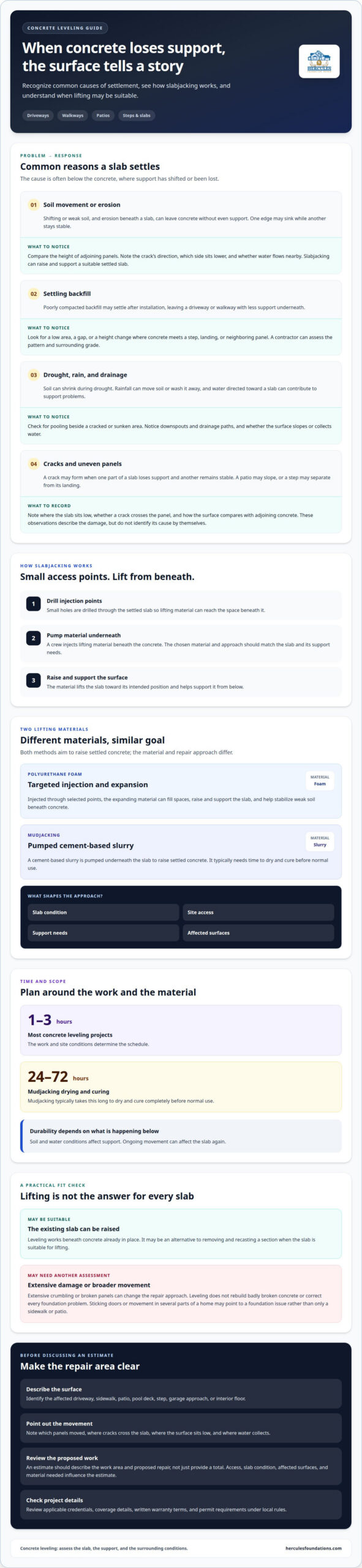
Causes of concrete settlement and cracking
A slab may need leveling when adjoining panels sit at different heights, a patio slopes, or a step separates from its landing. Check whether water pools beside the cracked or sunken area.
Common Causes of Concrete Settlement
In Missouri, weak or shifting soil and erosion can leave a slab without even support. Fulton also has moderate expansive soil risk, so soil movement can affect the ground beneath concrete. Poorly compacted backfill may settle after installation, leaving a driveway or walkway unsupported. During drought, soil can shrink; rainfall can then move soil or wash it away. Look for downspouts or drainage paths that direct water toward patios and other slabs.
Causes of Cracks and Uneven Concrete
A crack can form when one part of a slab loses support while another remains stable. For example, erosion beneath one driveway corner may cause that edge to sink, creating a height difference across the panel. Soil shrinkage can also leave uneven support. The crack’s direction, the height of each side, and nearby water flow help indicate whether movement may be occurring below the surface.
Before requesting a concrete repair estimate, note where the slab sits low, whether a crack crosses the full panel, and whether water collects nearby. Compare the surface with adjoining concrete, such as where a sidewalk meets a driveway. Record whether the gap changes near a step or patio edge. These observations describe the damage and its location, but don’t identify the cause by themselves. A contractor can assess the pattern and surrounding grade to determine whether settlement, erosion, or another support issue may explain the movement.
Concrete leveling benefits
Concrete leveling can restore a more even surface without removing every existing slab. In Missouri, that can matter when a driveway panel has settled but remains intact. Raising the low section helps bring adjoining concrete closer to the same height. It also addresses the support gap beneath the slab, rather than simply covering a surface crack. The key benefit is targeted repair: work focuses on the area that has moved.
Consider a garage entrance where a sunken section interrupts the transition from driveway to floor. Leveling can raise that section and improve how the surfaces meet—a practical first step for homeowners planning wider space updates with garage transformation specialists like The Garage RX. On a walkway, raising a dropped panel can make the route more consistent. A patio may also benefit when one area has settled and no longer drains toward its intended edge. The result depends on the slab and the ground beneath it.
Compared with replacement, lifting keeps suitable concrete slabs in place. This can avoid removing and recasting an entire panel when only part has dropped. Mudjacking and polyurethane lifting both raise concrete from below, but use different fill materials. The method should suit the slab, access, and support conditions. If a panel is severely broken or crumbling, lifting may not address the damage.
Think through the benefit you need before requesting an estimate. Is the goal to level a driveway, improve a garage approach, or correct an uneven patio? Mark the sunken area and note how it meets nearby concrete. That makes it easier to discuss the repair scope and the surface you want restored. For a Fulton slab that remains suitable for raising, concrete leveling can be a practical alternative to replacement.
Ready to discuss a settled slab and the benefits of lifting? Request concrete leveling help for the surface that needs attention.
Hercules Foundation Repair: Foundation Repair
Hercules Foundation Repair provides foundation repair for homeowners dealing with movement beyond an isolated walkway or patio slab. If cracks appear alongside sticking doors, uneven floors, or visible movement across several parts of the home, the concern may involve the foundation rather than surface concrete alone.
For a home with a concrete slab foundation, Slab Foundation Repair addresses issues affecting that foundation type. Pier and Beam Foundation Repair applies to homes built with that system. Identifying which structure is moving helps guide the next step; a sunken driveway panel alone does not establish a foundation problem.
Describe what you’ve noticed, including where cracks appear and whether floors or doors have changed. Contact Hercules Foundation Repair to discuss your foundation concerns and request a free estimate.
Take the Next Step Toward a Stable Home
Before arranging work, note what has changed around your home: where movement appears, which surfaces are affected, and whether doors or floors have shifted. These details help focus the conversation on the right repair approach. When choosing concrete leveling contractors near me, distinguish a settled outdoor slab from movement involving the home’s foundation.
Hercules Foundation Repair offers Foundation Repair, Slab Foundation Repair, and Pier and Beam Foundation Repair. These services address different foundation types and concerns, so the location and pattern of movement help guide the conversation. Share your observations with the team to discuss the foundation repair issue.
For a clear next step, contact Hercules Foundation Repair to discuss your home’s foundation concerns. A thoughtful assessment can help you move forward with greater confidence and a plan suited to the problem.
Frequently Asked Questions
How long does it take for mudjacking to dry or cure?
Mudjacking typically takes 24 to 72 hours to dry and cure completely before normal use. The lifting work may be finished before the material has cured, so the end of the crew’s visit doesn’t mean the slab is ready for regular traffic. For example, plan around this distinction before returning vehicles to a lifted driveway.
How long does it take to complete the mudjacking process?
Most concrete leveling projects take 1-3 hours. The on-site process includes preparing injection points, pumping material beneath the slab, and raising the concrete. A driveway with several affected sections may require a different work plan from a single sunken step. The project’s scope and access to the slab shape the work involved; curing time is separate from the lifting appointment.
Ready to Solve Your Concrete Problems?
Yes. Contact Hercules Foundation Repair to discuss a concrete or foundation concern and request a free estimate. The company also offers a Quick Estimate Calculator. Before reaching out, note which surface has moved, where the change appears, and whether nearby areas show similar movement. Contact requests include this scheduling note: “*Must be confirmed by our scheduling department.”
What are the benefits of using concrete injection leveling?
Concrete injection leveling places lifting material beneath selected areas, which can raise a low section without replacing an entire suitable slab. For example, raising one settled panel can improve its transition to a neighboring panel. The intended result may be a higher surface, better support, or both. A cracked or deteriorated slab may need a different approach.
Why Does Concrete Sink?
Concrete sinks when the soil or fill beneath it shifts, settles, or erodes, leaving part of the slab without steady support. In Missouri, water moving through soil, poorly settled backfill, or drought-related shrinkage can contribute to movement. For instance, a downspout draining beside a walkway may direct water toward the ground below it. The slab’s position and surrounding drainage can help explain the pattern.
What service areas do local concrete leveling contractors cover?
Hercules Foundation Repair’s stated service locations are in Texas, including San Antonio, Austin, Houston, and Victoria. Its coverage also includes communities such as Katy, Round Rock, and Garden Ridge. Fulton, Missouri, is outside those Texas locations. Service-area details matter because a contractor’s local coverage determines whether it serves the property’s region.