
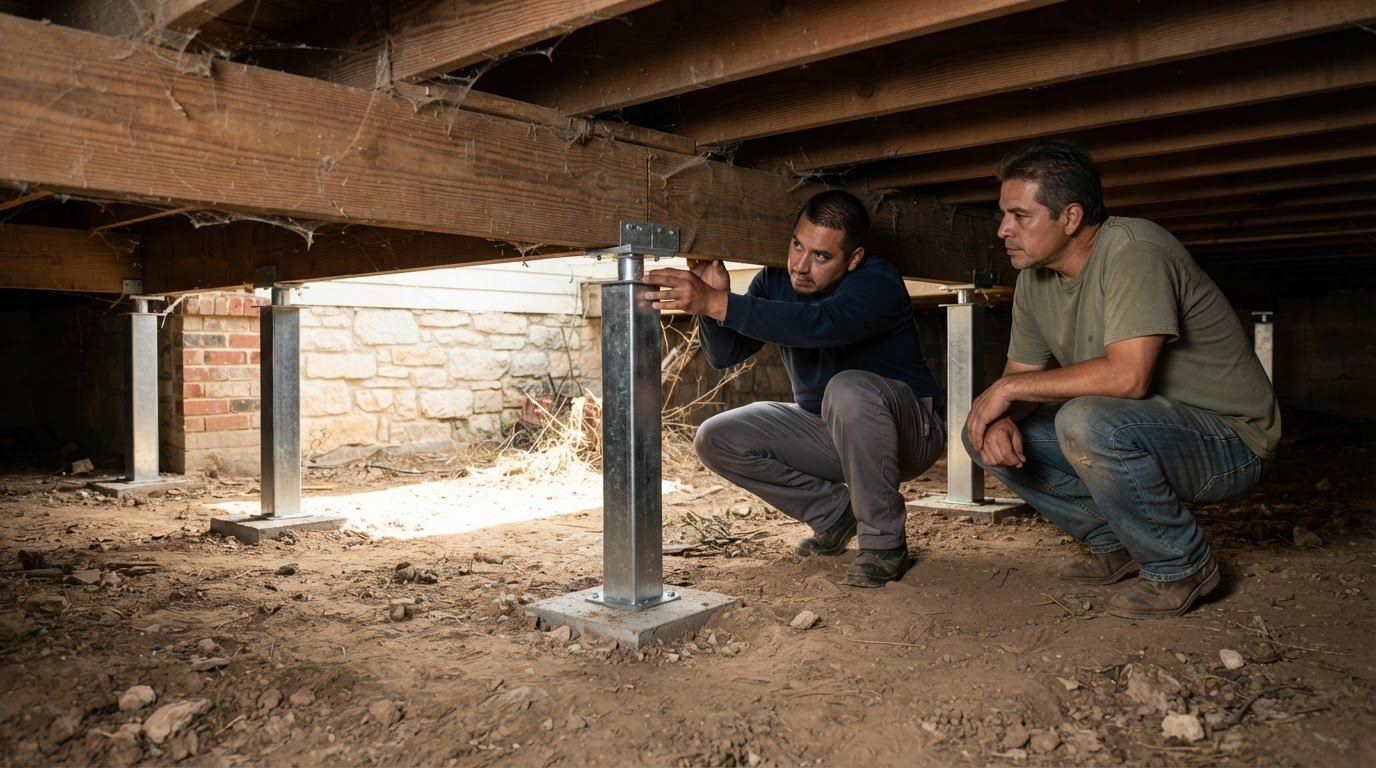
A repaired foundation doesn’t automatically reduce a home’s value. Selling a house with foundation issues in Texas is possible, but active movement can affect appraisal, financing, and buyer confidence; Texas Property Code §5.008 requires sellers to disclose known foundation defects and prior structural repairs. Clear repair records can help buyers understand what has been addressed.
If you’re concerned that cracks, uneven floors, or sticking doors could complicate selling a house with foundation issues in Texas, that concern is understandable. Foundation movement can have several causes, including expansive soil, poor drainage, and tree roots. Identifying what’s happening matters as much as recognizing the signs.
This article explains how foundation concerns may affect value and sale prospects, what common warning signs can mean, and how a specialist evaluation can help clarify the issue. You’ll also learn why repair history and supporting documentation can give buyers a clearer picture of the home.
Key Takeaways
- A repaired foundation doesn’t automatically hurt an appraisal; clear records can help explain the work and its history.
- Cracks, uneven floors, and sticking doors can point to movement, but a specialist evaluation helps distinguish signs from causes.
- Foundation concerns may affect buyer confidence and financing, so understand how repair options and sale terms can shape your prospects.
- A focused evaluation can clarify what is moving and what work may stabilize it, giving you a stronger basis for your next step.
1. Does a repaired foundation lower my appraisal?
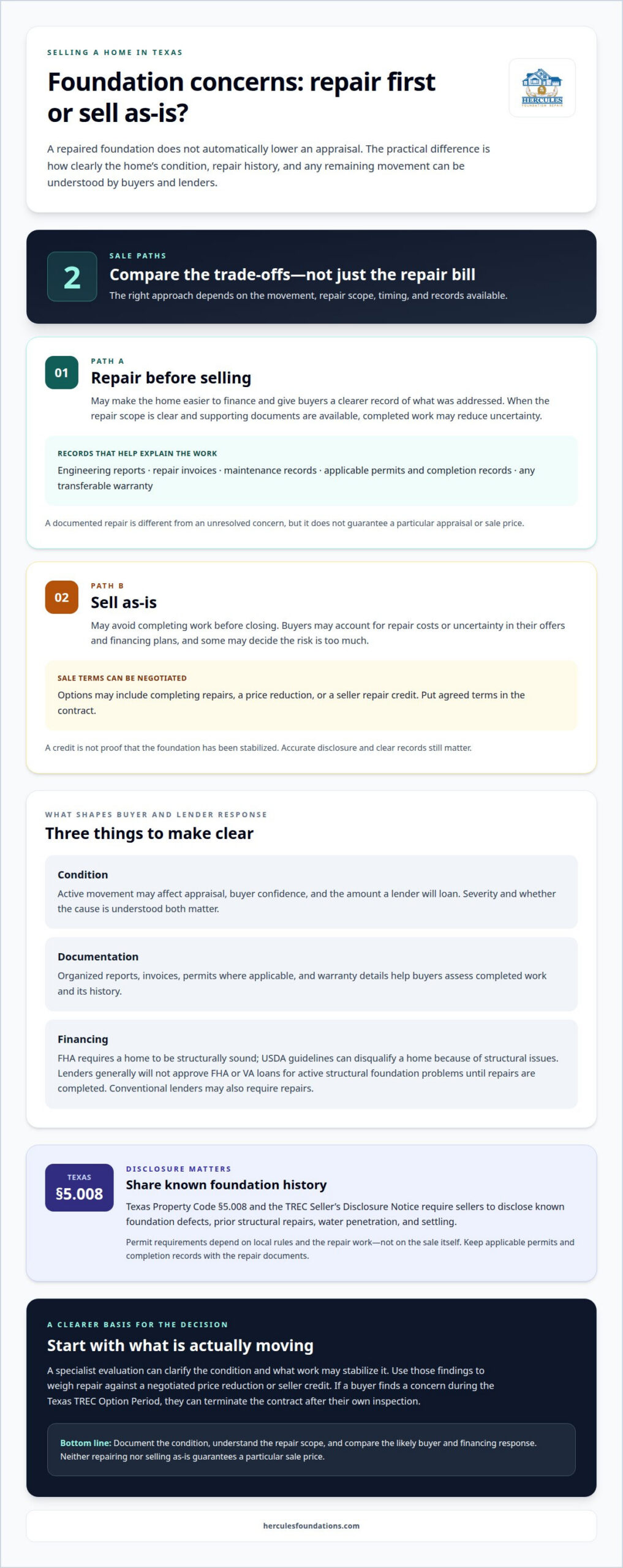
A repaired foundation does not automatically lower an appraisal. An appraiser considers the home’s condition, comparable sales, and evidence that repairs addressed movement. Buyers and lenders can better assess completed work when the seller organizes engineering reports, invoices, maintenance records, permits, and any transferable warranty. Active movement can have a different effect: foundation issues may lower an appraisal and the amount a lender will loan.
Texas Property Code §5.008 and the TREC Seller’s Disclosure Notice require sellers to disclose known foundation defects, prior structural repairs, water penetration, and settling. Texas real estate contracts can address repairs or seller credits through negotiated sale terms. A seller may agree to complete repairs or offer a price reduction or repair credit instead. Document the agreed terms in the contract, and don’t present a credit as proof that the foundation has been stabilized.
Financing partly depends on the home’s structural condition. FHA eligibility requires a home to be structurally sound, while USDA guidelines can disqualify a home because of structural issues. Lenders generally won’t approve FHA or VA loans for homes with active structural foundation problems until repairs are completed. Conventional lenders may also require repairs before lending. Depending on the severity, significant problems may prompt a lender to request more documentation.
Do Texas cities or counties require permits for foundation repairs before a home sale? Permit requirements depend on local rules and the repair work, not on the sale itself. Keep any applicable permits and completion records with the repair documents. If a buyer raises a concern during the Texas TREC Option Period, they can terminate the contract after finding a foundation issue in their own inspection. Clear records help buyers understand the repair history and support appraisal and financing.
2. Common signs of foundation problems
Foundation movement can show up in several parts of a Texas home, not just at the slab. Look for cracks in interior walls, exterior brick, or concrete. Their pattern and width can offer useful clues. Hairline cracks are generally cosmetic, while wide, stair-step cracks in brick or concrete may indicate more serious structural movement. One crack alone doesn’t establish the cause or severity.
Notice how doors and windows operate. A bedroom door that sticks, a window that suddenly won’t close, or gaps around frames may accompany shifting. Uneven or sloping floors can also signal movement, especially when changes appear in several rooms. These symptoms can have other causes, so consider whether they appear together and whether they’re changing.
Texas soil and water conditions can contribute to foundation movement. Expansive clay expands when wet and shrinks during dry periods, shifting support beneath a home. Poor drainage can leave water pooled near or under the structure, while tree roots draw moisture from nearby soil. Inadequate soil compaction or foundation reinforcement during construction can also contribute to later movement.
Before discussing a sale, use a simple observation routine: note where each crack appears, photograph it beside a fixed reference, and record any changes in doors, windows, or floors. Compare the same areas over time. A new gap above a door combined with a stair-step exterior crack deserves more attention than an isolated hairline mark. These notes can help a specialist understand the pattern and severity without treating every cosmetic blemish as structural damage.
Foundation concerns may become visible during a buyer’s inspection and affect confidence before closing. Avoid covering cracks before documenting them, since a clear view helps distinguish surface damage from possible movement. If several signs appear together, or visible changes continue, a specialist evaluation can clarify what’s happening and what the next step should be.
3. How foundation concerns can affect value and marketability
Foundation concerns can narrow the buyer pool because they affect perceived risk, financing, and future resale. An active structural problem may lead buyers to budget for repairs, seek a lower price, or decide the uncertainty is too much. The effect depends on the severity of the movement, whether its cause is understood, and whether proposed work addresses it. A documented repair presents a different picture from an unresolved concern.
Is it better to repair foundation problems before selling or sell as-is in Texas? Repairing first may make the home easier to finance and give buyers clearer documentation. Selling as-is may avoid completing work before closing, but buyers may account for uncertainty in their offers or financing plans.
Compare the practical trade-offs before choosing. A specialist’s findings can describe what is moving and what work may stabilize it, helping you weigh repairs against a negotiated price reduction or seller credit. If the repair scope is clear and records are available, completing the work may reduce uncertainty for buyers. If timing, access, or the extent of movement complicates repairs, an as-is sale with accurate disclosures and clear documentation may be more workable.
Think of repair as an investment in sale readiness, not an automatic increase in value. Buyers may consider the repair scope, supporting records, any transferable warranty, the home’s condition, and comparable sales. For example, a seller with completed repairs and organized documentation can explain what was addressed; a seller with active movement may need to negotiate around unresolved work. Neither approach guarantees a particular sale price.
To decide, first establish the condition, then compare the likely buyer response to each option. Consider whether the issue could restrict financing, what documentation exists, and whether a credit would address the buyer’s concerns. In Texas, foundation concerns can affect marketability as well as value, so a clear plan helps buyers assess the property and decide whether to proceed.
4. Foundation evaluations by specialists
An evaluation turns visible symptoms into a clearer account of foundation movement. A structural engineer’s report can identify what is moving, how much it is moving, and what work could stabilize it. That distinction matters: a wall crack describes a symptom, while an evaluation connects it to the home’s structure and potential repair needs.
For a useful evaluation, share the home’s repair history and point out changes you have observed. The specialist can assess the structure, consider whether signs appear in related areas, and explain the findings in a written report. For example, a sticking door paired with sloping floors may present a different picture from one isolated crack. A report gives buyers more specific information than a general statement that the foundation was checked.
Keep the evaluation’s scope clear. A structural assessment addresses foundation movement, while a sewer line inspection looks for damage to lines beneath a slab. Foundation problems can damage those lines, so sellers with repairs already in progress should obtain a sewer line inspection and an engineer’s certification. These documents address different concerns and help explain the property’s condition during a sale.
Use the findings to organize your next decisions: what is moving, what work is recommended, and which records will document completed repairs. Buyers considering a Texas home with foundation concerns can also consider evaluations by structural engineers or foundation specialists. A clear report helps them assess the issue and gives both sides a more concrete basis for discussing repairs or sale terms.
If foundation movement needs repair, discuss the next step for your foundation.
Hercules Foundation Repair
Hercules Foundation Repair helps Texas property owners address foundation concerns that can complicate a sale. If an evaluation points to structural work, the team provides foundation repair for homes, including slab and pier and beam foundation repair. The right next step depends on the foundation type and the findings, not simply on the presence of a crack.
Before listing or responding to buyer concerns, use the evaluation and repair records to understand what work may be needed. Addressing the underlying issue can give you clearer information to share during sale discussions and help buyers assess the property’s condition.
For guidance on foundation repair before a home sale, contact Hercules Foundation Repair.
Plan Your Next Move With Confidence
For homeowners selling a house with foundation issues in Texas, the next move is to turn uncertainty into a clear plan. Decide what matters most to your sale: completing work before listing, setting terms that reflect the home’s condition, or preparing to discuss options with interested buyers. A thoughtful sequence can keep decisions manageable and help you communicate clearly as the sale progresses.
Before taking action, consider how the foundation findings fit your timing and priorities. Hercules Foundation Repair can help you understand the repair path when foundation work is part of your plan. You can then discuss the property with a clearer basis, without treating every concern as a reason to abandon the sale.
Contact Hercules Foundation Repair to discuss a practical next step for your home. With a clear plan in hand, you can approach the sale with greater confidence.
Frequently Asked Questions
Do I have to disclose foundation repairs if they’re already fixed?
Yes, Texas sellers must disclose known prior structural repairs. Texas Property Code §5.008 and the TREC Seller’s Disclosure Notice cover known foundation defects and prior structural repairs. For a repaired foundation, provide a clear account of the work and available records, such as invoices or engineering documents. Keep the repair history consistent across disclosure forms and sale discussions so buyers can understand what was addressed.
Are you responsible for repairs?
Responsibility for completing repairs depends on the sale agreement. The seller and buyer can negotiate whether the seller will complete specified work, provide a credit, or sell without completing repairs. Put any agreement in the contract, including the repair scope and timing. Disclosing a known issue is separate from agreeing to repair it, so review the written terms before accepting the offer.
Does a repaired foundation lower my appraisal?
Not automatically. An appraiser considers the home’s condition and relevant comparable sales, while a lender may review structural condition and supporting documentation. A completed repair with records can help explain the work; unresolved movement may raise appraisal or financing concerns. Keep repair documents organized so the appraiser and lender can distinguish completed work from remaining issues.
Who would buy a home with foundation issues?
Potential buyers include cash buyers, investors, and homeowners willing to take on a repair project. Some buyers may proceed with financing if the structural concern is resolved and the lender’s requirements are met. Buyer interest depends on the property’s condition, repair scope, and the buyer’s resources. A clear description of the issue helps interested buyers decide whether the home fits their plans.
Can you sell a house with foundation issues in Texas?
Yes, selling a house with foundation issues in Texas is possible. Sellers can address repairs before listing or negotiate sale terms that account for unresolved work. For example, a buyer may request a price adjustment or repair credit after evaluating the property. Disclose known issues and prior repairs, then make sure the contract reflects the terms both parties accept.
Do Texas sellers have to disclose known foundation problems?
Yes. Texas Property Code §5.008 and the TREC Seller’s Disclosure Notice require sellers to disclose known foundation defects, settling, water penetration, and prior structural repairs. Report what you know accurately, including a concern that has not yet been repaired. For example, don’t describe a known settling issue as resolved unless the repair history supports that statement.