
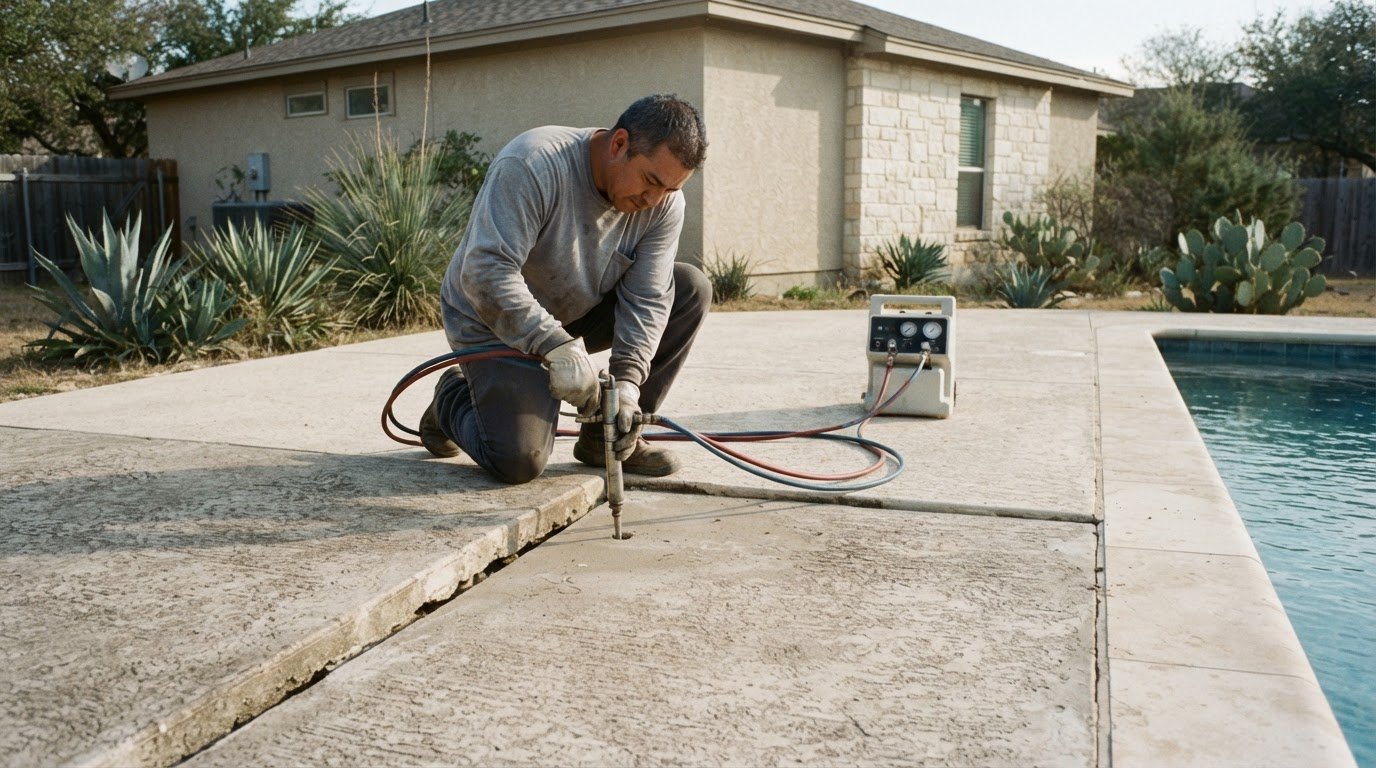
The repair method matters as much as the concrete you can see. Polyurethane foam jacking in San Antonio can lift settled driveways, sidewalks, and patios by injecting expanding foam through small holes beneath the slab. The foam hardens under the concrete, raising it toward a more level position.
A sinking or uneven slab can disrupt everyday use, so it’s reasonable to want a repair suited to local conditions and the surface’s use. This guide explains how foam jacking works, how it compares with mudjacking, and which concrete surfaces may be candidates. You’ll also learn what affects suitability before restoring a walkway, patio, driveway, pool deck, or steps.
Key Takeaways
- Learn which sunken concrete surfaces may be candidates for foam lifting and what conditions can affect repair suitability.
- See how the repair process addresses voids beneath slabs, with small access holes that are filled after leveling.
- Understand what contributes to long-term performance under everyday foot and vehicle traffic and changing weather.
- Compare foam leveling with mudjacking to see how their materials, access holes, and curing times differ.
Concrete surfaces repaired, including driveways, sidewalks, and patios
Foam lifting can address settled sections of concrete driveways, sidewalks, and patios. It raises slabs by filling empty space beneath them, rather than removing the entire surface.
Filling Voids Beneath Concrete Slabs
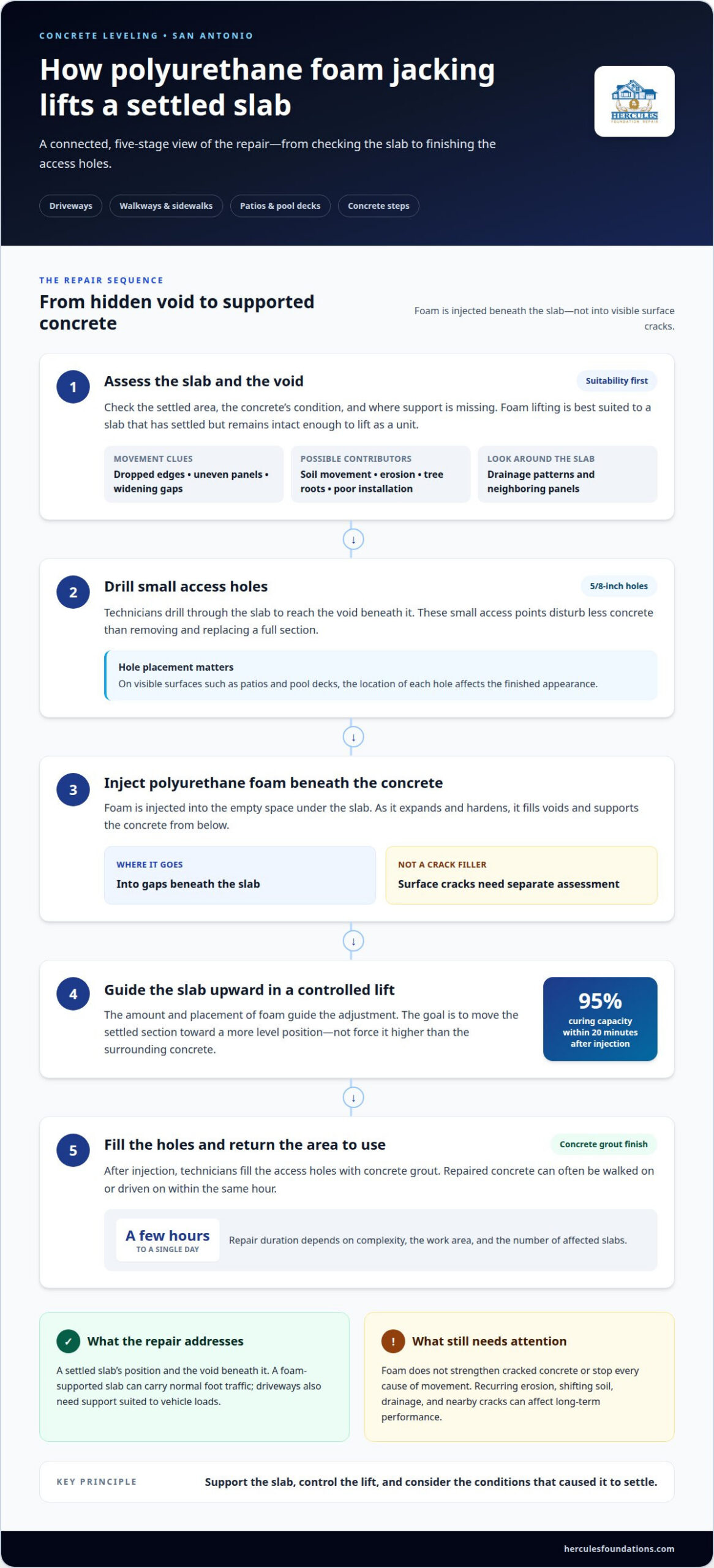
The repair starts with small holes drilled through the slab to reach gaps underneath. Technicians inject polyurethane foam into the voids; as it expands and hardens, it supports the concrete from below. They then fill the access holes. The method is best suited to a slab that has settled but remains intact enough to lift as a unit.
Lifting Concrete with Foam Injection
Foam injection lifts a slab by expanding beneath it and pushing it upward. The amount and placement of foam guide the adjustment, so the goal is controlled lifting rather than forcing the concrete higher than its surrounding surface. Polyurethane foam reaches 95% curing capacity within twenty minutes after injection, helping the repair gain support.
Foam is injected beneath concrete, not into visible cracks. Lifting a cracked driveway or sidewalk may correct the slab’s uneven position, but it does not fill the surface crack. An assessment can distinguish a gap beneath the slab from damage in the concrete before determining the appropriate repair.
Consider assessing shifting concrete when a driveway edge drops, a sidewalk becomes uneven, or a patio slab separates from its neighbor. Shifting soil, erosion, tree roots, and poor initial installation can all contribute to movement. A new trip edge or widening gap is a practical reason to assess the slab before the problem worsens.
When comparing polyurethane foam jacking contractors in San Antonio, look for a clear explanation of the injection process, the slab’s condition, and the repair’s limits. Ask for a written scope identifying the areas to be lifted and how the drilled holes will be finished.
San Antonio permit and local-rule requirements depend on the work’s scope and location. Concrete leveling and foundation repair may have different requirements, so confirm the applicable city rules for the planned project before work begins.
Soil movement and drainage in San Antonio can affect whether concrete settles and where voids form. Water erosion can wash soil from beneath a slab, while roots or shifting soil can contribute to uneven support. The void’s location and the slab’s condition help determine whether foam lifting is suitable.
Repairing walkways, patios, pool decks, and steps
Foam lifting can raise settled slabs without removing an entire walkway or patio. The repair plan depends on the surface, the pattern of movement, and access to the area beneath it.
Surfaces Suitable for Repair
Walkways, sidewalks, driveways, patios, pool decks, and concrete steps may be candidates when sections have settled. A sunken pool-deck panel, for example, can create an uneven transition beside the next slab. An assessment considers whether each section can be lifted and whether its concrete remains suitable for repair. Cracks, edges, and neighboring slabs help define the work area.
Lifting Sinking Driveways and Slabs
A sinking driveway or slab can leave a drop where two concrete sections meet. Foam injection can raise the settled section by filling space beneath it. For a driveway estimate, the scope should identify the affected panels and intended leveling area. This helps distinguish a surface-level repair from foundation repair, which addresses movement in a building’s support system.
Drill-Hole Size and Disruption
Polyurethane foam jacking uses a 5/8-inch hole drilled through the slab to reach the underlying void. These small access points limit the amount of concrete disturbed compared with removing and replacing a full section. After injection, technicians fill the holes with concrete grout. Their placement matters, especially on a visible patio or pool deck, where the finished surface is in plain view.
Repair Duration and Site Disruption
Foam injection repairs in San Antonio may take a few hours, while a typical project may take a few hours to a single day, depending on complexity. Repaired concrete can often be walked on or driven on within the same hour. The work area and number of affected slabs shape the schedule. A lasting repair also depends on addressing the void beneath the sinking section.
For a settled concrete surface, explore concrete leveling options as a practical next step.
Durability under foot traffic and weather
Once the repair is ready for use, a foam-supported slab can carry normal foot traffic. Driveways also face vehicle loads, so support beneath each settled section matters. Polyurethane foam creates a firm base under the concrete, but it does not strengthen a cracked slab. For example, a level patio panel with a surface crack still needs that crack assessed separately. The repair addresses the slab’s position and the void below it.
Foam-jacked concrete is described as having a sturdy base built to last for decades. Long-term performance depends on stable support beneath the slab. Drainage matters too: water moving soil away can create or enlarge unsupported areas. Around a San Antonio property, note where runoff collects and whether a sunken walkway lies beside a drainage path. These clues can help identify conditions that may continue to affect the concrete.
Polyurethane foam is a durable support material, but injection does not stop every cause of movement. Shifting soil, recurring erosion, or water flowing toward a driveway can leave the underlying problem active. A useful assessment considers the slab’s uneven position, nearby cracks, and surrounding ground conditions. If several adjacent panels are moving, their shared support may matter more than one visible edge.
How long does foam-jacked concrete last, and what warranties do San Antonio contractors offer? Foam leveling is described as creating a sturdy base built to last for decades. Warranty coverage and terms vary by contractor, so review the written warranty’s duration, covered work, and exclusions before deciding.
For better durability, address drainage patterns and the original cause of sinking alongside the injection repair. Keep water from repeatedly washing soil from beneath the same slab. Reassess new unevenness or widening cracks, which can signal renewed movement. These steps can help protect the repaired surface under everyday foot traffic and changing weather.
Foam leveling compared with mudjacking
Both methods raise settled concrete by placing material beneath a slab, but they differ in materials, access holes, and curing times. For San Antonio homeowners weighing repair against replacement, these differences affect site disruption and how soon the surface can return to use.
Polyurethane foam enters through small drilled holes and expands beneath the concrete, filling voids as it lifts the slab. Foam injection holes are about an inch smaller than mudjacking holes. The smaller openings disturb less concrete, while the expanding material supports the slab from below. The injection pattern and slab condition still guide the leveling process.
Mudjacking is an alternative method, but its larger holes and longer curing period can affect access. The repair may require a 24-to-72-hour wait before the surface is safe to use. Polyurethane foam sets in minutes, while mudjacking can take days to cure. That difference matters for a driveway needed for daily vehicle access or a walkway serving a main entrance.
Foam leveling is described as creating a sturdy base built to last for decades, but it does not solve every cause of shifting or damage. Foam lifts concrete; it does not rebuild a severely deteriorated slab or stop ongoing soil movement and drainage problems. Visible cracks may also need separate attention, since lifting addresses support and position beneath the concrete.
The main limitations are the slab’s condition and the cause of settlement. A broken or badly deteriorated panel may not be suitable for lifting as one piece, while continuing erosion can undermine repaired support. The method is most relevant when concrete has settled but remains liftable. An assessment should consider both the slab and the ground beneath it.
For a settled slab, request concrete leveling to discuss whether foam lifting fits the repair.
Hercules Foundation Repair
Hercules Foundation Repair helps property owners address concrete and foundation concerns with repair options suited to the structure and observed movement. If a settled slab may be connected to broader foundation movement, its condition and support system matter alongside the surface symptoms.
For concerns involving a home’s foundation, Hercules Foundation Repair offers Foundation Repair, Slab Foundation Repair, and Pier and Beam Foundation Repair. Commercial properties can also receive Commercial Foundation Repair. The right direction depends on whether the issue affects an isolated concrete slab or the building’s foundation.
Share what has shifted, where cracks appear, and whether the movement affects a walkway, driveway, or structure. This context helps clarify the concern and relevant repair path. To discuss a concrete or foundation concern, contact Hercules Foundation Repair.
Choose the Next Step for Your Concrete
Before settling on a repair, consider what you need the surface to do every day. A driveway must serve vehicles, while a walkway needs a safe, even path. This practical view can clarify whether lifting is appropriate or whether the concrete’s condition calls for another approach.
For polyurethane foam jacking in San Antonio, the useful next step is to connect visible slab movement with its underlying cause. Note where movement appears and how it affects access around your property. If the concern extends beyond a concrete panel, a broader foundation assessment may be more appropriate than treating the surface alone.
Hercules Foundation Repair offers foundation services for concerns involving homes and commercial properties. To discuss what you’re seeing and identify a suitable next step, contact Hercules Foundation Repair. A clear conversation can help you move forward with greater confidence and a repair plan grounded in the problem at hand.
Frequently Asked Questions
Why You Should Repair It Now?
Address shifting concrete early to correct uneven transitions before they interfere further with everyday access. A raised sidewalk edge can catch a foot; a settled driveway can make vehicle entry awkward. Cracks or movement near a home may also warrant attention because they can signal a support issue. Note where the change appears and whether it affects one slab or the surrounding structure.
What is polyurethane foam jacking and how does the process work?
Polyurethane foam jacking raises settled concrete by placing expanding foam beneath the slab. The crew identifies the low area, injects foam through access points, and observes how the concrete responds as support builds below. The aim is to correct the slab’s position, not repair every surface crack. For instance, a patio may need separate crack repair after leveling.
Which San Antonio companies offer polyurethane foam jacking?
Hercules Foundation Repair offers Concrete Leveling for uneven concrete surfaces. If you’re concerned about a sunken driveway or walkway, this service is relevant. The company also handles foundation-related problems, which matters if movement appears to involve the structure rather than an isolated concrete panel. Describe where the slab has shifted and what nearby areas show movement.
How much does polyurethane foam jacking cost per square foot in San Antonio?
There is no dependable per-square-foot figure for every project. The price depends on the case and is provided after a quote request. A useful estimate accounts for the affected concrete area, repair access, the slab’s condition, and the work needed beneath it. A small patio panel and a long driveway can require different scopes.
What factors affect the price of foam jacking in San Antonio?
The repair area, slab condition, access, and extent of empty space beneath the concrete all affect the project scope. For example, one settled walkway section differs from several connected driveway panels. Existing cracks and drainage concerns may also shape the appropriate work. These details help define an estimate; the final price depends on the case and follows a quote request.
How does polyurethane foam jacking compare with mudjacking and slab replacement?
Foam jacking and mudjacking both aim to raise settled concrete, while slab replacement removes and replaces concrete that cannot be suitably lifted. The slab’s integrity is central: a mostly intact panel may be a candidate for leveling, while badly broken concrete may call for replacement. Compare the repair area, surface condition, and disruption involved to decide which approach fits the problem.