
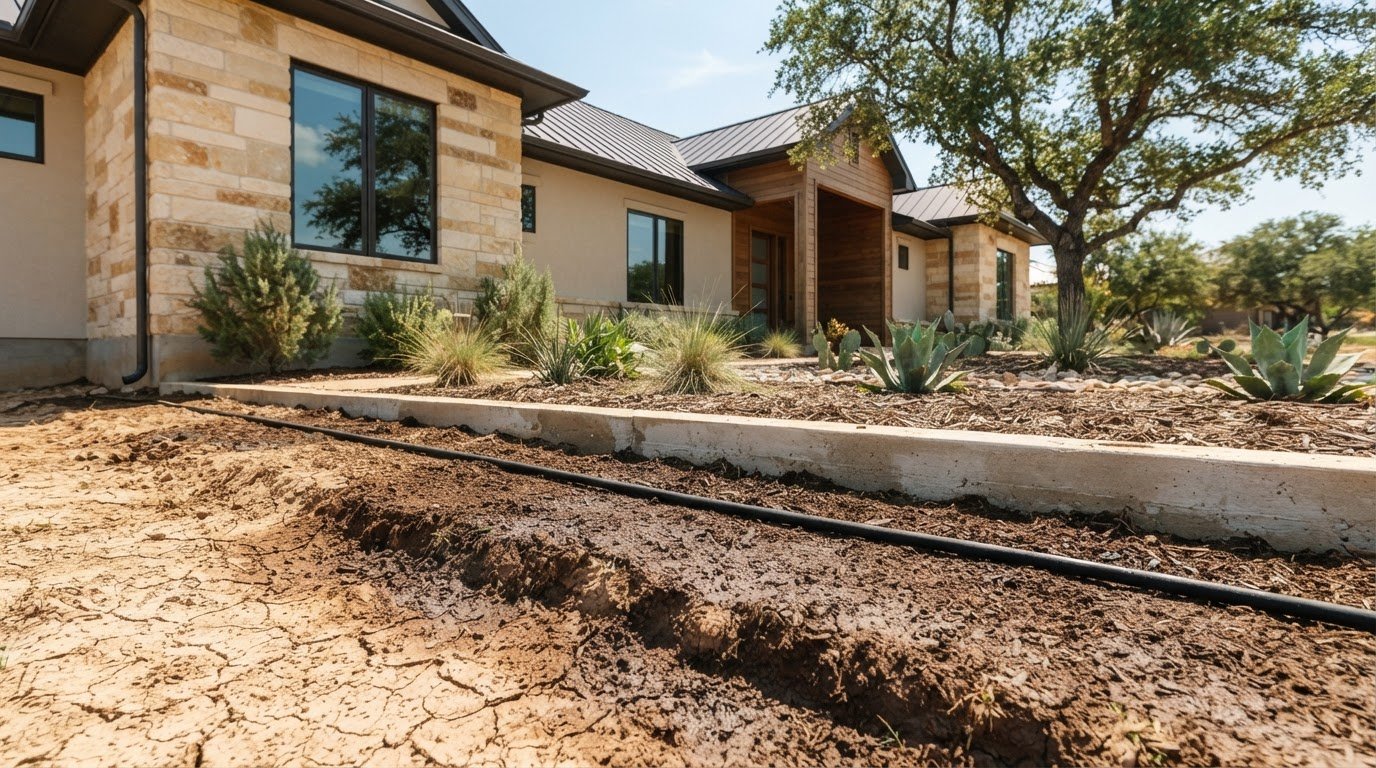
Texas summer heat can turn dry soil into a foundation concern. In regions like San Antonio, Austin, Houston, and Victoria, watering a foundation 2-3 times per week is recommended when temperatures are 85-100°F, and daily watering is recommended when temperatures reach 100°F or higher. The right routine for watering foundation in a Texas summer also depends on soil moisture and rainfall, so avoid treating the schedule as a reason to keep the ground saturated.
If you’re wondering what watering foundation in a Texas summer actually does, the goal is to help keep soil around the home from drying unevenly. That matters in Texas, where clay can shrink as it loses moisture and swell when it gets wet. Too little water during a dry spell can leave soil parched; too much can encourage more movement.
This guide from Hercules Foundation Repair explains how to check soil conditions, adjust watering through changing seasons, and respond to prolonged summer heat. You’ll learn practical ways to keep moisture more consistent and recognize when cracks or sticking doors may point to movement that watering alone won’t address.
Key Takeaways
- Check soil near the foundation regularly; dry, crumbly ground and a screwdriver that barely penetrates can signal that it needs moisture.
- Keep clay soil consistently moist, not muddy, since drying and overwatering can both contribute to foundation movement.
- Adjust your watering routine as North Texas seasons and rainfall change instead of relying on one schedule year-round.
- Watch for developing cracks or sticking doors, which can signal movement that watering alone may not address.
What is Foundation Watering?
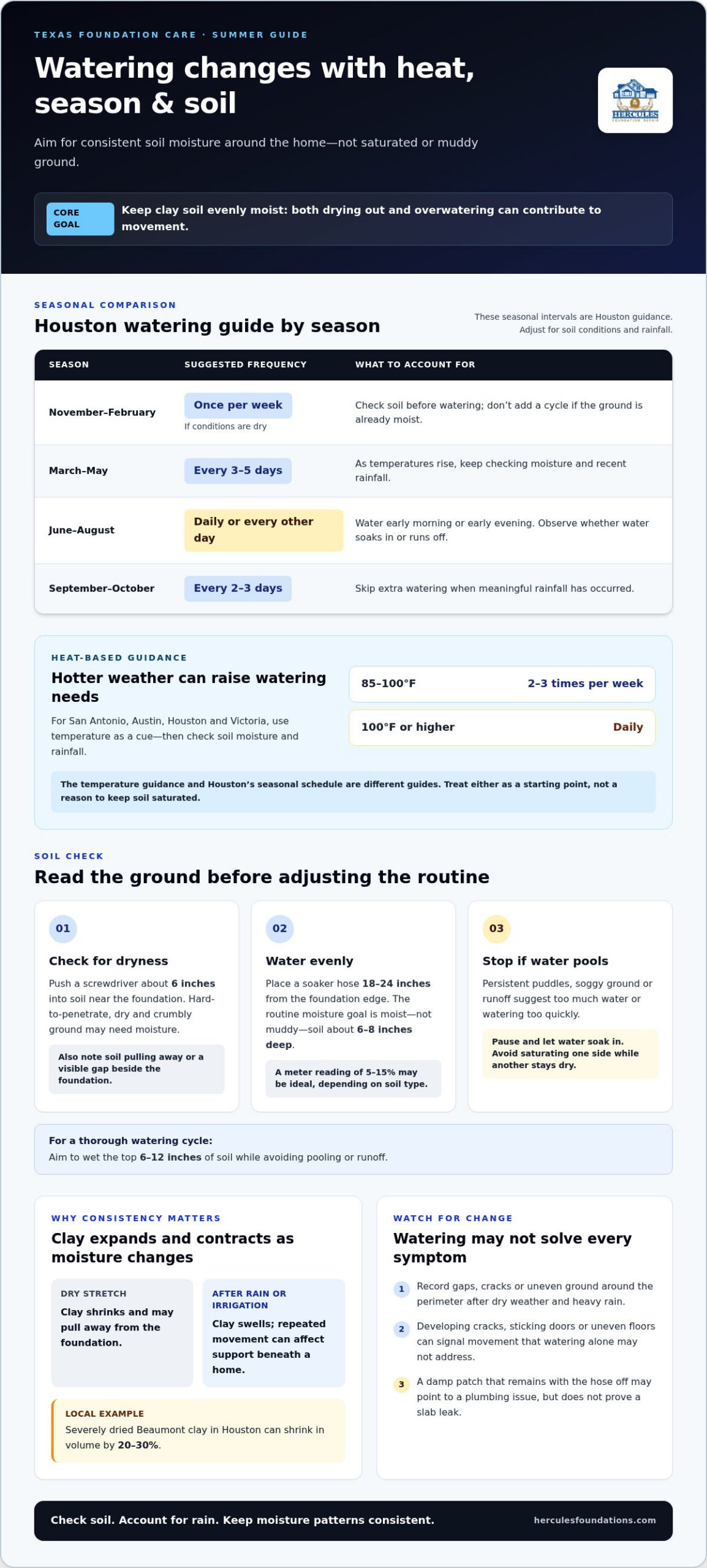
Foundation watering adds moisture to soil beside a home to help limit extreme drying. Place a soaker hose 18 to 24 inches from the foundation edge. Aim to keep soil moist, not muddy, about 6 to 8 inches deep. A soil moisture meter reading between 5 and 15 percent may be ideal, depending on soil type. These checks help guide watering a foundation during a Texas summer.
- Check the soil before watering. Inspect the ground around each side of your home, especially after a prolonged dry spell. Push a screwdriver about 6 inches into the soil. If it barely penetrates, or the soil looks dry and crumbly, the area may need moisture. A visible gap between soil and foundation is another reason to check conditions rather than wait for a crack.
- Look for signs of underwatering. Hard soil that pulls away from the foundation can indicate drying. When watering a foundation during a Texas summer, respond to soil conditions and recent rainfall instead of relying only on a fixed timer. Recheck the soil after a cycle; the goal is even moisture, not a muddy surface or standing water.
- Stop if the soil becomes waterlogged. Persistent puddles, soggy ground, or runoff beside the home suggest you may be applying too much water or applying it too quickly. Pause the cycle and let water soak in before reassessing. Avoid saturating one side while leaving another dry, since uneven moisture can contribute to soil movement.
- Separate watering concerns from possible leaks. Note a damp patch that remains when the hose is off or a localized wet area indoors. These clues can point to a plumbing issue, but don’t prove a slab leak. Stop watering that area and arrange an appropriate inspection. In Austin, drywall cracks or sticking doors can also signal foundation movement that watering alone won’t address.
Clay soil shrinkage, swelling, and foundation movement
- Track moisture changes around the perimeter. Expansive clay found across Texas changes volume as it gains or loses water. During a dry stretch, clay shrinks and can pull away from a foundation; after rain or irrigation, it swells. This repeated movement can affect support beneath a home. Walk the perimeter after dry weather and again after heavy rain, noting where soil separates or stays wet.
- Consider how local clay responds. Severely dried Beaumont clay in Houston can shrink in volume by 20 to 30 percent. Around Austin and Central Texas, clay-based foundation soils can become dehydrated and contract under a home’s weight. These conditions help explain why a visible gap or uneven ground deserves attention, even before indoor symptoms become obvious.
- Record changes instead of assuming every property behaves alike. Soil composition and moisture vary across San Antonio, Austin, Houston, and Victoria. Note where soil pulls away, whether the change follows a dry spell, and whether rain reverses it. This simple record can reveal whether movement is seasonal or concentrated around one part of the home.
- Keep moisture patterns consistent during dry weather. In Houston, a summer dry spell lasting more than two weeks is a cue to consider supplemental foundation watering. Across Texas, irregular watering can increase soil shrinkage and the risk of foundation movement. Avoid alternating between very dry ground and excessive saturation; check the soil and adjust irrigation to conditions.
- Respond to continuing movement clues. Note when gaps, cracks, or uneven floors appear, and whether they change after rain or a dry spell. A repeated pattern around the perimeter can help distinguish seasonal soil movement from a persistent structural concern. If visible movement continues, foundation repair may be relevant after the cause and affected areas are assessed.
Seasonal foundation-watering frequency in North Texas
Watering needs change with the season, rainfall, and local soil conditions. The seasonal watering schedule described here applies to Houston, not San Antonio, Austin, or Victoria.
-
Set a Seasonal Watering Frequency
In Houston, water once per week from November through February if conditions are dry. As temperatures rise, water every 3 to 5 days from March through May. From September through October, water every 2 to 3 days unless meaningful rainfall has occurred. Use these seasonal intervals as Houston guidance, and account for rain before adding another cycle.
-
Plan Summer Watering Timing
In Houston, water daily or every other day from June through August. Choose early morning or early evening during hot weather to reduce evaporation, then observe whether water soaks in or runs off. If one area dries faster, assess its shade, nearby trees, and soil before changing the whole schedule. After a good soaking rain, skip one or two cycles.
-
Determine Water Amount and Cost
How many inches of water should you apply around a Texas home foundation? Aim to thoroughly wet the top 6 to 12 inches of soil, adjusting the cycle to avoid pooling or runoff. How much does foundation watering cost in Texas during summer? That figure describes installation, not the cost of each watering cycle.
Watering foundations during dry summers
During drought, adjust watering to soil conditions, heat, and rainfall. Under the NTMWD rules described here, drip irrigation and soaker hoses are exempt from the twice-per-week spray-irrigation restriction. This exemption applies to those watering methods, not every irrigation system.
- Check soil before adding water. During summer, push a screwdriver about 6 inches into the ground near the foundation. North Texas homeowners can check all four sides weekly; hard, dry soil signals that moisture may be needed. Temperatures of 100°F or higher are a cue for daily watering in DFW, but inspect first to avoid adding water to already-wet soil.
- Use a controlled watering cycle. A soaker hose can deliver water gradually beside the foundation. For North Texas, a common starting cycle is 15 to 20 minutes. During drought, watering may be needed for up to 45 minutes daily. Check that water soaks into the ground instead of pooling or running away, then adjust the cycle to soil response.
- Account for rainfall and evaporation. After rainfall of 1 inch or more, skip watering for 3 to 5 days. That pause helps avoid oversaturating soil already replenished by rain. During hot summer months, water early in the morning or early evening, when less water is lost to evaporation. Resume only when the soil check shows drying.
- Match your method to local restrictions. Texas watering rules can differ by location and method. NTMWD’s exemption covers drip irrigation and soaker hoses, while spray irrigation remains subject to its twice-per-week restriction. Check the applicable local rules before using sprinklers, and use a soaker hose when its slow delivery suits the dry soil around your home.
If drought conditions coincide with persistent cracks or uneven floors, get help assessing foundation movement rather than relying on extra watering alone.
Hercules Foundation Repair: Foundation Repair
Hercules Foundation Repair provides Foundation Repair for homeowners facing signs of ongoing foundation movement. If cracks keep widening, floors become uneven, or doors continue sticking after soil moisture changes, repair may be the next step rather than adding more water.
The right approach depends on the structure. Slab Foundation Repair addresses slab foundations, while Pier and Beam Foundation Repair serves homes built with pier-and-beam systems. For commercial properties with foundation concerns, Commercial Foundation Repair is also available. These services address structural issues that a watering routine cannot resolve on its own.
Keep notes on when cracks appear and how they change through dry weather and rainfall. That timeline can help explain what you’ve observed when discussing the problem. For help with persistent foundation concerns, contact Hercules Foundation Repair.
Make Your Next Step a Consistent One
Think of watering your foundation in a Texas summer as ongoing moisture management, not a one-time fix. A simple log of watering days, rainfall, and changes around the home can help you spot patterns instead of reacting to every new crack or sticky door. Keep that record alongside photos, and note whether changes appear after a dry spell or rain. This gives you a clearer basis for deciding whether to adjust your routine or address a structural concern.
Watering can support more even soil conditions, but it doesn’t repair a foundation that has already shifted. If signs of movement persist, consider the structure itself. Hercules Foundation Repair offers Foundation Repair, Slab Foundation Repair, and Pier and Beam Foundation Repair for different foundation types and concerns.
Share your foundation concerns and take a practical next step toward protecting your home.
Frequently Asked Questions
Can I use sprinklers instead of a soaker hose?
Yes, sprinklers can wet soil around a foundation, but they distribute water less precisely than a soaker hose. Depending on conditions, spraying can lose 20 percent of applied water to evaporation. Under NTMWD rules, drip irrigation and soaker hoses are exempt from the twice-per-week spray-irrigation restriction. That exemption applies to the rules described for NTMWD, not automatically across Texas.
What If Some Sides of Your Foundation Receive More Sun Than Others?
Check each side separately instead of extending watering across the whole perimeter. Compare soil moisture at the same depth and note which side dries first after irrigation. Mature tree roots can also extract up to 190 gallons of water per day from surrounding soil, so consider nearby trees if one section repeatedly dries faster. Adjust only where the soil check shows a need.
How often should you water a foundation in Texas during summer?
In DFW, water 2-3 times per week when summer temperatures are 85-100°F; daily watering is recommended at 100°F or higher. Let rainfall and soil conditions guide adjustments instead of following the schedule automatically. After a good soaking rain, skip one or two watering cycles. Check drier or more exposed areas separately before resuming, so one side doesn’t receive unnecessary water.
Should you water the foundation during a Texas drought or water restrictions?
During drought, consider soil moisture while following restrictions that apply to your watering method and location. NTMWD rules exempt drip irrigation and soaker hoses from the twice-per-week spray-irrigation restriction, but this is not a statewide exemption and shouldn’t be assumed to apply in San Antonio, Austin, Houston, or Victoria. In Houston, a summer dry spell lasting more than two weeks is a cue to consider supplemental watering.
What are the signs of foundation movement caused by dry soil in Texas?
Possible signs include new or widening cracks in walls or brick, doors or windows that stop closing properly, and soil separating from the foundation. Record where each change appears and whether it progresses after rainfall or another dry stretch. Note whether symptoms occur together or in separate parts of the home. A timeline can help distinguish a changing pattern from a single isolated crack.
Is soaker hose watering better than sprinklers for foundation protection?
A soaker hose can deliver water along the foundation perimeter more precisely, while sprinklers wet a broader area and may lose water to evaporation. Whichever method you use, watch for pooling or runoff rather than assuming longer watering means better moisture below the surface. If you use sprinklers, observe how water reaches each side and stop a cycle if water begins running away.