
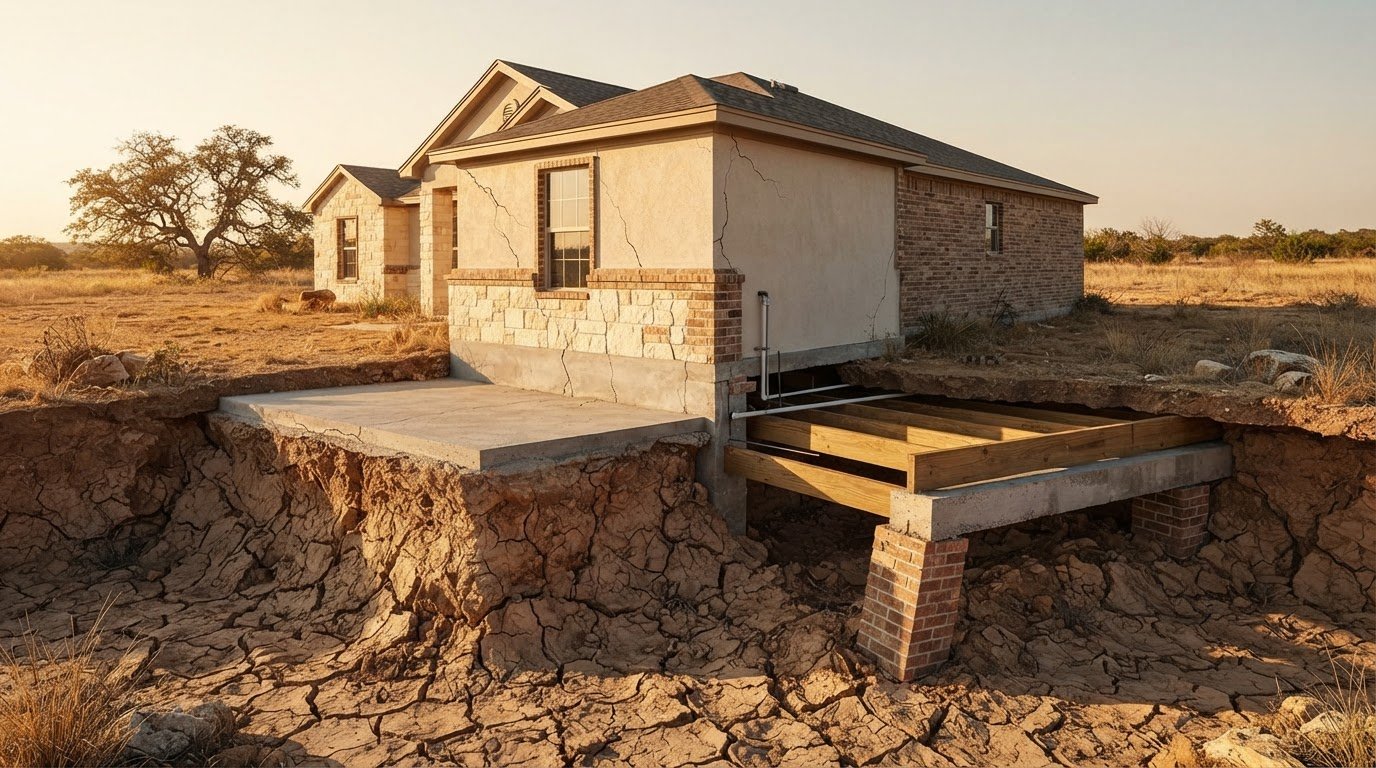
The drought effects on foundations in Texas begin as clay soil loses moisture, shrinks, and no longer supports a home evenly. That movement can crack or shift both slab and beam-and-pier foundations; south of Interstate 10 is a rough guide to where expansive clay and foundation problems are common. Beam-and-pier homes aren’t immune just because they sit above a crawl space.
It’s understandable to focus on visible cracks, but changes beneath your home can affect its supports before damage becomes obvious indoors. Sticking doors, uneven floors, and gaps near walls can offer clues, though no single sign tells the whole story.
This guide explains how Texas clay responds to drought, which warning signs to watch for, and how dry or uneven soil can affect slab and pier-and-beam foundations differently. You’ll learn why pier supports may shift as surrounding soil dries, and which changes deserve attention. Understanding what may be happening beneath your home can help you recognize movement and consider next steps.
Key Takeaways
- Texas clay shrinks as it dries and swells when wet, so uneven moisture around a home can affect foundation support.
- Watch for changes such as sticking doors, wall cracks, uneven floors, or gaps where walls meet.
- Beam-and-pier foundations can shift when dry soil changes the support beneath their piers; the location and pattern of movement help explain what may be happening.
- Note changes over time, and explore foundation repair when signs persist or worsen. Slab and pier-and-beam foundations may require different repair approaches.
1. How expansive Texas clay soil responds to moisture loss
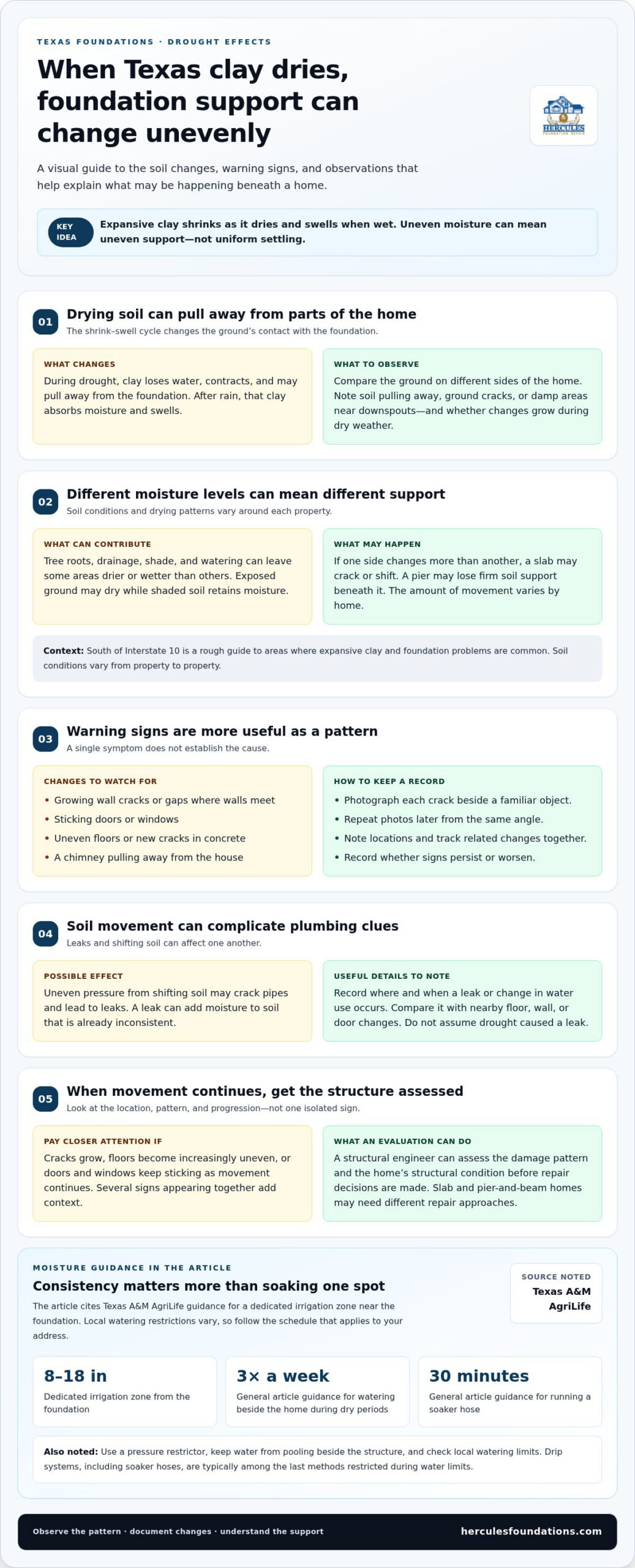
Expansive clay changes volume as its moisture content changes. During drought, soil loses water, contracts, and may pull away from parts of a foundation. After rain, the same clay absorbs moisture and swells. This shrink-swell cycle can create uneven support when some areas dry faster than others, causing one side of a home to move differently from another rather than settling evenly.
The drought effects on foundations in Texas depend partly on the amount of clay beneath a home and how evenly soil moisture is maintained. Tree roots, drainage, and watering can leave some areas drier or wetter than others. For example, shaded soil may retain moisture while exposed ground dries. This difference can place uneven pressure on a slab or on the soil supporting foundation piers.
Which Texas soil types are most affected by drought-related foundation movement? Expansive clay soils are the main concern because they shrink as they dry and swell when wet. Expansive clay and foundation problems can occur in different parts of Texas, and soil conditions vary from one property to another.
When should a Texas homeowner seek a structural evaluation for foundation problems? Arrange one when cracks grow, floors become increasingly uneven, or doors and windows keep sticking as movement continues. A structural engineer can assess the damage pattern and the home’s structural condition before you decide on repairs.
After a dry spell, compare the ground on different sides of your home. Look for soil pulling away from the foundation, ground cracks, or damp areas near downspouts. Note where each change appears and whether it grows during dry weather. These observations can help distinguish a surface change from a pattern of movement that needs professional attention.
2. Signs of drought-related foundation damage
Check for changes in several parts of the house. Large cracks following the mortar joints between bricks can signal stress, especially alongside gaps where exterior walls meet. Indoors, look for new cracks in sheetrock or plaster and track them over time. A chimney pulling away from the house or separation between a wall and foundation also deserves attention.
Doors and windows can provide practical clues. A door that suddenly sticks, swings open by itself, or leaves an uneven gap may reflect a change in its frame. Windows that become difficult to open can show a similar pattern. Crooked-looking gas or water meters and cracks in a garage or other interior concrete floors add to the picture. One symptom alone doesn’t establish the cause, so note where each change occurs.
Dry soil and Texas heat can add stress by reducing moisture around a home. Shifting soil may put uneven pressure on plumbing, crack pipes, and lead to leaks. If your home has a basement, check its walls and floor for new cracks or water entry. A leak can complicate the picture, so note its location and timing rather than assuming drought caused it.
Keep a simple record: photograph each crack beside a familiar object, note its location, and repeat the photo from the same angle later. Track sticking doors, floor changes, and plumbing symptoms together. Before replacing doors or patching cracks, look for related changes elsewhere; cosmetic fixes may hide signs without addressing movement. If damage continues or several signs appear together, seek an assessment focused on the structure and suitable foundation repair.
Does homeowners insurance cover drought-related foundation damage in Texas? Coverage depends on the policy language and documented cause of damage. Review the policy’s exclusions and claim terms, and accurately describe the signs you’ve observed and when they appeared.
If the signs point to ongoing structural movement, foundation repair options can help address the underlying support issue.
3. How drought and dry soil can cause foundations to shift, crack, or sink
During drought, dry Texas clay shrinks and may lose contact with parts of a foundation. Tree roots near or beneath a home also draw moisture from the soil, sometimes drying one area faster. If soil beneath one side changes more than soil beneath the other, support can become uneven. A slab may crack or shift, while a pier may lose firm soil support beneath it.
Movement can develop gradually. Seasonal changes in soil moisture may contribute to uneven floors and wall cracks as the foundation responds to changing support. The amount of movement depends on the soil, how unevenly it dries, root activity, drainage, and foundation design. No single amount of movement applies to every Texas home.
Shifting soil can also put uneven pressure on plumbing beneath or near a house. That pressure may crack pipes and cause leaks, adding moisture to soil that is already inconsistent. If water use or a leak changes suddenly during dry weather, note where it happens and whether nearby floors, walls, or doors change too.
What are Texas watering restrictions for foundation watering during drought? Restrictions vary by locality, so follow the schedule that applies to your address. Drip systems, including soaker hoses, are typically among the last watering methods restricted during water limits.
Consistent moisture matters more than soaking one spot. Texas A&M AgriLife recommends a dedicated irrigation zone eight to 18 inches from the foundation. During dry periods, the article’s general guidance is to water soil beside the home three times a week and run a soaker hose for 30 minutes. Use a pressure restrictor to limit flow, and keep water from pooling beside the structure.
How much can Texas foundations move during severe drought? Movement varies with soil conditions, differences in moisture, nearby roots, and the structure’s support system. A crack or sloping floor indicates a change, but the pattern across the home helps show whether movement is uneven.
For a practical check, mark new ground cracks and note their locations alongside indoor changes. Comparing these observations over time can help distinguish a localized dry patch from movement affecting several areas.
4. Drought effects on beam-and-pier foundations
A pier-and-beam foundation transfers a home’s weight through beams onto separate piers. During drought, soil around one pier may shrink more than soil around another. That uneven support can let one section settle or shift, changing how the beam carries the load. A slab rests across a broader area, while a pier-and-beam structure depends on the support beneath each pier.
Watch how movement appears across the house. A floor that slopes near one room, a beam that no longer sits evenly on its supports, or a new gap between a wall and floor may suggest localized movement. In a crawl space, compare visible beam-to-pier connections and look for supports that appear displaced. Record each location and pattern; one isolated change doesn’t show how the whole structure is behaving.
How do drought effects on foundations differ across Texas regions? Soil type, local moisture, drainage, and nearby tree roots affect how much soil contracts and where movement occurs. South of Interstate 10 is a rough guide to areas where expansive clay and foundation problems are common, but conditions vary between properties.
For a pier-and-beam home, the key question is whether the supports remain stable and the beams distribute weight evenly. If one area changes while others remain level, the pattern may point to localized soil movement. New or adjusted piers are repair options for this foundation type; the appropriate approach depends on which supports have shifted and how the beams are affected.
Keep a simple record during dry weather. Photograph the same floor areas and crawl-space supports from consistent angles, and note any changes after rain or watering. This creates a clearer timeline than memory alone. Avoid trying to raise or brace a beam yourself, since changing one support can affect the load on connected parts.
If movement continues or several supports appear affected, a focused assessment can clarify the next step. Explore pier-and-beam foundation repair when drought-related shifting has changed your floors or support conditions.
Hercules Foundation Repair: Foundation Repair
Hercules Foundation Repair helps homeowners address foundation movement with repairs suited to the structure and its support system. If drought-related changes have left a slab uneven or caused movement around crawl-space supports, Slab Foundation Repair and Pier and Beam Foundation Repair address these distinct foundation types. Describe the changes you’ve observed, such as widening cracks, sloping floors, or shifting supports, to start the conversation.
Foundation problems can have different causes, so the damage pattern matters. Hercules Foundation Repair also provides Commercial Foundation Repair for businesses facing foundation concerns. Share what has changed at your property and which areas show signs of movement to discuss repair.
Contact Hercules Foundation Repair to discuss foundation concerns at your home or commercial property.
Choose a Clear Next Step for Your Home
Foundation concerns are easier to discuss when you can describe what changed and where you noticed it. Before arranging repairs, gather dated photos, notes about movement, and questions about how the affected area is supported. This gives the conversation a practical starting point and keeps the focus on your property’s needs.
The drought effects on foundations in Texas can leave homeowners weighing different repair options. Hercules Foundation Repair offers Foundation Repair, Slab Foundation Repair, and Pier and Beam Foundation Repair, with the approach tailored to the foundation type. A clear discussion can help you understand the next step without rushing into a decision.
Contact Hercules Foundation Repair to talk through the changes you’ve observed and your foundation repair needs. Taking a steady, informed step now can help you move forward with greater confidence.
Frequently Asked Questions
How does drought cause foundation damage in Texas?
Drought dries expansive clay, causing it to contract and changing the soil support beneath a structure. If one area dries faster, a slab or individual pier may settle differently from nearby supports. Later rain can swell the clay again, but uneven wetting may leave support inconsistent. Repeated moisture changes can stress framing and connected finishes, so note whether changes recur through dry and wet weather.
What are signs of drought damage to a house foundation?
Look for a pattern rather than relying on one isolated mark. A crack that grows alongside changes to nearby doors, floors, or wall joints deserves closer attention than a stable finish crack. Keep dated photos and note whether changes return after dry periods. This record helps a foundation professional compare locations and timing to distinguish ongoing movement from a one-time cosmetic issue.
How can homeowners protect foundations during a Texas drought?
Manage where rain and landscape water flow instead of soaking the foundation. In San Antonio, Austin, Houston, and Victoria, keep gutters and downspouts clear, maintain a ground slope away from the house, and mulch around new plants to retain moisture. Choose drought-tolerant landscaping and plant trees away from the foundation. After rainfall, check for pooling or erosion and address drainage problems promptly.