
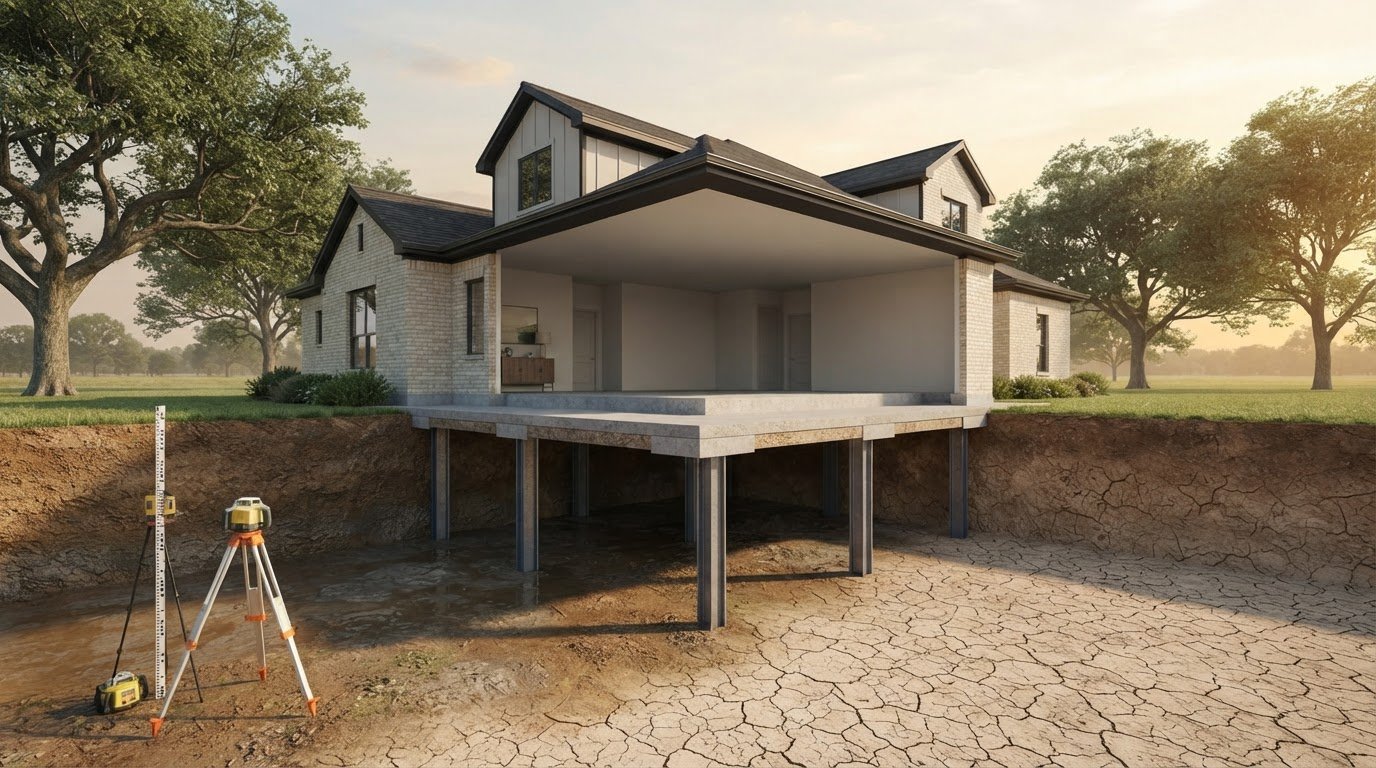
What if a sloping floor isn’t the first thing that needs fixing? Cracks, sticking doors, and uneven floors can point to foundation movement, but they don’t reveal its cause on their own. Effective house leveling in Houston starts with understanding how the home is supported, then restoring stability where it’s needed. That matters in a region where expansive clay soil can swell when wet and shrink during dry spells, shifting the ground beneath a home.
It’s understandable to worry that symptoms will worsen, or that a repair might do too little or more than necessary. House leveling can address uneven support, but it won’t automatically resolve every crack or correct an underlying site condition. The right approach depends on the source of movement, the foundation type, and conditions around the home.
This article explains what house leveling involves, what it can and can’t address, and why slab and pier-and-beam foundations call for different repair plans. You’ll also learn how Houston soil and moisture changes matter, what to note before discussing a project, and how to distinguish foundation repair from concrete leveling. Hercules Foundation Repair provides residential foundation repair and concrete leveling in Houston, San Antonio, Austin, and Victoria.
Key Takeaways
- Sloping floors, sticking doors, and widening cracks can be clues to foundation movement, but they don’t confirm the cause by themselves.
- For house leveling Houston homes, the foundation type and observed movement help shape the repair approach.
- Foundation stabilization addresses structural support, while concrete leveling corrects uneven concrete surfaces such as walkways.
- Noting where symptoms appear and how they change can help make a foundation repair discussion more specific.
- Hercules Foundation Repair provides slab and pier-and-beam repair, structural stabilization, and concrete leveling in Houston and other South Texas cities.
House Leveling in Houston: What Foundation Movement Can Look Like
House leveling is structural work intended to restore stable support beneath a home. It doesn’t promise perfectly level floors: an effective repair focuses on foundation stability, not simply on making every surface look even. Understanding how a foundation supports a building is useful background, but the right repair depends on the home’s foundation type and conditions at the property.
Which signs may point to foundation settlement?
Possible clues can appear in several parts of the house:
- Floors: A floor may slope, feel uneven, or seem to dip in one area.
- Doors and windows: Doors may start sticking or fail to latch as they once did; windows may become harder to open or close.
- Walls and brick: Interior drywall or exterior brick may develop cracks. A crack that widens or appears alongside other changes deserves closer attention.
One symptom doesn’t prove foundation movement. An isolated hairline crack, for example, can have causes unrelated to structural settlement, and a photo alone can’t establish what’s happening beneath a home. Look for patterns and changes over time: several symptoms appearing together, or signs that are visibly worsening, may be more meaningful than one cosmetic issue. Note where changes appear and when you first noticed them. Those details can help a foundation contractor understand what to assess without assuming every crack needs structural repair.
How Houston soil and moisture can affect a home
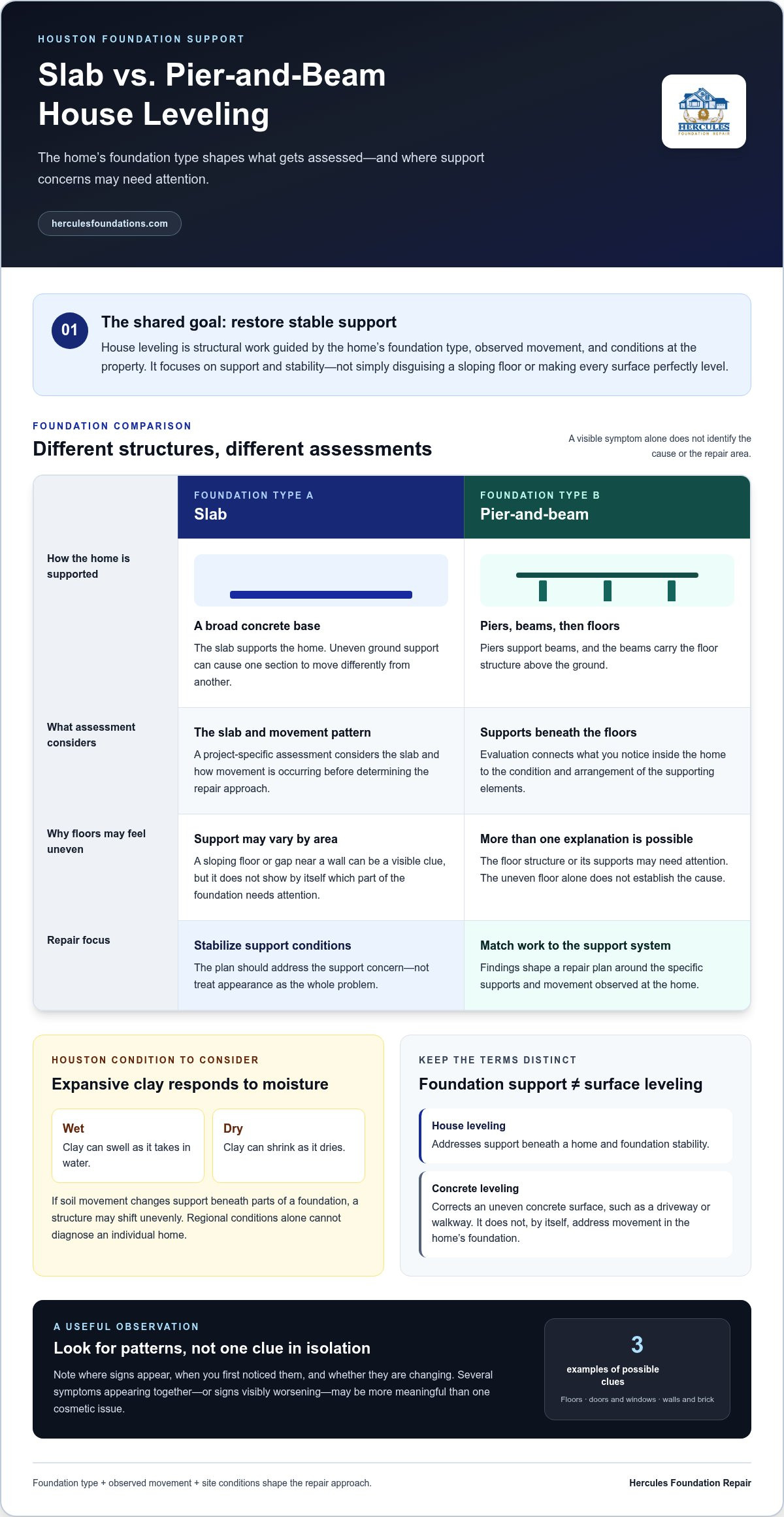
Soil beneath a foundation can change as its moisture level changes. In Houston, expansive clay is a recognized concern: it can swell as it takes in water and shrink as it dries. If soil movement changes the support beneath parts of a foundation, the structure may shift unevenly. The degree and pattern of movement depend on the property, so regional conditions alone can’t diagnose an individual home.
Rainfall and dry spells are part of the picture, but a home’s symptoms still need to be considered in context. If you’re researching house leveling Houston homeowners may need, note whether signs are changing and appearing together rather than treating one uneven floor or crack as a diagnosis. A property-specific assessment can help distinguish foundation movement from isolated finish issues and guide the next step.
How House Leveling Works for Houston Slab and Pier-and-Beam Homes
House leveling is structural work that restores or improves foundation support based on the home’s foundation type and observed movement. It isn’t a single method applied to every property, and it doesn’t necessarily mean raising the entire home until every floor is perfectly level. The goal is to address the support concern, not simply disguise a sloped floor or repair a visible crack.
Slab and pier-and-beam homes carry their weight differently. A repair plan should account for the structure’s layout, where movement is occurring, and the conditions at the site. For house leveling Houston projects, those details help determine whether foundation repair or stabilization is appropriate and where it should focus.
What leveling means for a slab foundation
A slab foundation is a broad concrete base that supports the home. If the ground beneath different areas shifts or provides uneven support, one section may move differently from another. A project-specific assessment considers the slab and the pattern of movement before determining a repair approach. For more background on this foundation type and its repair, see the slab foundation repair guide.
The visible result might be a sloping floor or a gap near a wall, but those signs alone don’t identify which part of the foundation needs attention. Structural stabilization focuses on support conditions rather than treating appearances as the whole problem.
How pier-and-beam leveling differs
A pier-and-beam home sits above the ground on piers that support beams, which in turn carry the floor structure. This raised layout differs from a slab, so assessment focuses on the support system beneath the floors as well as the home’s overall movement.
An uneven floor in a pier-and-beam house can have more than one explanation. The floor structure or its supports may need attention, but the symptom itself doesn’t establish the cause. An evaluation connects what you notice inside the home to the condition and arrangement of its supporting elements, then shapes a repair plan around those findings.
Don’t choose a repair solely because it promises to make a floor look level. A slab and a raised pier-and-beam structure call for different assessments, and the right work depends on the specific support concern. Hercules Foundation Repair provides residential slab and pier-and-beam foundation repair and structural stabilization in Houston. Learn more about Houston foundation repair and stabilization.
House Leveling or Another Foundation Repair: How to Understand the Difference
The word “leveling” can describe different kinds of work. House leveling concerns the support beneath a home and the stability of its foundation. Concrete leveling addresses an uneven concrete surface, such as a section of driveway or walkway. Correcting one surface doesn’t, by itself, address movement in a home’s foundation.
House leveling versus concrete leveling
Use the affected structure as a starting point, not as a diagnosis. This comparison can help organize what you’ve noticed:
Issue: Sloping floors or several changing symptoms inside the home. Affected structure: The house and its foundation. Assessment focus: Whether foundation movement is affecting structural support and what repair scope fits the findings.
Issue: A sunken or uneven driveway or walkway. Affected structure: The concrete surface outside the home. Assessment focus: The condition of the concrete and whether concrete leveling is appropriate.
Issue: One isolated finish crack. Affected structure: A wall or surface finish. Assessment focus: Whether it appears alongside other changes or is an isolated cosmetic concern.
These distinctions help organize what you’ve noticed, but they can’t diagnose a property remotely. An uneven walkway alone doesn’t establish that the home’s foundation is moving, just as one interior crack doesn’t automatically call for structural repair. For a closer look at concrete surface work, explore the concrete leveling options guide.
When symptoms call for a structural assessment
Consider the pattern. A crack that remains unchanged may be less concerning than several symptoms that appear together or continue to develop, such as doors that start binding alongside new floor slopes or widening cracks. Those observations don’t prove a foundation problem, but they can make a professional structural assessment a sensible next step.
Keep the distinction clear: symptoms are observable; their cause and the right repair scope require assessment. For house leveling Houston homeowners are considering, the useful question isn’t just how to make a floor or surface look even. It’s whether the home’s foundation support needs attention, or whether the concern is limited to a separate concrete surface or finish.
Hercules Foundation Repair provides residential foundation repair and concrete leveling, with the approach guided by the issue being addressed. Learn more about foundation repair and concrete leveling.
What to Expect During a Houston House-Leveling Project
A foundation repair project should follow a clear sequence: understand the concern, plan work around the home’s structure, carry out the repair, then discuss what was addressed. The details vary. A house leveling Houston project depends on whether the home has a slab or pier-and-beam foundation, what conditions are present at the site, and how extensive the support concern is. Knowing the general stages can make the process easier to follow.
From observed symptoms to a repair plan
Start by noting where you see changes and whether they’ve progressed. For example, record which doors bind, where a floor seems uneven, or where a crack has changed. These observations provide a useful starting point, but they don’t establish the cause on their own.
An assessment connects visible conditions with potential structural concerns. The repair plan should reflect the foundation type, observed movement, and relevant site conditions rather than applying the same scope to every home.
- Assessment: Review the home’s foundation type and the concerns you’ve observed.
- Repair planning: Identify an approach and scope suited to the property and its conditions.
- Stabilization work: Complete the planned foundation repair to address the support concern.
- Follow-up discussion: Review the work performed and discuss what the repair addresses.
These are useful points of reference, not a fixed schedule or promise about the exact work involved. The affected structure and project scope shape each stage.
How to prepare for a foundation repair discussion
A few simple notes can help you explain what you’ve noticed. Write down where symptoms appear, approximately when they started, and any changes you’ve observed since then. If several areas seem affected, list them separately. You can also note whether a concern seems stable or continues to change.
Your notes don’t replace a professional evaluation, and you don’t need to determine the cause before raising a concern. They provide context for a clearer discussion. Hercules Foundation Repair provides residential slab and pier-and-beam foundation repair and structural stabilization in Houston, San Antonio, Austin, and Victoria. The repair approach is tailored to the home and observed conditions, rather than assuming every property needs the same work.
If you’ve noticed changes around your home, discuss your Houston foundation concerns.
Choose Experienced Houston House-Leveling Support for Lasting Stability
Choosing support for house leveling Houston homeowners need starts with a project-specific approach. A sound repair plan should reflect what the home is built on, where movement is occurring, and what the site conditions show. The aim is to address structural support, not to promise every floor, wall, or finish will look perfectly level afterward.
Why local foundation experience matters
Hercules Foundation Repair is a family-owned South Texas foundation contractor serving Houston, San Antonio, Austin, and Victoria. The company brings more than 45 years of experience to foundation concerns in the region. Each repair scope should stay focused on the property, its foundation type, and the conditions observed there.
The repair needs are distinct. Slab foundation repair addresses support concerns in homes built on a concrete slab. Pier-and-beam foundation repair focuses on a raised structure supported by piers and beams. Structural stabilization addresses foundation support, while concrete leveling is intended for uneven concrete surfaces such as walkways or driveways. These services aren’t interchangeable, and not every home needs the same work.
A measured plan matters. An uneven walkway doesn’t establish that the house’s foundation is moving, and a sloping floor alone doesn’t determine which structural repair is appropriate. Assessment findings and project conditions guide the scope rather than a one-size-fits-all promise.
Take the next step toward a stable foundation
Start with what you can observe: note where symptoms appear, whether multiple areas are affected, and how conditions have changed. Knowing whether your home has a slab or pier-and-beam foundation can also help frame the discussion. An assessment can connect those observations to the foundation and site conditions and clarify an appropriate repair path.
House leveling is intended to address structural support. It isn’t a cosmetic guarantee that every floor will become perfectly level or that every visible crack will disappear. Hercules Foundation Repair provides residential foundation repair, structural stabilization, and concrete leveling in Houston, with the work shaped by each project’s needs.
For a project-specific discussion about your home’s foundation, talk with Hercules Foundation Repair about house leveling.
Take a Clear Next Step Toward Foundation Stability
Sloping floors, sticking doors, or changing cracks can be clues, but no single symptom confirms foundation movement. Look for patterns, note what’s changing, and remember that the right repair depends on the home’s foundation type and site conditions.
House leveling Houston homeowners consider should focus on restoring structural support, not promising perfectly level floors or a cosmetic fix for every crack. Slab and pier-and-beam foundations need different repair approaches, while uneven walkways and driveways may call for concrete leveling rather than foundation work.
Hercules Foundation Repair is family-owned and operated, with more than 45 years of experience serving South Texas. The company provides residential slab and pier-and-beam foundation repair, structural stabilization, and concrete leveling in Houston, San Antonio, Austin, and Victoria.
Start with what you’ve observed, then discuss a project-specific path forward. Talk with Hercules Foundation Repair about your Houston home.
Frequently Asked Questions
What is house leveling, and how does it work?
House leveling is structural work intended to restore or improve support beneath a home. The repair approach depends on the foundation type, the pattern of movement, and site conditions. An assessment connects visible concerns, such as uneven floors or cracks, with the foundation’s condition. Stabilization then addresses the identified support issue. The goal is structural stability, not a guarantee that every floor or finish will become perfectly level.
How do I know if my Houston home needs house leveling?
Changing or recurring symptoms can indicate that your Houston home may need a foundation assessment, but no single sign confirms the cause. Watch for a combination of sloping floors, doors that begin to bind, or widening cracks in walls or brick. Note where each symptom appears and whether it changes over time. An assessment can help determine whether the foundation is involved and whether structural repair is appropriate.
Can Houston clay soil cause a house to become uneven?
Yes, expansive clay in the Houston area can swell as it absorbs moisture and shrink as it dries, potentially changing the support beneath a foundation. If support shifts unevenly, parts of a home may move differently. The effect depends on conditions at the specific property, so local soil patterns alone can’t diagnose a home. An assessment helps connect observed movement to the foundation and site conditions.
Is house leveling the same as concrete leveling?
No. House leveling concerns the structural support beneath a home and may involve foundation repair or stabilization. Concrete leveling addresses an uneven concrete surface, such as a driveway or walkway. These services address different problems, and one doesn’t automatically resolve the other. For example, a sunken walkway by itself doesn’t establish that the home’s foundation is moving. The affected structure and its condition guide the appropriate assessment.
Can both slab and pier-and-beam homes need leveling?
Yes. Both slab and pier-and-beam homes can experience movement or uneven support, but their structural layouts differ, so assessment and repair planning differ too. A slab is a broad concrete base; a pier-and-beam home has a raised floor supported by piers and beams. Hercules Foundation Repair provides foundation services in Houston, San Antonio, Austin, and Victoria, with the repair approach shaped by the home and observed conditions.
How long does house leveling take?
There isn’t one timeline that applies to every house-leveling project. The time involved depends on factors such as the foundation type, the area requiring attention, site conditions, and the repair scope. A project assessment helps clarify the work planned for that specific home and the expected sequence. A general estimate may not reflect a particular property’s needs, since different foundations and support concerns can call for different work.
How much does house leveling cost in Houston?
The cost of house leveling in Houston depends on the foundation type, the extent and location of the support concern, site conditions, and the repair scope. A slab repair and a pier-and-beam repair may involve different work, so a general figure can’t determine what a particular home needs. A property-specific assessment helps define the appropriate work before costs can be discussed. Hercules Foundation Repair handles residential slab and pier-and-beam foundation repair.