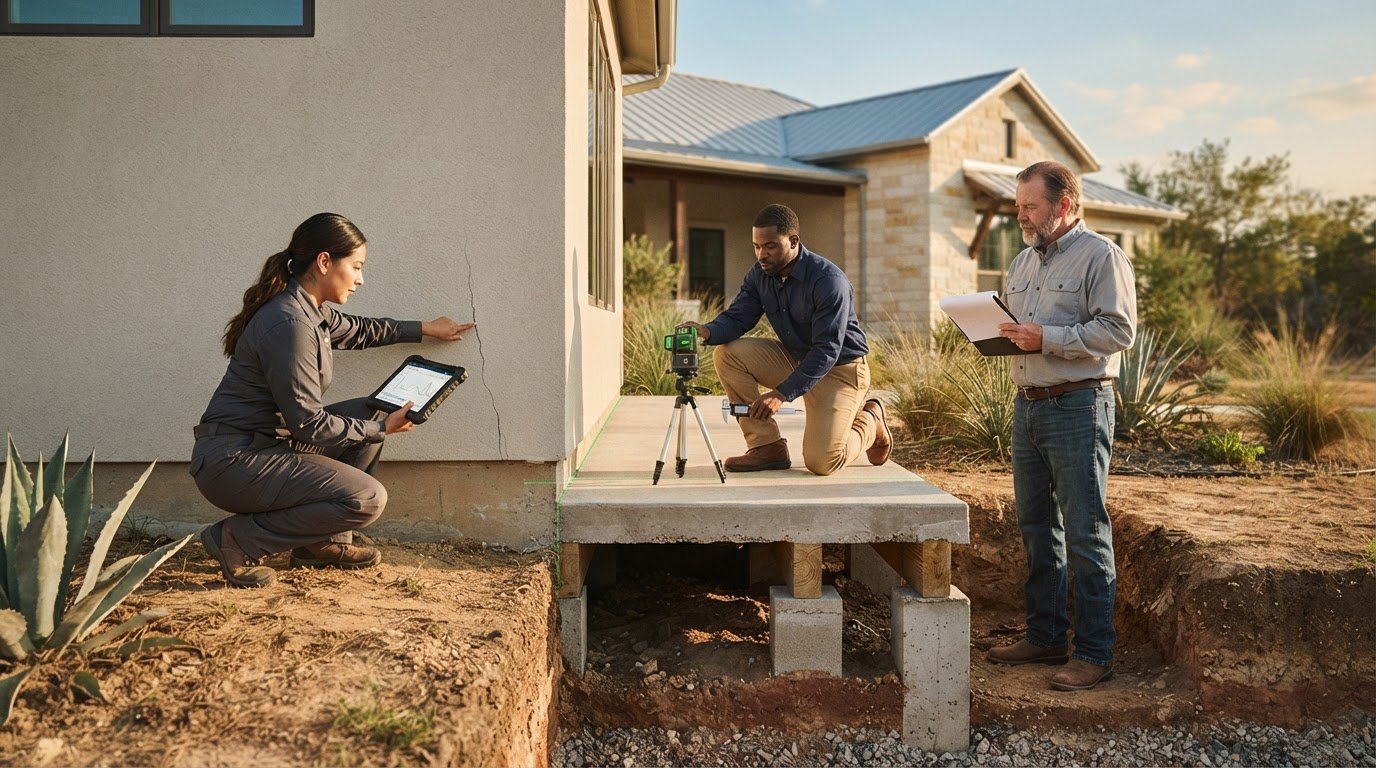
What if a visible crack isn’t the whole story? A crack or uneven floor can be unsettling, but the right repair depends on what’s causing the movement, not just what’s easiest to see. Good foundation experts look for the reason behind the symptoms before recommending a fix.
Before considering structural work, it helps to understand what the assessment should cover: the pattern and location of cracks or movement, the property’s foundation type, and relevant site conditions. Those details help distinguish a foundation concern from an uneven concrete surface and explain why a particular repair approach may fit.
This article explains what foundation experts assess, how they match repair recommendations to slab and pier-and-beam structures, and what a clear contractor discussion should include. You’ll also learn how to describe what you’ve noticed and understand the proposed repair path. Hercules Foundation Repair is family-owned and operated, with more than 45 years serving South Texas communities including San Antonio, Austin, Houston, and Victoria.
Key Takeaways
- Learn how to distinguish structural concerns from surface-level cracks or routine home maintenance.
- See what foundation experts consider when investigating symptoms, foundation type, and property conditions before recommending repairs.
- Compare the general purposes of slab foundation repair, pier-and-beam repair, and concrete leveling.
- Understand how South Texas context can inform an assessment without assuming every property has the same conditions.
- Use a clear decision path to describe your concerns and understand which repair category may fit your property.
What Do Foundation Experts Actually Do for a Property?
Foundation experts assess structural movement and repair foundation problems. Their work goes beyond patching a visible crack: they consider what the symptom may indicate, how the building is supported, and whether movement appears to affect the structure.
A crack’s appearance alone doesn’t establish its cause or show that major repair is needed. A surface crack may call for a different response than cracking accompanied by shifting or uneven areas. The foundation type matters, too. For background on one common category, Shallow foundations explains how these foundations transfer building loads to the ground near the surface.
A sound diagnosis connects observed movement, foundation type, and site conditions to a repair plan that addresses the likely structural cause. That’s what separates foundation repair expertise from cosmetic patching or general home maintenance.
Which foundation problems call for a specialist?
Settlement, shifting, uneven slabs, and cracks that appear structural are reasons to arrange an assessment, not proof that extensive work is necessary. A specialist considers where symptoms occur and how they relate to the foundation rather than treating each mark as a separate problem. For an overview of symptoms to watch for, see common signs of foundation damage.
Keep a record of what you’ve noticed. Note where floors or concrete feel uneven, where cracks appear, and when you first saw them. This information helps describe the concern, but a remote description cannot establish its cause.
How is foundation expertise different from a general inspection?
A general home-maintenance check may note a crack or sloping floor. Foundation repair expertise focuses on the foundation type, patterns of movement, and structural stability. The assessment considers how those details fit together rather than treating one visible symptom as a complete diagnosis.
This article covers foundation assessment and repair, not inspections for real-estate transactions. Before selecting work such as underpinning, the likely cause of movement needs to be understood. If a recommendation doesn’t match the cause, it may address a symptom without resolving the underlying concern. A clear explanation helps you understand why a repair category is being considered and what it is intended to address.
How Foundation Experts Assess the Cause Before Recommending Repairs
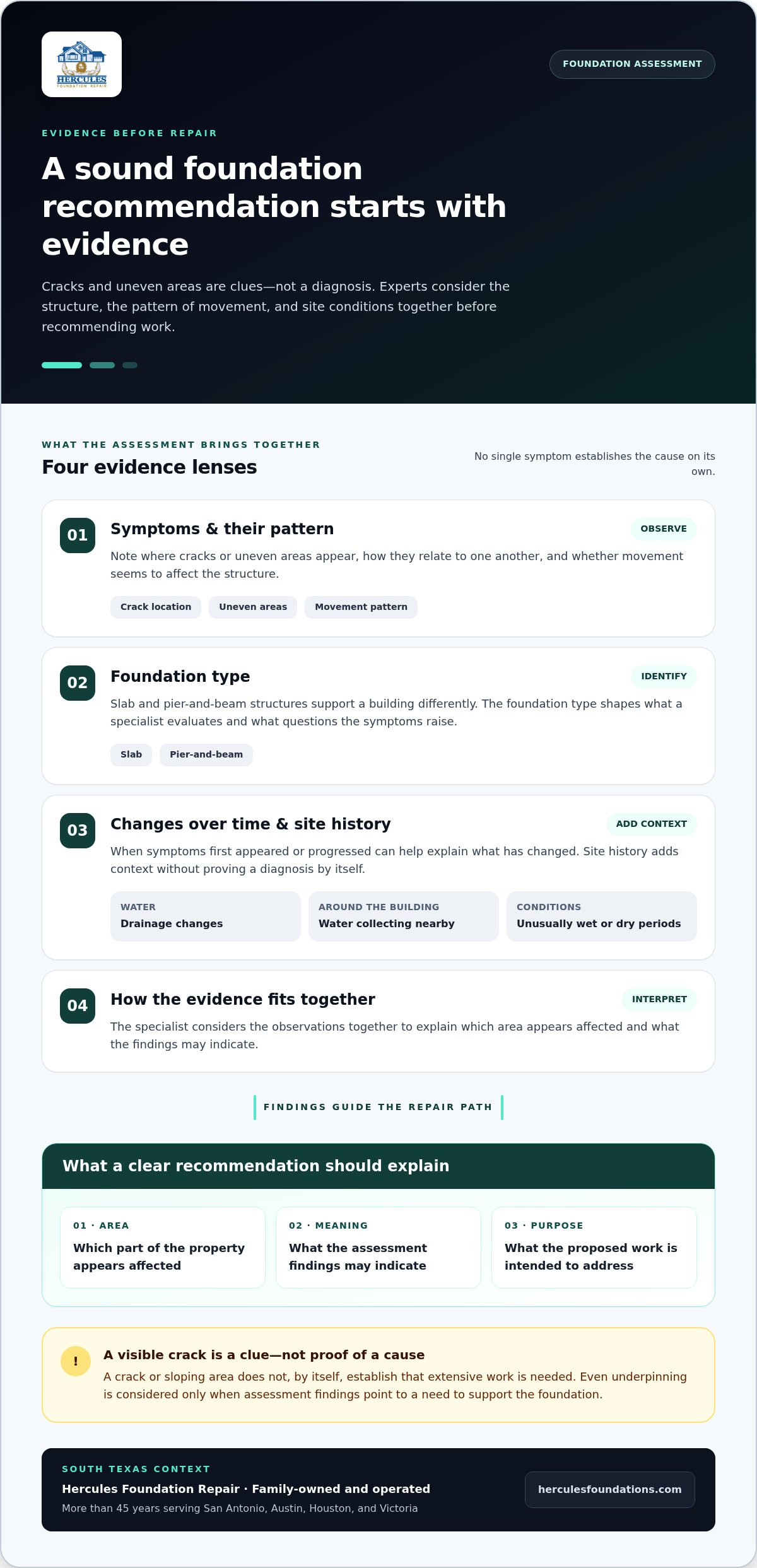
A sound recommendation starts with evidence, not a predetermined repair. Foundation experts consider how the property is built, what has changed, and where symptoms appear before connecting those observations to a possible repair approach. A crack or sloping area can guide the assessment, but no single symptom proves a specific cause.
A thorough foundation assessment brings together observed conditions, property context, and a repair plan tied to the findings. This reasoning helps distinguish a concern that may need structural attention from a symptom that doesn’t, by itself, establish the need for major work.
What information helps explain foundation movement?
The foundation type shapes what a specialist evaluates. A slab foundation and a pier-and-beam structure support a building differently, so the same visible symptom may prompt different questions. The location and pattern of cracks, uneven areas, or other changes matter, as does whether they have appeared or progressed over time.
Site history adds context. Notes about drainage changes, water collecting near the building, or unusually wet or dry periods can help explain what the property has experienced. These details don’t establish a diagnosis on their own. They help the specialist consider possible contributing factors alongside the structure and visible symptoms.
How does a diagnosis become a repair recommendation?
After considering the observations together, the specialist can explain which area appears affected, what the findings may indicate, and what type of work could address the condition. A recommendation should connect the proposed repair to the structural need, not simply target the most noticeable crack or uneven spot.
That distinction matters with underpinning. It may be considered when assessment findings point to a need to support a foundation, but it isn’t automatically the answer to every crack or sign of movement. The appropriate repair depends on the diagnosis and the property’s structural needs. For slab-specific context, read the slab foundation repair guide.
As you review a proposed plan, look for a clear explanation of how the observations support the recommended work and what that work is intended to address. Hercules Foundation Repair provides foundation repair for residential and commercial properties.
How Foundation Experts Match Repair Methods to Different Problems
Different problems call for different repair categories. The key distinction is whether the concern involves the building’s foundation and structural support, or an uneven concrete surface that needs leveling. A method that fits one situation may not address the other.
Responsible foundation experts don’t assume every settling property needs the same repair. Foundation type, affected areas, and assessment findings guide the recommendation. The table below outlines general purposes. A property-specific assessment determines whether an approach fits.
| Repair category | General purpose | What guides its relevance |
|---|---|---|
| Slab foundation repair | Addresses structural concerns involving a concrete slab foundation. | Whether the findings involve the slab or its support. |
| Pier-and-beam foundation repair | Addresses foundation concerns in properties built with a pier-and-beam structure. | The condition and movement of that specific foundation system. |
| Concrete leveling | Raises or levels an uneven or sunken concrete surface. | Whether the concern is the concrete surface rather than the building’s foundation. |
When might slab or pier-and-beam repair be relevant?
Slab repair is relevant when assessment findings point to a concern involving a home or building supported by a concrete slab. Pier-and-beam repair applies to properties with that distinct foundation structure. In either case, the foundation type helps frame the investigation, but it doesn’t determine the repair by itself.
Underpinning may be part of a foundation repair plan when the findings support additional foundation support. It shouldn’t be prescribed simply because a property appears to be settling. The affected area and structural needs should guide the proposed work, rather than assumptions about what every property requires.
When is concrete leveling different from foundation repair?
Concrete leveling addresses an uneven or sunken concrete surface, such as a walkway, driveway, patio, or concrete slab. It can improve the level of that surface, but it doesn’t automatically mean the building’s foundation has been repaired or stabilized. A settled walkway and structural movement in a home are different concerns, even if both involve concrete.
If the findings point to a surface-level issue, concrete leveling may be the right category. If they indicate a structural foundation concern, foundation repair is the relevant category. For a closer look at approaches to uneven concrete, see the concrete leveling options guide.
What to Expect From Foundation Experts in South Texas
Local experience can help put a property’s foundation concerns in context, but it shouldn’t replace an assessment of the property itself. Soil, drainage, construction, and moisture conditions can vary from one site to another, even within the same city. A careful evaluation considers those details rather than assuming every home in South Texas shares the same conditions or needs the same repair.
Why can South Texas soil and moisture context matter?
Soil type can affect how the ground responds to changes in moisture. Some soils expand as they become wetter and shrink as they dry, which may contribute to movement around a foundation. That possibility provides context, not a diagnosis: a wet season, dry spell, or drainage change alone doesn’t prove why a particular property has cracks or uneven areas.
Foundation experts consider site conditions alongside the building’s foundation type and observed symptoms. You can help by sharing what you’ve noticed, including drainage changes or when movement first became apparent. That history gives the assessment useful context without treating one event as the definite cause.
Uneven concrete can also raise the question of whether the concern involves a surface or the building’s structure. A sunken driveway or patio, for example, isn’t automatically evidence of foundation movement. The home leveling guide explores common uneven surfaces and how they differ.
How does a clear project discussion build homeowner confidence?
A clear discussion connects what’s been observed to what the recommended work is meant to address. You should be able to understand which areas raise concern, how the property’s foundation type informs the repair category, and why that approach fits the findings. Clear reasoning helps you consider the next step without mistaking a visible symptom for a complete diagnosis.
Hercules Foundation Repair is a family-owned and operated South Texas contractor with more than 45 years of experience. The company serves San Antonio, Austin, Houston, and Victoria, providing residential and commercial foundation repair for slab and pier-and-beam structures, as well as concrete leveling.
If you’re seeing movement or uneven concrete, learn about foundation repair from Hercules and take a practical next step toward understanding the issue.
How Hercules Foundation Repair Helps You Take the Next Step
Once you’ve noticed a concern, organize what you know: where symptoms appear, what foundation type the property has, and what repair category may fit. A crack or uneven area can be a useful starting point for a discussion, but the right approach depends on how the property is built and what the assessment finds.
Hercules Foundation Repair is a family-owned South Texas business with more than 45 years of experience. Its work includes residential and commercial foundation repair, slab foundation repair, pier-and-beam foundation repair, and concrete leveling. Each service addresses a different type of property or concern, so understanding the distinctions can help you describe what you’ve noticed.
Which Hercules services address common structural concerns?
Foundation type helps identify the relevant repair category. Slab foundation repair addresses concerns involving properties built on a concrete slab. Pier-and-beam foundation repair is for structures supported by that foundation system. Commercial foundation repair addresses foundation concerns in business properties. The specific repair approach depends on the property and assessment findings.
Concrete leveling is different. It addresses uneven or sunken concrete surfaces rather than automatically treating a building’s structural foundation. If a driveway, patio, or other concrete area looks uneven, an assessment can help clarify whether the concern is with that surface or with the building’s foundation.
What is a practical first step for a concerned property owner?
Before discussing repair, make a simple record of what you’ve noticed. Note the locations of cracks or uneven areas, when you first saw them, and whether they appear to have changed. If you know whether the property has a slab or pier-and-beam foundation, include that detail. These observations won’t diagnose the cause, but they can make the discussion more focused.
- Identify the areas that concern you.
- Record when you noticed changes and what seems different.
- Note the foundation type if you know it.
From there, foundation experts can connect the property’s structure and reported concerns to an appropriate repair category. The goal is to understand what the findings suggest and what the recommended work is intended to address, rather than rely on a one-size-fits-all answer.
To discuss your property’s concerns, explore Hercules Foundation Repair.
Take a Clear Next Step for Your Property
A crack or uneven floor is a reason to pay attention, not proof that your property needs extensive structural work. The key is understanding how visible symptoms relate to the foundation type and site conditions. A careful assessment connects those details to a repair recommendation, whether the concern involves a slab foundation, a pier-and-beam structure, or an uneven concrete surface.
Experienced foundation experts explain what they observe and why a repair category may fit, helping you understand the path forward without treating every property the same. Hercules Foundation Repair is family-owned and operated, with more than 45 years serving South Texas. The company provides foundation repair and concrete leveling for residential and commercial properties in San Antonio, Austin, Houston, and Victoria.
Start by noting where you’ve seen changes and when you noticed them. Then contact Hercules Foundation Repair to discuss your foundation concerns and take the next step toward understanding your property.
Frequently Asked Questions
What does a foundation expert look for during an assessment?
A foundation expert considers the foundation type, visible symptoms, and conditions around the property to understand what may be happening. They may look at where cracks or uneven areas appear, how different symptoms relate, and what changes you’ve noticed over time. Drainage and moisture history can also provide useful context. The goal is to connect observations to the property’s structural needs before recommending a repair category.
How do I know if I need a foundation expert?
Consider arranging an assessment if you notice shifting, uneven floors or slabs, or cracks that concern you, especially if symptoms appear to change. These signs are reasons to take a closer look, not proof that major repairs are needed. Write down where you see changes and when you first noticed them. That information can help a specialist understand the concern and determine whether it involves the foundation or a concrete surface.
Can foundation experts tell whether a crack is structural?
A specialist can assess whether a crack may relate to structural movement, but its appearance alone doesn’t establish the cause. Its location, pattern, changes over time, and relationship to other symptoms all matter. For example, a crack alongside uneven areas may prompt a broader evaluation than an isolated surface mark. An on-site assessment provides context that a photo or short description can’t reliably supply.
How do foundation experts choose a repair method?
Foundation experts match a repair category to the foundation type and assessment findings. Slab foundation repair addresses concerns involving slab structures, while pier-and-beam repair applies to properties built with that foundation system. Underpinning may be considered when findings support additional foundation support, but it isn’t the automatic solution for every settling property. The recommendation should explain what condition the work is intended to address.
Is concrete leveling the same as foundation repair?
No. Concrete leveling addresses uneven or sunken concrete surfaces, such as a driveway, patio, or walkway. Foundation repair focuses on structural concerns involving the support of a building. An uneven surface doesn’t automatically indicate a structural foundation problem, just as a foundation concern isn’t necessarily resolved by leveling nearby concrete. The right category depends on what the assessment identifies as affected.
Do Texas soil conditions affect foundation problems?
They can be a factor. Some South Texas soils contain expansive clay, which can swell as it absorbs moisture and shrink during dry periods. These changes may contribute to ground movement, but soil conditions alone don’t prove the cause of a particular property’s symptoms. Soil, drainage, foundation type, and observed movement need to be considered together. Conditions can also vary between properties, even in the same area.
What foundation repair services does Hercules Foundation Repair provide?
Hercules Foundation Repair provides residential and commercial foundation repair, including slab and pier-and-beam foundation repair, as well as concrete leveling. The company is family-owned and operated and has served South Texas for more than 45 years. Its service areas include San Antonio, Austin, Houston, and Victoria. The appropriate repair category depends on the property’s foundation type, the concern, and assessment findings.