
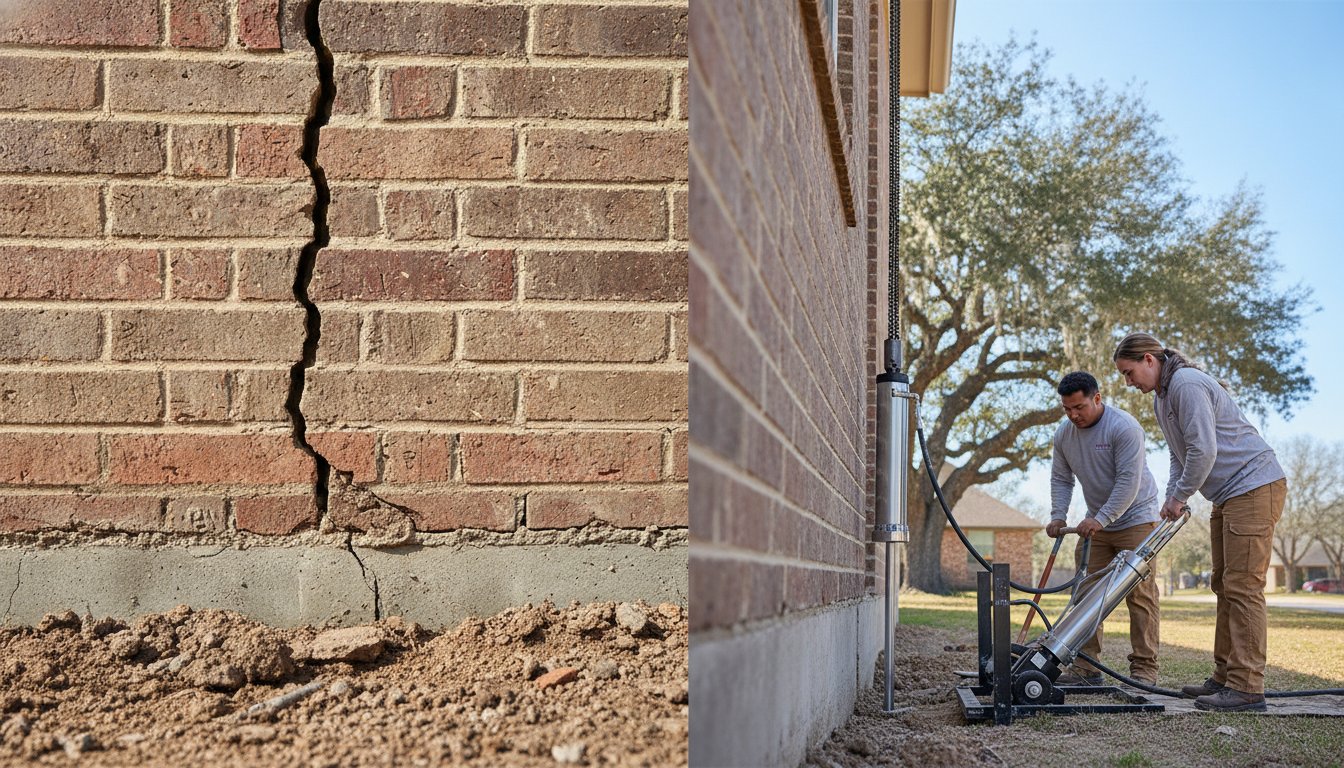
What if that hairline crack above your bedroom door isn’t just a cosmetic flaw, but a warning sign from the ground beneath your feet? In South Texas, the earth is constantly moving, and local homeowners know that san antonio foundation repair isn’t just a maintenance task; it’s a necessity for preserving your property’s value. If you’ve noticed sticking doors or uneven floors, you’re likely worried about structural failure and the confusion of choosing the right fix. It’s a heavy burden to carry, especially when you’re unsure which method actually works for our specific, shifting clay soil.
We agree that your home should be your most stable asset, not a source of constant anxiety. This guide will show you exactly how to protect your investment with expert strategies tailored for the San Antonio climate. We’ll walk through the practical differences between slab and pier-and-beam solutions, helping you move past the fear of hidden costs toward a permanent, warrantied fix. You’ll gain a clear preview of the repair process and the transparent approach that ensures your house stays level without any unwelcome surprises or technical jargon.
Key Takeaways
- Understand how San Antonio’s expansive clay soil triggers structural shifts and why localized expertise is vital for a lasting san antonio foundation repair.
- Learn to spot early warning signs like interior wall cracks and misaligned door frames before they turn into catastrophic failures.
- Compare repair strategies for modern concrete slabs and historic pier and beam homes to find the right fit for your property.
- Uncover the technical factors that influence your estimate, focusing on the precision of pier placement rather than just square footage.
- Discover the advantage of working with a dedicated specialist who has stabilized South Texas homes for over four decades.
Understanding San Antonio Soil: Why Local Foundations Shift
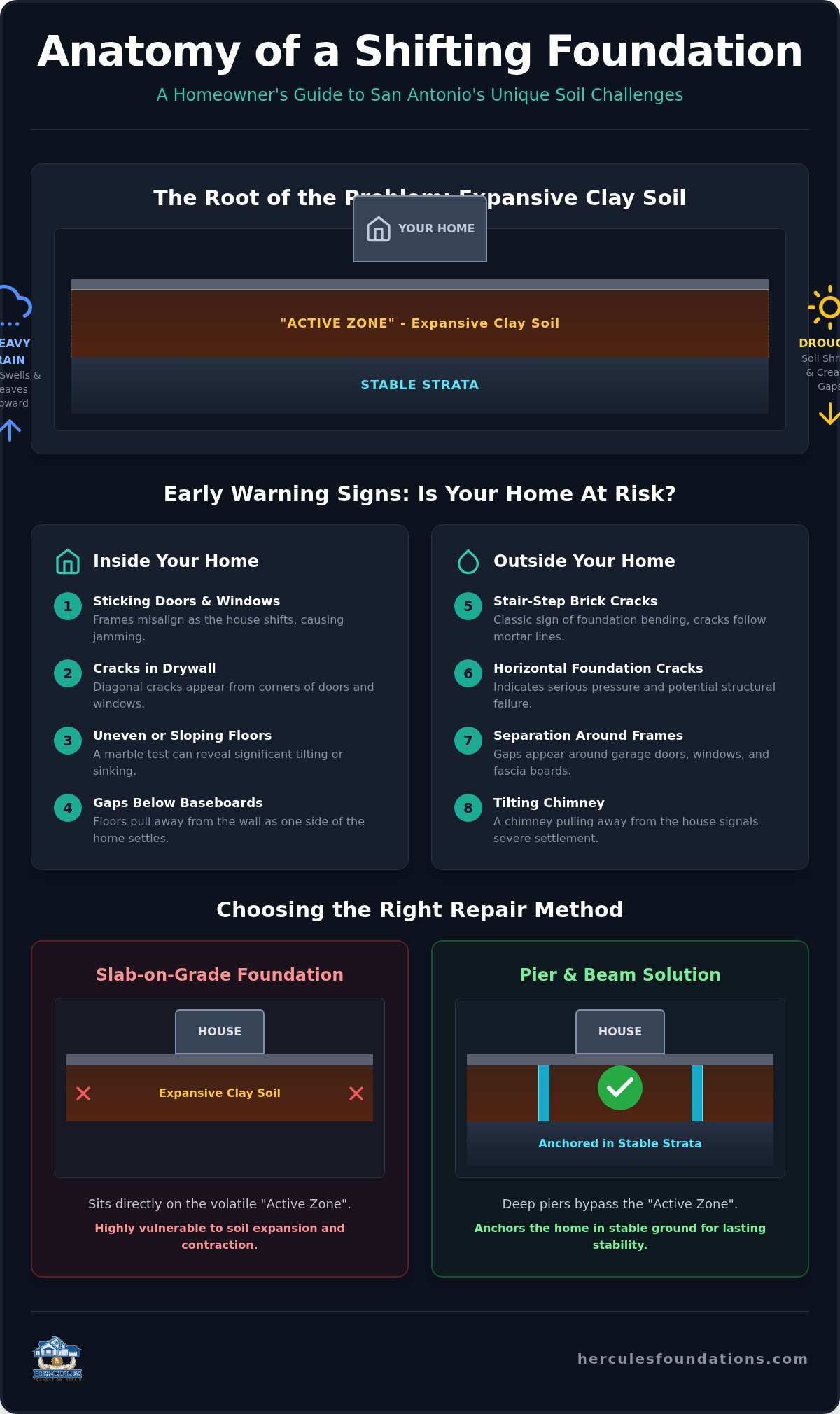
San Antonio isn’t just built on solid ground; it’s built on a geological puzzle that’s constantly shifting. The primary culprit is the highly expansive clay found throughout South Texas. This soil acts like a giant sponge. When it rains, the clay absorbs water and expands with incredible force. When the Texas sun bakes the earth, it shrinks, leaving massive gaps beneath your home. This cycle creates immense pressure on residential structures. To understand the science behind these shifts, engineers look at Soil mechanics to determine how much a specific plot of land will move during a season.
The “Active Zone” is a critical concept for any san antonio foundation repair specialist. This is the top layer of soil where moisture levels fluctuate the most. In our region, this zone can extend several feet deep. If a foundation isn’t anchored below this depth, it’s at the mercy of the weather. Hydrostatic pressure also plays a role. When the soil becomes oversaturated, the water trapped against your foundation exerts a sideways force. It makes your foundation feel like it’s resting on a heavy, wet sponge rather than stable earth, leading to the tilting and shifting that causes interior damage.
The Eagle Ford Shale Factor
Much of the local landscape sits atop the Eagle Ford Shale. This specific clay is notorious for its extreme volumetric change. It doesn’t just move; it swells and shrinks with enough power to snap concrete. Slab-on-grade foundations, which are common in modern San Antonio suburbs, are particularly vulnerable because they sit directly on this active layer. Without deep piering to reach stable strata, the slab simply follows the soil’s movement. This results in the characteristic stair-step cracks in brickwork and foundation heaving that many homeowners face.
Climate Cycles and Foundation Stress
The weather patterns of 2025 and 2026 have been particularly brutal for South Texas homes. We’ve seen record-breaking drought followed by sudden, intense flooding. This rapid transition accelerates the settling process. Another hidden factor is evapotranspiration. Large trees near your home act as powerful pumps, stealing moisture from the soil directly beneath your foundation. This creates localized dry spots that cause one corner of the house to sink while others remain stable. You’ll often notice the most movement right after the first major rain following a dry spell, as the parched clay aggressively absorbs water and heaves upward. This is why san antonio foundation repair requires a strategy that accounts for both the soil type and the surrounding vegetation.
Key Signs Your San Antonio Home Needs Foundation Repair
Identifying structural trouble starts with small, daily changes. If you find yourself wrestling with a door that used to swing freely, you’re likely seeing the “Stuck Door” test in action. Frame misalignment happens when the soil beneath one side of your house settles faster than the other. This isn’t just a minor annoyance; it’s a clear signal that you might need a professional san antonio foundation repair assessment. Early detection is your best defense against the high costs of catastrophic failure.
Outside, the signs are often more dramatic and harder to ignore. Separation around window frames or garage doors indicates that the building’s skeleton is stretching. This often happens in tandem with the moisture cycles that plague our local clay. When the ground loses its grip, the house doesn’t move as a single unit, leading to the visible stress points you see on the facade.
Interior Symptoms: Flooring and Walls
Sheetrock is usually the first material to tell the story of a shifting home. Look for diagonal cracks stretching from the corners of door headers or window frames. These aren’t just cosmetic settling lines; they’re stress fractures caused by the frame twisting. You might also notice gaps where the baseboard meets the floor, or floors that feel like they’re sloping toward a specific corner. A simple way to check is the “marble test.” If a marble rolls on its own across a floor that should be level, your home has likely shifted significantly. These internal shifts are common indicators that a san antonio foundation repair is necessary to stabilize the structure.
Exterior and Structural Red Flags
The classic red flag in South Texas is the stair-step crack in the mortar between your bricks. These cracks follow the path of least resistance as the foundation beam below bends or breaks. You might also notice horizontal cracks running along the concrete foundation beam itself, which often signal a serious structural failure. You might also see your chimney pulling away from the main structure, leaving a visible gap that lets in moisture and pests. Check your roofline as well. Gaps in the fascia boards or a roofline that looks slightly wavy are signs that the foundation is no longer providing a level platform.
When you start noticing these issues, it’s wise to follow the advice from the Federal Trade Commission on vetting home improvement contractors. Dealing with these red flags early prevents small cracks from turning into major structural disasters. If you’re seeing these signs, a quick professional evaluation can help you determine if the movement is active or settled.
Slab vs. Pier and Beam: Choosing the Right Repair Method
San Antonio features a diverse architectural landscape, ranging from the historic charm of King William to the sprawling modern suburbs of Stone Oak. Because of this variety, there isn’t a one-size-fits-all solution for san antonio foundation repair. Most modern homes sit on concrete slabs, while our city’s older, character-filled residences typically utilize pier and beam construction. Both styles face the same relentless pressure from the expansive clay soils in Bexar County, but they fail in very different ways. Understanding these differences is the first step toward a permanent fix that protects your home’s equity.
The core of any structural repair is underpinning. This is the process of transferring the weight of your home from the unstable surface soil down to load-bearing strata that doesn’t move with the weather. In some cases, you might only need concrete leveling to fix a minor trip hazard on a porch or walkway. However, when the main structure begins to tilt, we must look deeper. Since 1980, we’ve seen how South Texas weather can turn a stable yard into a shifting hazard, making the choice of repair method critical for long-term success.
Repairing Slab Foundations in Texas
For most suburban homes, slab repair involves driving piers deep into the earth. You’ll usually choose between pressed concrete piers and steel piers. Pressed concrete is a reliable, cost-effective choice for many residential blocks. Steel piers, however, are often necessary when we need to reach extreme depths to find stable ground. We use hydraulic lifting systems to carefully stabilize the slab, monitoring every inch of movement. At Hercules, we don’t just “jack up” the house; we use precision stabilization to ensure a level finish that protects your plumbing and interior finishes from further stress.
Pier and Beam Restoration
Restoring a pier and beam foundation is a more surgical process. These homes rely on a network of wooden sills, joists, and concrete blocks. Over time, the high humidity in South Texas can lead to rotted wood in the crawl space, which causes floors to sag. We focus on replacing these damaged components and ensuring proper ventilation. Without airflow, the moisture trapped under your home will eventually cause the new wood to rot again. We use high-quality shims and reinforced supports to restore the levelness of your floors, providing a stable foundation that respects the original craftsmanship of your older home.
The Cost of Foundation Repair in San Antonio (2026)
Understanding the financial side of structural work is often the most stressful part for homeowners. While it’s tempting to look for a quick fix, san antonio foundation repair is a precise engineering task where the cheapest option often leads to the highest long-term expense. Pricing isn’t determined by square footage alone. Instead, it’s driven by the specific needs of your property’s footprint and the unique challenges of South Texas soil. Commercial foundation repair costs often differ from residential ones due to the scale, increased load requirements, and specialized equipment needed for larger buildings. However, the underlying principles of stabilization remain the same for every structure we protect.
The density of the soil also dictates the labor intensity of the project. Harder, more compacted clay requires more effort to penetrate, which influences the time our crews spend on-site. We focus on getting the job done right the first time because we know that a failed “budget” repair can eventually cost double when a specialist has to come in and undo the previous mistakes. Investing in quality materials and experienced labor is the only way to ensure your home remains level through the next several decades of Texas weather cycles.
What Drives the Price of Structural Repair?
The primary factor in any estimate is the number of piers required to stabilize the structure. Every home is different. One house might only need stabilization on a single settled corner, while another requires a full perimeter lift to reach stable load-bearing strata. The depth of these piers also matters. In areas with deep active zones, the piers must be driven further down to find ground that won’t move. Accessibility also plays a role. If our crews have to work around custom decks, intricate landscaping, or tight property lines, the manual labor required for the job increases. Finally, the severity of the foundation drop, often measured in inches, dictates the complexity of the hydraulic lifting process and the amount of stabilization needed.
Investing in Your Home’s Equity
Think of foundation work as an investment in your home’s future resale value rather than just a repair bill. A stable foundation backed by a local warranty is a major selling point in the San Antonio real estate market. It provides peace of mind to potential buyers who are often wary of South Texas clay. Beyond resale, fixing your foundation acts as a preventative measure. It stops the chain reaction of damage that eventually hits your plumbing lines and roof structure. Since 1980, we’ve focused on providing permanent solutions. With over 45 years of experience, we ensure that you only have to fix the problem once, protecting your equity for decades to come.
If you’re ready to get a clear picture of what your home needs to stay level, you can request a professional estimate today to start your path toward a stable home.
Why Hercules Foundation Repair is San Antonio’s Specialist
Choosing a contractor for san antonio foundation repair is a decision that affects your home’s safety for decades. You don’t want a generalist who fixes a leaky faucet one day and attempts to level a structural beam the next. Since 1980, Hercules Foundation Repair has maintained a singular focus on structural stabilization. This specialization allows us to master the specific nuances of South Texas geology, from the rocky terrain of the Hill Country to the deep clay of the coastal plains. Our family-owned legacy is built on the idea that doing one thing exceptionally well is better than being average at everything.
Our commitment extends beyond just San Antonio. We’ve spent decades stabilizing homes and businesses in Austin, Houston, and Victoria, adapting our methods to the unique soil profiles of each region. When we step onto your property, we bring a methodical process that covers everything from the initial structural evaluation to the final cleanup. We understand the stress that comes with foundation issues, which is why we act as both your technical expert and your reassuring neighbor throughout the entire project.
45 Years of Local Engineering Knowledge
We’ve watched San Antonio’s soil behave through four decades of extreme weather patterns. We know exactly how the ground reacts when a multi-year drought is followed by a week of torrential rain. This institutional knowledge isn’t something you can find in a franchise manual. As a family-operated team, we treat every project with the same care we’d give our own homes. We don’t offer plumbing, roofing, or HVAC services because we believe structural integrity is too important to be a side business. This dedication ensures that our crews are experts in the specific physics of hydraulic lifting and pier placement, providing a level of precision that general “home service” companies simply can’t match.
Your Next Steps for a Stable Home
When you’re ready to address those cracks and sticking doors, the process starts with a thorough structural evaluation. We don’t just look at the surface damage; we measure elevations and analyze how the soil is impacting your home’s specific footprint. During the actual san antonio foundation repair, we focus on minimizing disruption to your daily life and your landscaping. Our crews are trained to protect your yard and leave the site clean, ensuring the only evidence of our work is a level, stable home. You can schedule your expert evaluation with Hercules today to get a clear, honest assessment of your home’s needs. We’re proud to serve our community with the same unwavering commitment to quality that we’ve held since our founding in 1980.
Restore Stability to Your South Texas Home
Protecting your property from the relentless movement of Eagle Ford Shale doesn’t have to be a source of constant stress. We’ve explored how shifting moisture cycles and expansive clay create a unique challenge for every home in Bexar County. Whether you’re dealing with a modern concrete slab or a historic pier and beam structure, the key is addressing structural shifts before they impact your home’s long-term equity. By recognizing the early warning signs and choosing a specialized underpinning method, you’re making a proactive choice to ensure a permanent san antonio foundation repair that stands the test of time.
Hercules Foundation Repair has been family-owned and operated since 1980, bringing over 45 years of specialized expertise to every project. We don’t distract ourselves with general home services; we focus strictly on the stabilization techniques that keep South Texas standing tall. If you’re ready for a transparent, permanent solution backed by a legacy of local trust, it’s time to take the next step toward a level home. You don’t have to face the shifting soil alone when you have a dedicated specialist in your corner.
Secure Your Home’s Future – Request a Professional Evaluation
Your home is more than just a building; it’s the foundation of your life. Let’s work together to ensure it stays solid for the next generation.
Frequently Asked Questions
How much does foundation repair typically cost in San Antonio for 2026?
The final cost is determined by the number of piers required and the depth needed to reach stable soil. Every home in South Texas has a unique footprint and varying levels of settlement, which makes a flat rate impossible to provide without an on-site evaluation. Factors like site accessibility and the severity of the structural drop also influence the estimate. Investing in a permanent fix from a specialist prevents the recurring expenses of temporary repairs.
Does San Antonio’s clay soil make foundation issues inevitable?
While the expansive clay in Bexar County is notoriously unstable, catastrophic failure isn’t a certainty for every property. Proper drainage and consistent soil moisture management can help mitigate the risks of shifting. However, the natural expansion and contraction cycles of our local geology often lead to some degree of movement over time. If you notice warning signs, a professional san antonio foundation repair assessment can determine if the shift requires structural intervention.
How long does a typical slab foundation repair take to complete?
Most residential projects are finished within two to five business days. The exact timeline depends on the number of piers we need to install and whether the work is confined to the exterior or requires interior access. We prioritize a methodical approach to ensure the stabilization is handled with precision. Our crews work efficiently to restore your home’s stability while minimizing the impact on your daily routine and landscaping.
Will foundation repair fix the cracks in my interior drywall?
Lifting and stabilizing your home often closes existing cracks, but it doesn’t replace the need for cosmetic repairs. Structural work focuses on the skeleton of the building, not the finish. We suggest waiting several weeks after the stabilization is complete before you patch or paint your walls. This allows the structure to settle into its new, level position. Fixing the foundation stops the underlying stress that causes new cracks to form.
Is pier and beam repair more expensive than slab repair?
The price depends more on the scope of the damage than the foundation type itself. Pier and beam restoration often involves replacing rotted wooden sills or joists in tight crawl spaces, which requires specialized manual labor. Slab repairs generally focus on driving piers to reach load-bearing strata. Both methods have specific technical requirements and cost drivers. A detailed evaluation is the only way to compare the necessary work for your specific home type.
Can I stay in my home while the foundation is being repaired?
Yes, homeowners can almost always remain in their residence throughout the entire process. Most of our structural work is performed from the exterior of the house, so your daily life stays largely undisturbed. If we need to install interior piers, we coordinate with you to manage the workspace and protect your belongings. We maintain a clean site and clear communication to ensure you feel comfortable while we secure your home’s future.
What is the difference between concrete leveling and foundation repair?
Concrete leveling is designed to fix surface issues like sinking porches or uneven walkways, while foundation repair addresses the main structural support of the house. Leveling is a faster, less invasive solution for non-load-bearing concrete that has settled over time. If the perimeter beam or the interior load-bearing walls are shifting, you need a comprehensive san antonio foundation repair. We evaluate your property to determine which solution provides the necessary stability.
Does insurance cover foundation repair caused by San Antonio droughts?
Standard homeowners insurance policies rarely cover damage resulting from drought, soil shrinkage, or natural clay expansion. Coverage is typically limited to sudden events like a major plumbing leak under the slab. Since the structural issues in South Texas are usually caused by long-term weather cycles, they are considered maintenance responsibilities rather than insurable losses. It’s helpful to review your specific policy with your agent to understand your coverage limits for earth movement.